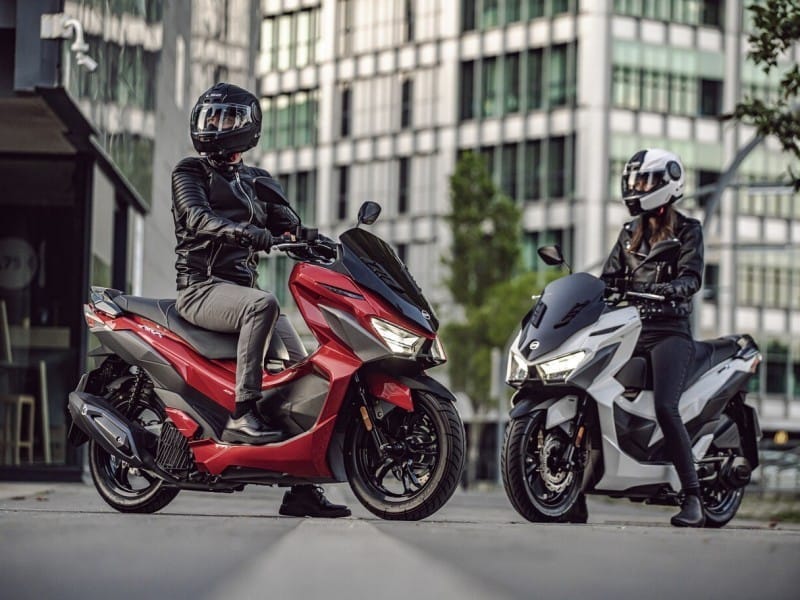
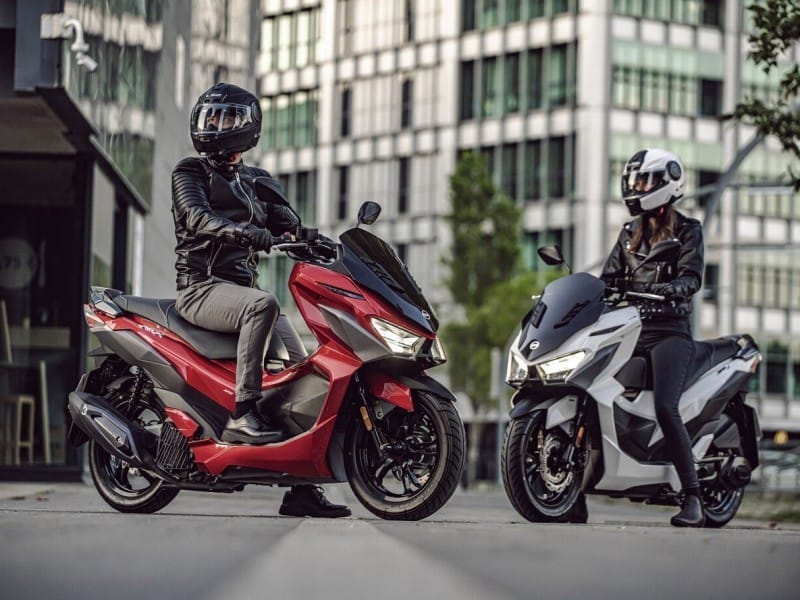
 SYM Jet-x-125
Taiwan’s motorcycle market partially recovered in 2025, with total sales up 5.1% to 805,212 units, supported by GDP growth of 2.9%, though U.S. tariff uncertainty may slow momentum in H2. The electric segment collapsed -29.5%, led by Gogoro’s -47.1% decline.
Economic Outlook
Taiwan’s gross domestic product (GDP) grew by 2.9% in 2025, according to the Taiwan Research Institute (TRI). However, the adverse impact of the Trump administration’s proposed “reciprocal” tariffs is expected to become more visible in the second half of the year.
TRI, one of Taiwan’s leading economic think tanks, warned that economic momentum is likely to slow as rush orders—placed by foreign buyers seeking to avoid potential tariffs—begin to fade once U.S. trade policy becomes clearer.
U.S. President Donald Trump first announced reciprocal tariffs on April 2, targeting countries with large trade surpluses with the United States. Taiwan was included, with a proposed 32% import duty on its goods. Although a 90-day pause was announced shortly afterward to allow negotiations, tariff uncertainty continues to weigh on the outlook.
Motorcycle Industry: Trends and Perspectives
Taiwan’s motorcycle market, the 12th largest globally, is often referred to as the “kingdom of motorcycles,” reflecting the very high density of two-wheelers in daily use.
Despite being open to imports, the market is dominated by domestic manufacturers Kymco and SYM, which compete for leadership alongside several local electric scooter producers. Together with Yamaha Taiwan, these mainly ICE-focused brands account for over 80% of total market share, while Gogoro alone dominates the electric segment.
The market is mature and highly sensitive to economic conditions and government incentive schemes, resulting in volatile trends in recent years.
Taiwan was among the first countries to introduce EV incentives, enabling rapid early growth in the electric segment and the emergence of local champions such as Gogoro well before 2020. However, the subsequent withdrawal of incentives led to a sharp contraction in EV demand, undermining consumer confidence and creating structural challenges for manufacturers. In 2025, the EV segment recorded a steep decline, closely mirroring the crisis of its leading player.
Total motorcycle sales increased 5.1% in 2025 to 805,212 units, partially recovering from the -12.3% decline in 2024. In contrast, electric motorcycles suffered a sharp contraction of -29.5%, with L1 models down 43.1% and L3 models down 7.6% year on year.
Market Leaders and Competitive Dynamics
Within the competitive landscape, the duel between the two local giants saw only modest shifts. SYM, the market leader, increased sales by 6.8%, while rival Kymco declined 4.7%.
Behind them, performance was mixed. Yamaha posted strong growth (+32.8%), standing out among traditional OEMs.
In fourth place, EV pioneer Gogoro saw sales collapse by 47.1% and now faces serious financial distress, having eroded much of its available cash without achieving sustainable growth.
PGO ranked fifth with an impressive +91.2%, followed by Suzuki (+22.4%) and Honda (-15.5%), the leading importer, highlighting continued fragmentation and shifting competitive dynamics.
Overall Assessment
Taiwan’s motorcycle market showed signs of stabilisation in 2025, supported by moderate economic growth. However, the sharp collapse of the electric segment underscores the critical dependence of EV adoption on policy continuity, while tariff uncertainty and a mature demand base limit upside potential. Without renewed incentives or a clearer long-term strategy, the EV segment risks further contraction despite Taiwan’s early leadership in electric mobility.
 SYM RV180