In the pantheon of memorable and much-loved car advertising campaigns in the UK, Renault has punched well above its weight.
“Papa and Nicole” became two of the most recognisable people in Britain during the seven-year-long television push in the 1990s of the Renault Clio, the car that replaced the Renault 5, beloved by the yuppie classes of the 1980s.
When Renault wanted to push the Clio towards a more male demographic after the turn of the millennium, the company brought in the coolest Frenchman in Britain, Thierry Henry, the Arsenal international footballer, and “va va voom” was born into the English lexicon.
When it launched the Renault Megane with its outsized derriere, the company brought Fatboy Slim’s remix of Groove Armada’s dance anthem I See You Baby (Shakin’ That Ass) to a national audience.
If all those brilliant ad campaigns seem a long time ago it is because they are — more than two decades.
Renault was never the biggest player in the UK, with a market share at between 2 per cent and 3 per cent. It hit a high point of 85,000 vehicles in 2016, the UK’s biggest new car market in recent times, for a 3.1 per cent share. By 2019, the last full year undisturbed by Covid-19, sales had dwindled to 59,000. During the pandemic sales crashed in line with almost all manufacturers.
Then something happened in 2025. Last year Renault captured its largest UK market share in a generation at 3.2 per cent.
• Renault Clio 2027 review — long wait, but the UK almost missed out
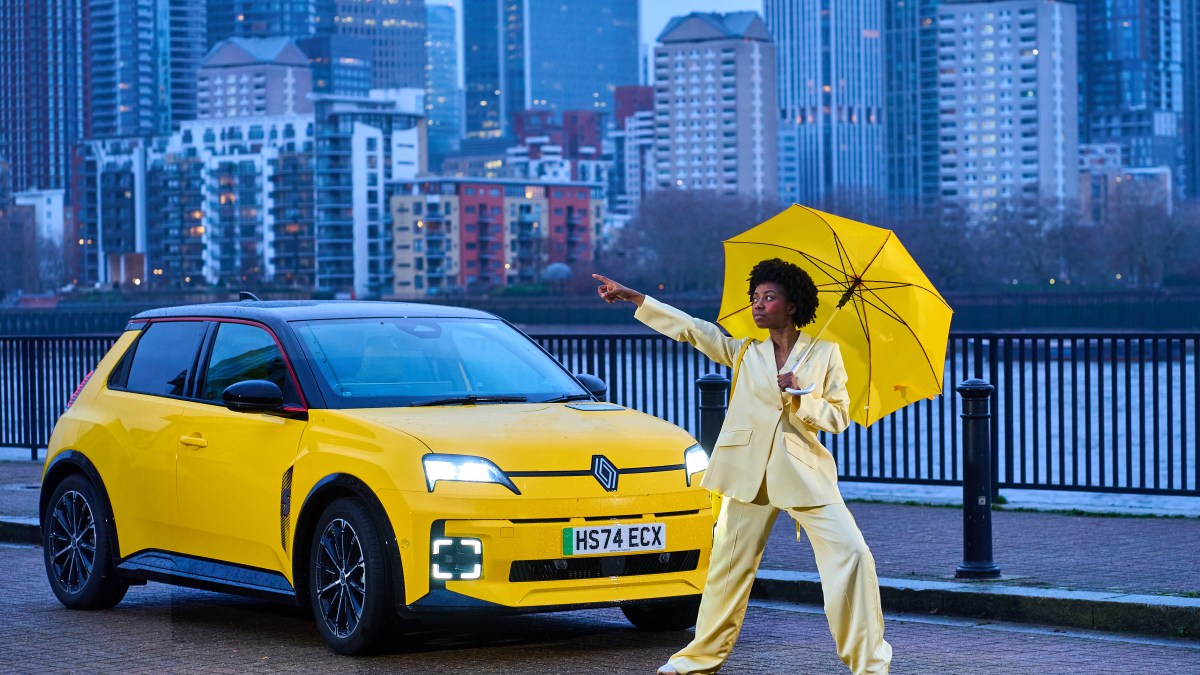
After years of people wondering what Renault was about amid the crumbling of the alliance with Nissan during the Carlos Ghosn scandals, Renault’s rediscovery of its va va voom coincided with the relaunch of the Renault 5 as an all-electric model, whose design has more than a passing nod to the pleasing looks of the original.
The new Renault 5 E-Tech was behind a 120 per cent surge to nearly 19,000 Renault electric car sales in Britain in 2025, meaning the French manufacturer was one of the few legacy motor groups that surpassed the UK’s challenging mandated target of 28 per cent of all sales as zero-emission units.
Launched last spring, in three of its first six months in the showroom the Renault 5 was the single bestselling electric car in the retail market, that is sales to private motorists not swayed by company car and salary sacrifice offers and schemes which have been the bedrock of electric sales.
That is seen as a crucial statistic and an indicator of the size and shape that the private British motorist wants and can afford in the electric car landscape.
• The Clarkson review: the Renault 5 E-Tech — maybe the future isn’t Chinese
The Renault 5 has, to many minds in the motoring game, kickstarted the next phase of the zero-emission vehicle market: the arrival of the “affordable” electric car.
“Affordable” is a moot term. What affordable means to the sales executive on the forecourt can result in a lot of teeth-sucking from the consumer left wondering just when did a new car become so expensive.
The new Renault 5 is on the market with taxpayer-subsidised electric car grants at about £21,000. Or in the real car-buying world of three-year contracts or leasing deals, at a little more than £200 a month.
The affordable runaround beloved of Brits who spent decades buying millions of Ford Fiestas is, according to Mike Hawes, chief executive of the Society of Motor Manufacturers and Traders, “where the focus is now” for electric carmakers.
• Why Britain is best for an electric car discount
Ian Plummer, commercial director of Auto Trader, says the Renault 5 is the first model to all but close the gap between the price of an electric car and its petrol equivalent. And as the consumer becomes comfortable with the range limitations of smaller electric cars married to their own actual driving habits, then the hatchback city car that does 180 miles between charges becomes more attractive. “The Renault 5 is both a rational and an emotional acquisition,” he said.
The reviews have been kind. “It is sitting at an impressively good-value part of the price-range curve”, says the Top Gear website. “This is a car you desire rather than merely decide upon. Renault has tapped into a seam of happy memory. The original Renault 5 was a brilliant piece of distinctive product design that gave millions of people sunny memories in the simpler times and roads of the 1970s to 1990s.”
The Renault 5’s sub-200 miles single-charge range is low and it is not much more spacious than its compact and bijou predecessor. But as Ginny Buckley, the chief executive of Electrifying.com, the electric car buying and advice site, said: “Nothing has sparked as much conversation or genuine affection as the Renault 5 over the past six months.
“It’s a real crowd-pleaser that cuts through age and gender, appealing to an unusually broad mix of buyers. Renault has been clever enough to tap into a much-loved icon and reimagine it without turning it into a pastiche.”

There are two other things at work. The Renault 5 replaces the Zoe, which has given the manufacturer more than a decade of experience and expertise in bringing down the cost of building electric cars. That may be seen to even greater effect when it launches in the next year the new iteration of its entry-level, sub-£20,000 zero-emission Twingo.
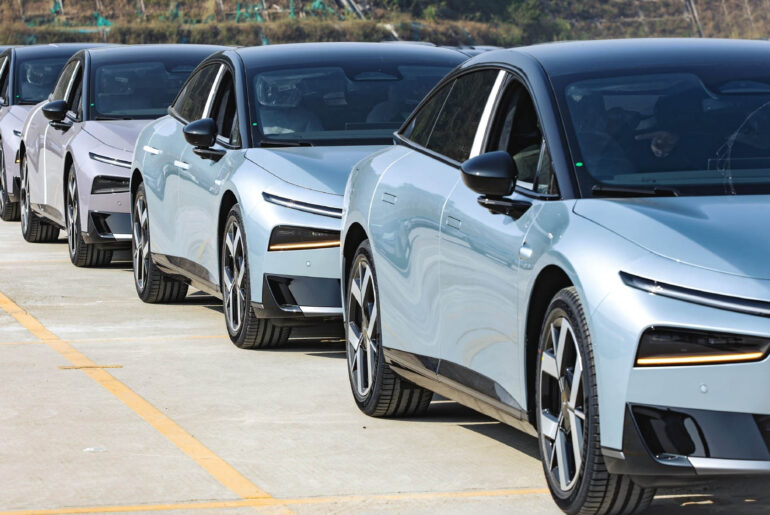
And there is a palpable gap in the market. The armada of Chinese electric cars arriving in Britain are short of such supermini models. That is because the segment is not a big deal in China itself and Chinese manufacturers are happy, for now, to export larger electric cars undercutting Tesla or the European legacy manufacturers and still retain a healthy profit margin.
That is likely to change. Renault sees a window in the market to get its retaliation in first and get the new Renault 5 and the Twingo embedded in the UK electric car-buying consciousness.
“The UK is clearly a priority for us,” said François Provost, Renault’s new chief executive of an electric car market which is, proportionally, the largest of any major European economy.
And that is tied to what Provost calls his most pressing goal. “People cannot afford new electric cars. The prices are too high,” he said. “You must be in no doubt that making the electric car affordable has to be the main priority.”