As Southeast Asia accelerates into electric vehicle manufacturing, industry leaders in the Philippines say their country risks falling behind neighbours that have moved quickly to support the sector, with policy uncertainty raising doubts about Manila’s commitment to long-term growth.Those concerns sharpened last month when President Ferdinand Marcos Jnr vetoed 92.5 billion pesos (US$1.56 billion) in unprogrammed appropriations from the 2026 national budget, a move that also swept up funding for key automotive incentive schemes.
The veto included 4.57 billion pesos allocated to the Comprehensive Automotive Resurgence Strategy (CARS) and the Revitalising the Automotive Industry for Competitiveness Enhancement (RACE) programme, both aimed at encouraging local vehicle production.
Under CARS, manufacturers must produce at least 200,000 units of a registered model over six years, while RACE, seen as a successor of the CARS scheme, requires makers to produce 100,000 units of a registered model to qualify for incentives.
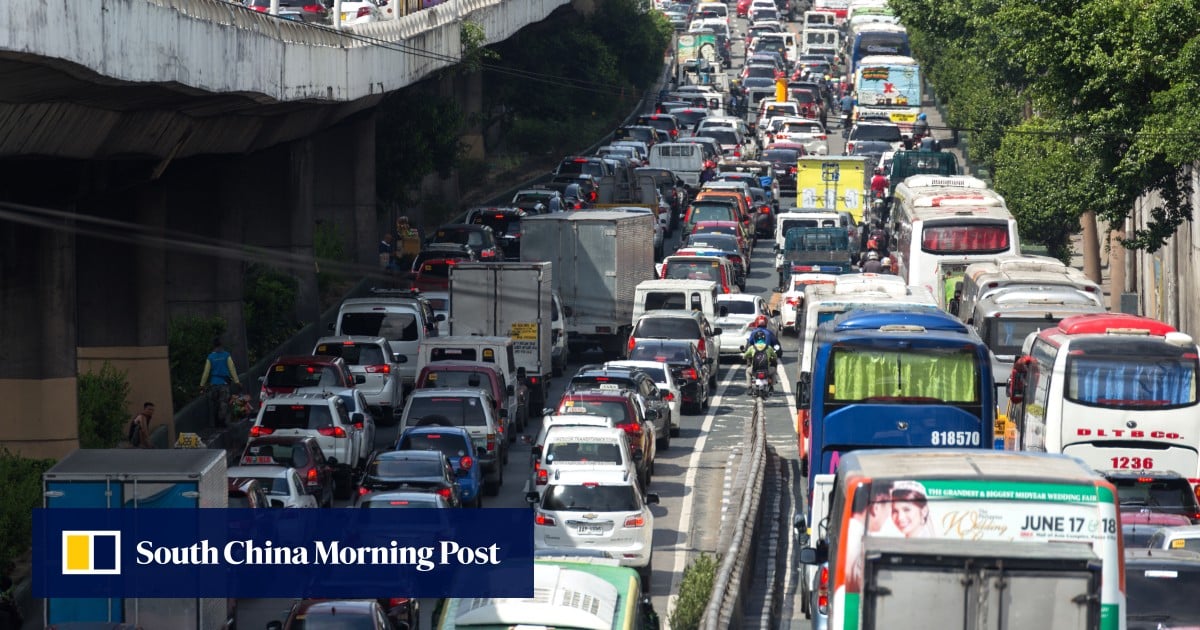
 Jeepneys ply the roads in downtown Manila. The Philippines has been trying to encourage local vehicle production through programmes such as CARS and RACE. Photo: Shutterstock
Industry groups warn the veto would undermine jobs and unsettle investors who have factored local production incentives into long-term regional plans, particularly as electric mobility in the Philippines still depends on the broader automotive supply chain.