Tesla’s Full Self-Driving (FSD) AI Vision-based software is getting better with each new update. In a new video posted on X, a Tesla owner shows Tesla FSD reacting to an ambulance even before the human driver could hear the siren.
Although FSD runs on AI computer vision for the most part, Tesla has made some exceptions for emergency vehicles. FSD v13 was the first version of the software that started taking audio inputs to handle emergency vehicles.
The video below is a prime example of how useful this mutation of the FSD software has been.
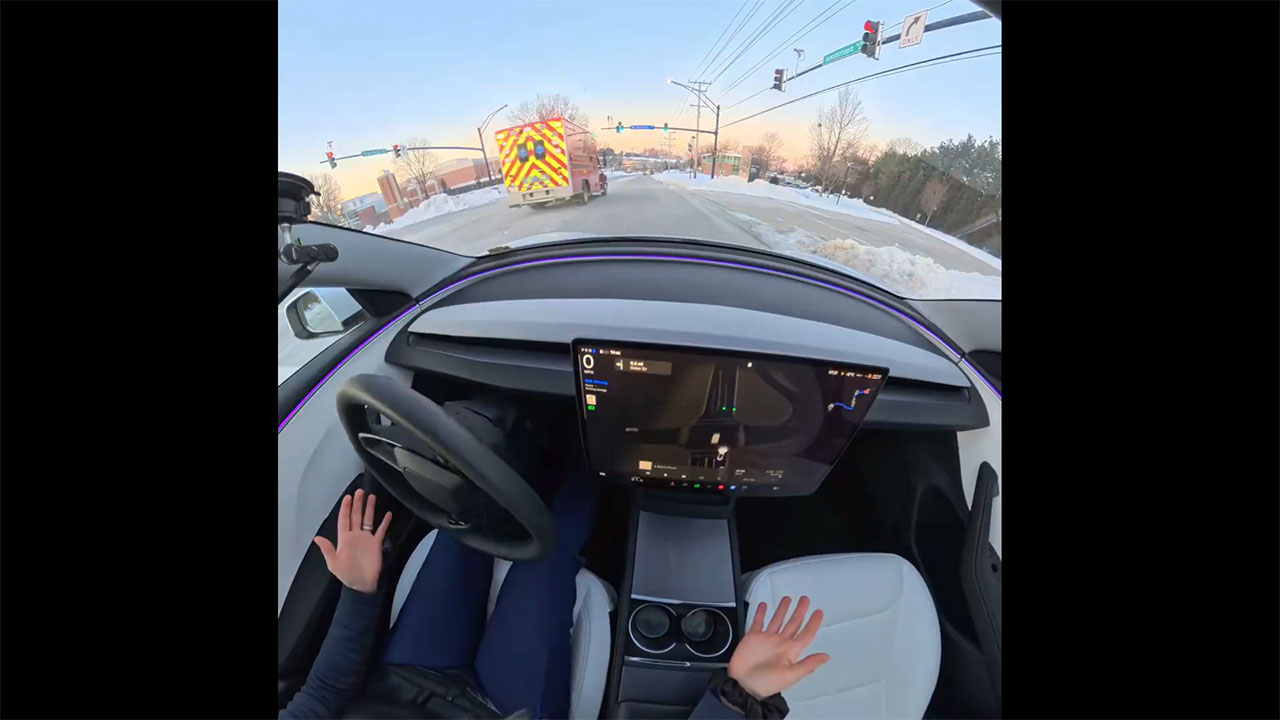
The human driver supervising Tesla FSD said that she did not know why the vehicle was pulling over to the right at a traffic signal. However, she realized that her Tesla running on FSD v14 detected the ambulance way before she could hear a siren.
– Advertisement –
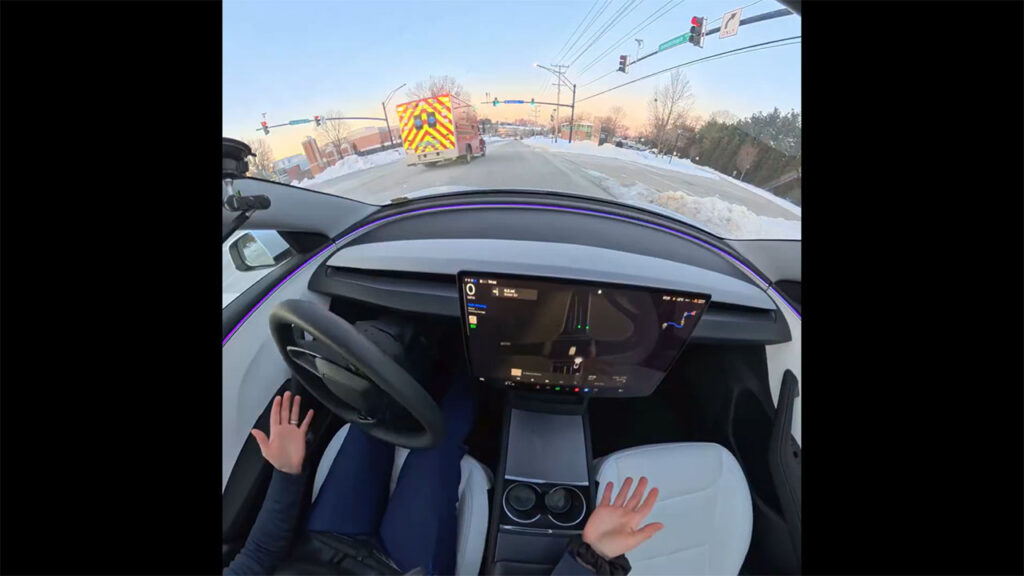 Tesla FSD v14 hears an ambulance, gives it way before the human could listen to the siren (video screenshot, watch below). Credit: @nursedanakay / X.
Interestingly, as I watched the video again and again, the vehicle started to pull over much before it appeared on the Autopilot FSD driving visualizations on the center touchscreen display.
The distance at which the Tesla heard a siren was out of the display area of the on-screen driving visualizations. Amazingly, the hearing capability of a Tesla vehicle is far greater than that of a human. This makes Tesla’s autonomous cars much safer than human drivers.
The owner was amazed that her vehicle created space for the ambulance in advance. This increased the safety of human lives in the emergency vehicle. Deployed across a large number of vehicles, this feature will enhance road user safety at scale.
Don’t question when your Tesla pulls a quirky move. FSD heard that ambulance siren before I did and got us over. 🚑🔊👍 pic.twitter.com/z4MrHLHUSr
— Dana Chandler 🇨🇦🖖 (@nursedanakay) January 30, 2026
Video: “FSD heard that ambulance siren before I did and got us over,” says the Tesla owner.
– Advertisement –
FSD v14 is the latest version of the Tesla AI self-driving software released to the vehicles owned by customers. Robotaxis, however, are running on a much more advanced FSD software version that’s not yet available to the public.
Tesla Model Y Robotaxis running in Austin, Texas, are already providing autonomous ride-hailing service without a human driver or safety monitor, aka Unsupervised FSD.
The automaker is optimistic that it will go out to customer-owned Tesla cars in the near future and will increase Tesla’s recurring revenue from monthly subscriptions to the Unsupervised FSD.
 – Sponsored –
Stay tuned for constant Tesla updates, follow us on:
Google News | Flipboard | X (Twitter) | WhatsApp Channel | RSS (Feedly).
Related Tesla FSD News
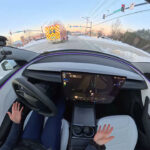 Watch Tesla FSD give way to an ambulance before the human driver could even hear itJanuary 31, 2026
 Tesla expands the rollout of FSD v14.2.2.4 (2025.45.9), release notes and first impression videosJanuary 27, 2026
 Tesla replaces standard Autopilot with TACC, Musk explains whyJanuary 24, 2026
 Tesla to end the free FSD Transfer Program soonJanuary 20, 2026
 Tesla starts rolling out FSD v14.2.2.3 (2025.45.8), official release notesJanuary 16, 2026
 Tesla (TSLA) to discontinue FSD package from Feb, only subscriptions will be available, Musk announcesJanuary 14, 2026