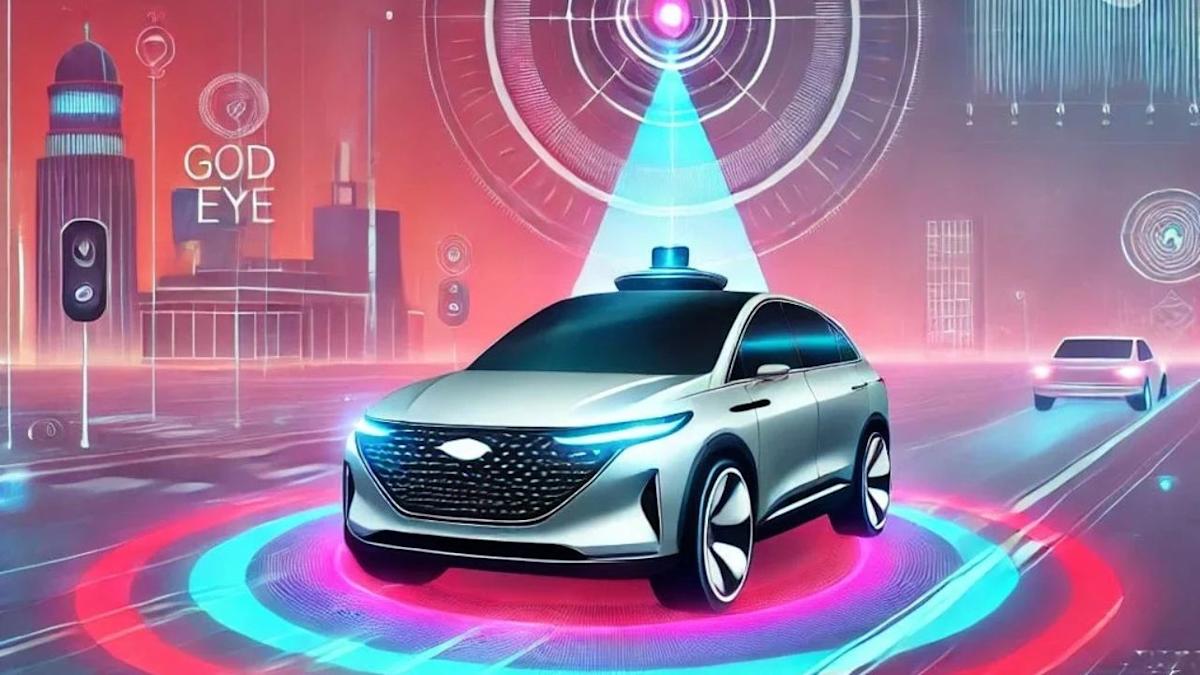
Chinese electric vehicle giant BYD has released the latest evolution of its proprietary assisted driving suite; God’s Eye 5.0. The rollout follows a rapid adoption in China, with more than 2.3 million vehicles equipped with earlier God’s Eye systems across BYD’s wide lineup of passenger cars by the end of 2025.
The company says the new software emphasizes artificial intelligence, reinforcement learning, and a closed-loop workflow from perception through action.
God’s Eye was first introduced in early 2025. The modular structure includes tiered hardware classes labeled C, B and A corresponding to DiPilot 100, DiPilot 300 and DiPilot 600 respectively.
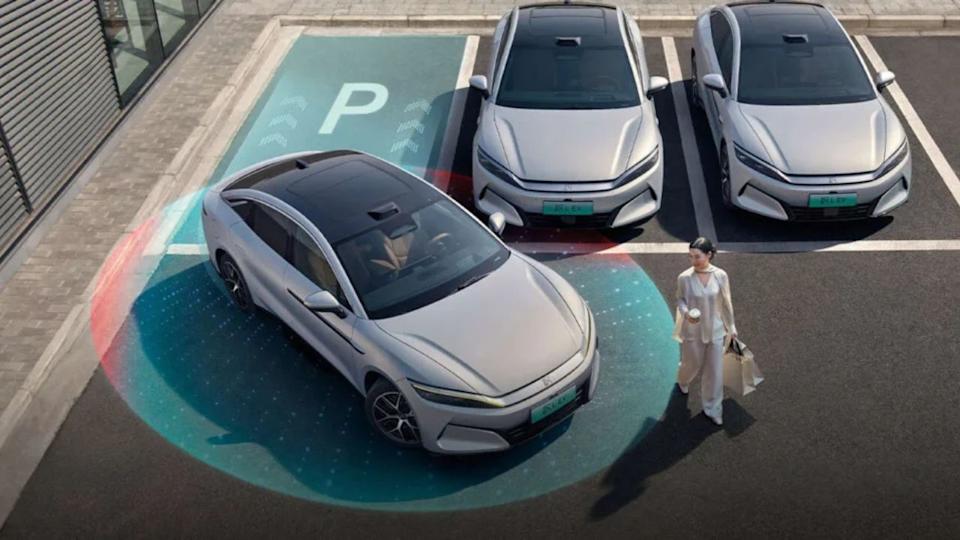
Image Credit: BYD.
Lower tiers rely on camera and radar sensors to deliver core driver assistance functions. Middle and top tiers add lidar and greater computational power to capture a richer environmental picture.
This scaled deployment has allowed BYD to embed assisted driving in vehicles from entry-level hatchbacks to luxury SUVs, bringing advanced features into the mass market rather than reserving them for high-end models.
The Power of Massive, Real-World Data
A cornerstone of BYD’s strategy is massive real-world data capture. Vehicles with God’s Eye enabled collectively accrue well over 62 million miles (a hundred million kilometers) of driving data every single day. These real-world data streams are fed back to refine perception, planning and control logic in God’s Eye 5.0.
BYD characterizes this architecture as a closed-loop system that can improve decision-making without relying solely on fixed rule sets.

Image Credit: BYD.
God’s Eye 5.0 introduces targeted upgrades in automatic emergency steering and braking. The system’s sensor fusion uses cameras, millimeter-wave radar and ultrasonic sensors, with high-compute platforms processing inputs to handle complex driving contexts including low-visibility environments such as tunnels.
The company expressly positions these functions as assisted driving rather than full autonomy, and stresses that availability of certain features depends on the hardware configuration fitted to each model.
How God’s Eye Compares to Western Rivals
Comparing God’s Eye to systems from Western rivals highlights different strategic paths. Tesla’s Autopilot and Full Self-Driving (FSD) offering represent the best-known suite in the United States and parts of Europe.
Tesla’s FSD uses a camera-centric perception suite that processes visual data to perform adaptive cruise control, lane centering, traffic light recognition and, in some beta versions, city-street navigation.
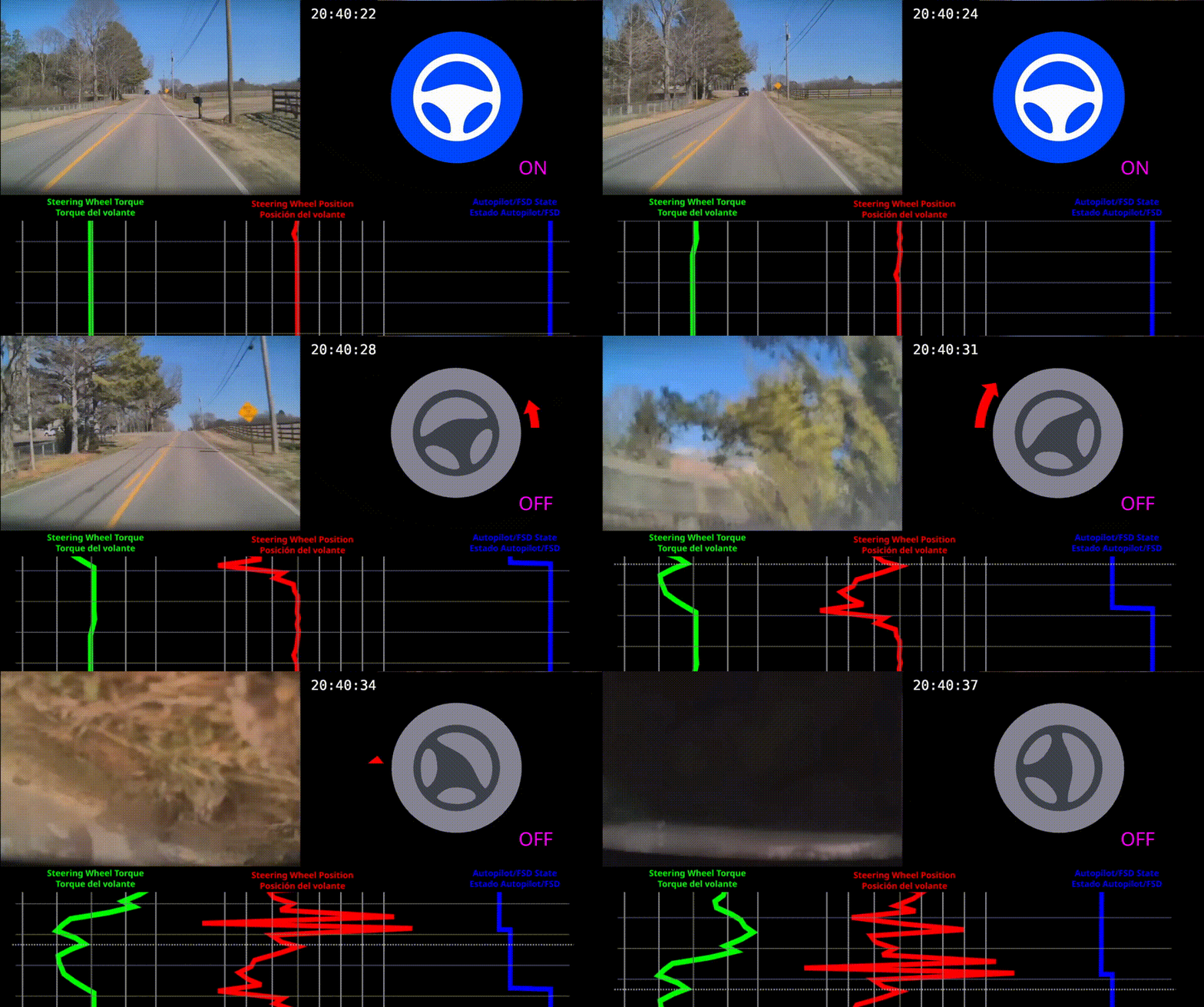
Image Credit: Jzh2074 – Own work, CC BY-SA 4.0, Wikimedia.
All functions require active driver supervision according to Tesla’s documentation and regulatory guidance. The system continues to be refined via over-the-air software updates.
Tesla’s approach has become controversial. We have previously reported that Tesla has recently discontinued the basic Autopilot package in North America, pushing users toward a subscription for the broader FSD suite.
That model brings in recurring revenue but places the burden of improvement and safety squarely on continuous software evolution, at least until regulators formally approve more autonomous capability.
In Europe, regulatory hurdles have limited the breadth of features available to Tesla owners. Complex rules about autonomous functions mean that several FSD features remain constrained or under test.
Mercedes-Benz’s Drive Pilot represents a different point on the spectrum. The system carries official Level 3 certification in select markets and allows the driver to temporarily divert attention from the driving task under specific conditions such as highway traffic below certain speeds.
This situational automation is enabled by high-precision sensors, detailed digital mapping, and strict operational boundaries. The trade-off is a reduced envelope of use relative to systems optimized for everyday driving across broad conditions.
Accessible, Data-Driven Iteration
BYD’s God’s Eye strategy emphasizes broad accessibility, ongoing data-driven learning and affordable scale. Rather than seeking a narrow domain where drivers can hand off control under ideal conditions, BYD has prioritized robust driver assist capabilities that improve safety and convenience across highway and urban contexts.
Data collection at scale fuels iterative improvements that may converge toward higher levels of automation in future releases.
Where Western systems like FSD and Drive Pilot explore premium, regulated automation niches, BYD’s God’s Eye 5.0 embodies a mass-market approach that ties hardware diversity with cloud-driven AI refinement. The coming years will reveal how these divergent philosophies shape global acceptance of assisted and autonomous driving.
Sources: BYD.