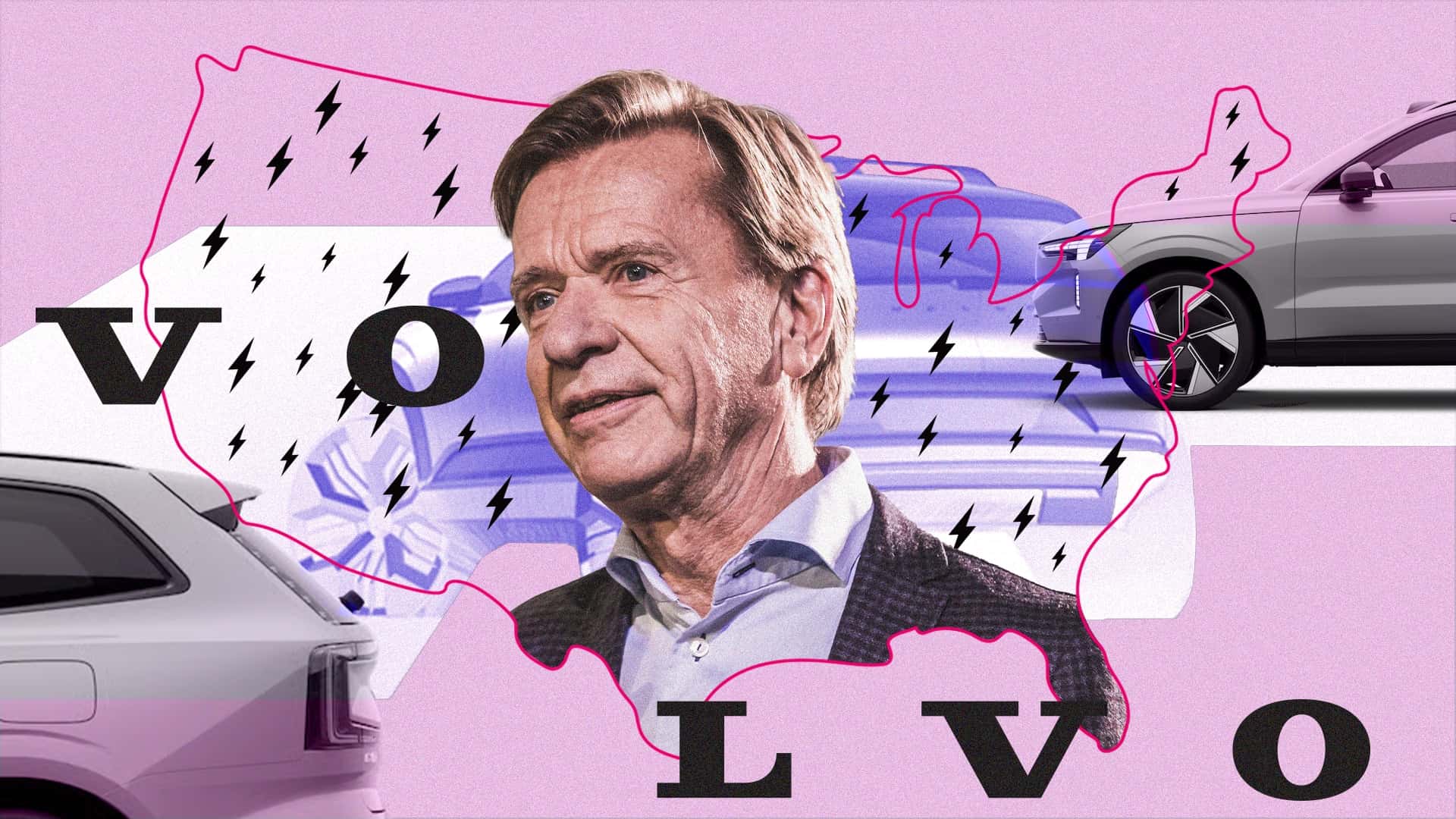
Volvo CEO Håkan Samuelsson thinks American homes are perfectly suited to EV life.
Because many Europeans live in apartments, the charging issue is tougher to solve there.
But for Americans with home charging, EVs will win out regardless of incentives, he said.
Volvo’s CEO doesn’t quite understand why American buyers are so wary of electric vehicles. For practical reasons, Håkan Samuelsson thinks they’re a better fit for Americans than for Europeans, at least in the near-term.
“I would say the U.S. is a perfect market for electric cars, because a lot of people live in the suburbs and you have your three-car garages,” the Swedish CEO said during a briefing with reporters during a debut event for the Volvo EX60. “I mean, it’s ideal to charge at home. So I don’t understand exactly why [Americans are] so negative.”
He’s got a point: The vast majority of Americans live in single-family homes, while 46% of European Union citizens live in apartments and 19% live in shared buildings. It’s far easier to charge an EV at a single residence, where you are likely to have a dedicated parking spot and power access. Apartment-dwellers who park at the curb aren’t so lucky, which is why Europe is pushing so hard to electrify public parking spots.

Samuelsson spoke to reporters during a reveal event for the EX60, the brand’s newest and most advanced electric car.
Photo by: Volvo
European countries have also been more steadfast in their commitment to funding public fast-charging infrastructure, generally. Climate change is also not nearly as politically controversial there, leading the continent to adopt stricter emissions standards. While they are also rolling back their most ambitious automotive targets, the EU still wants to have a mostly carbon-free fleet by 2035.
Meanwhile, U.S. automakers are pivoting resources away from EVs and toward gas cars. Regulators have shredded the standards that once drove us towards a lower-emissions future and removed all policies designed to incentivize EV adoption. This diverging track has caused some experts—and journalists—to wonder whether the U.S. will fall far behind the EU in EV adoption. Samuelsson, for his part, doesn’t think it’ll be a problem.
“Europe and the U.S. are more similar than they look right now,” he said at the briefing. “The U.S. is more skeptical of electrification right now because the incentives have been taken away. But on the other hand, I think the electrification transformation will not be driven by incentives. It will be driven by consumers.”
The EX90 was supposed to kickstart Volvo’s American EV ambitions. But software issues ruined that plan.
Photo by: Volvo
Consumers who go electric rarely ever go back. In most cases, they find that range anxiety isn’t as real as it seems from afar, and the practical realities of EV life are better than most people expect. The cars are smoother, quieter, faster and require less maintenance. And the biggest concern—charging—eventually becomes the biggest advantage.
“Would you like to have a car that would be automatically filled up by ‘Volvo Fuel Service’ during the night? Then when you wake up in the morning, you always have a full tank,” Samuelsson said, saying you’d never have to deal with stopping to fill up at all.
Part of the trepidation may be a lack of knowledge about home charging in the U.S. in general. While home charger installations are on the rise here, it’s often a poorly understood topic for drivers who have likely spent decades going to gas stations. Many automakers have dealt with this head-on by including a home charger with the lease or purchase of an EV, or providing a discount to do so. (See our list here.) Volvo has offered this perk to EV buyers in Europe, but not the U.S.—at least, not yet. “I wouldn’t put them at the forefront of the road map, but eventually we will get there,” Volvo’s energy solutions president told Automotive News in October.
With any luck, that will be part of the EX60’s American launch. Then, perhaps more prospective EV buyers will get off the fence and enjoy a benefit to EVs that its CEO thinks highly of.
“Wouldn’t you love that? That’s basically what you can get with an electric car,” Samuelsson said. “So what’s the problem?”
One problem, of course, is actually installing that home charger. Companies like Ford offer free chargers and installation, whereas Volvo’s current “fueling service” is a bring-your-own equipment affair. In the long term, most new homes and renovated garages will have chargers installed. But if Volvo wants Americans to fall in love with home charging, it should consider providing the equipment to customers now. After all, as Samuelsson notes, they probably already have a garage.
Contact the author: Mack.Hogan@insideevs.com.
We want your opinion!
What would you like to see on Insideevs.com?
– The InsideEVs team