Rivian‘s founder and Chief Executive Officer RJ Scaringe praised BYD and Xiaomi for their highly competitive EVs, both in technology and pricing, while also acknowledging that government subsidies give them an important advantage.
Speaking on the On with Kara Swisher podcast, the CEO of the Irvine-based EV maker highlighted that a handful of Chinese companies are “very, very strong in terms of technology,” in addition to benefiting from cost efficiencies.
The world’s largest EV market differs from the US in various ways, the executive noted, firstly because they have “an overwhelming number of choices.”
While there are “100 different companies making electric vehicles in China,” Scaringe thinks “a vast majority of them are not particularly compelling in terms of technology or innocation.”
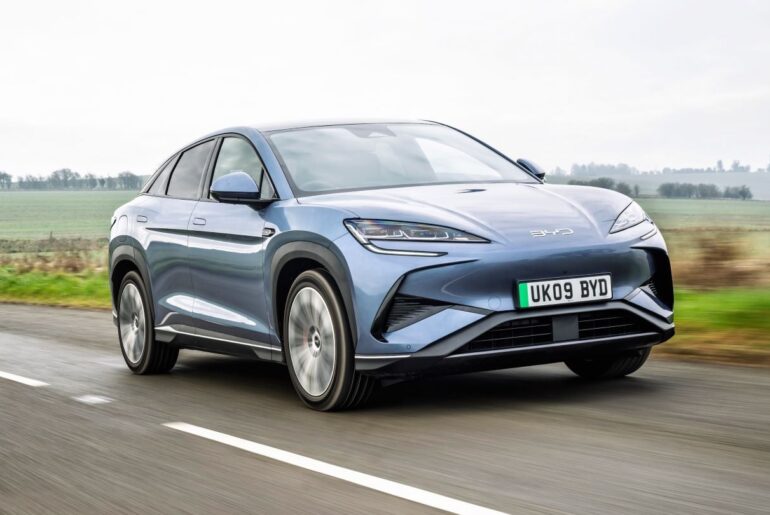
Xiaomi and BYD
However, among these companies, a few stand out for being both affordable and having “impressive” technology.
“Companies like Xiaomi or BYD very much technically demonstrate a lot of leadership, and then from a price point of view, are quite competitive,” the CEO exemplified.
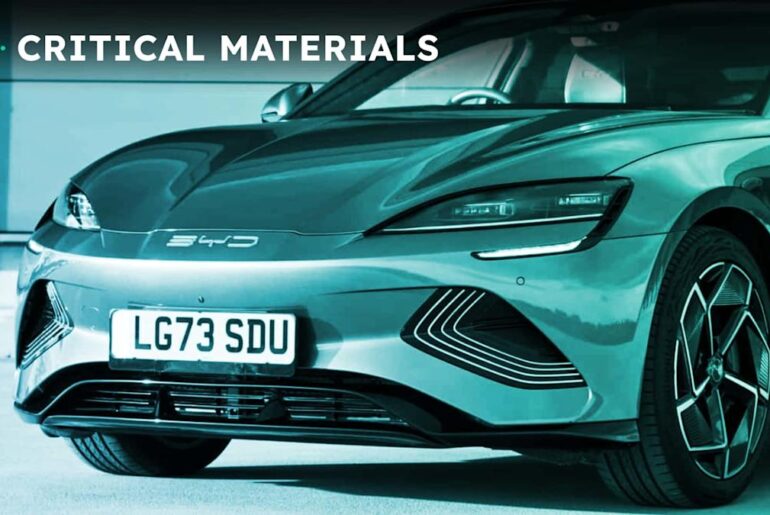
Automaker BYD produces both battery electric (BEV) and plug-in hybrid vehicles (PHEV) and has expanded across the globe in the past few years.
From the total of 4.6 million vehicles it sold in 2025, 1 million were delivered overseas, representing over 20% of its car sales.
Xiaomi, a tech giant, has only started producing electric vehicles in early 2024; however, it has quickly outpaced several of its rivals.
One of its most notable achievements is that its SU7 debut sedan outsold the Tesla Model 3 — something no other car in its segment has managed.
Its second model, the YU7 SUV, has broken industry records, registering over 240,000 non-refundable orders within 18 hours of its launch last July.
According to Scaringe, one thing that distinguishes these automakers is that they have a software-first approach, similar to what Rivian and Tesla have done.
“We had the benefit of starting with a clean sheet,” he said, adding that “Rivian was built as a software and electronics company first, and [then] we made cars. So we have more software engineers than we do mechanical engineers.
Scaringe noted that the same dynamic “exists for a number of newer Chinese car companies, where they approached it as a technology-first business” and “made architectural decisions that are advantageous relative to legacy manufacturers.”
Cost Structure
To the Rivian CEO, newer electric vehicles are very similar tech-wise.
The main difference is the cost structure, which can be explained by government subsidies and cheaper labor costs in China.
“If you were to take those cars apart and compare them to a Rivian, you’d see there’s technically there’s actually a lot of similarity,” he claimed, however, adding that “then you’d say, well, why are the cost structures so different?”
Scaringe reiterated that “it’s not magic,” but a combination that includes “cost of capital in China, so the cost to build the plant and invest in the products is very low, near zero.”
“In many cases, the plant and the equipment are paid for by the government,” he stated. “Whereas we have to raise capital with equity or some debt, in China, you get given the capital to go build capacity.”
According to the executive, it’s “very much a decision by the Chinese government to say, we’re going to be leaders in this space.”
“So, you take the cost of capital to close to zero, the whole supply base suddenly becomes cheaper because the amortization of your fixed cost becomes a lot less,” he explained.
Labor Costs
Combined with that, according to Scaringe, is “a labor cost that’s much, much lower and labor policies that are very different.”
In China, “you have people that go and work and live at a plant, working 50 to 60 hours a week and making, you know, somewhere between one-fifth and one-seventh of what someone in the United States would make.”
That makes it hard for the United States to compete.
To him, “there’s no way with that difference in labor cost to really have, and the cost of capital to have a one-to-one.”
When questioned about the entry of Chinese EVs in North America after the Canada-China deal, Scaringe thinks “it’s very, very, very likely that the tariffs the US have put in place will remain.”
“And for the Chinese to really participate in this market, they’ll need to locally produce,” he added. “If they decide to locally produce, those advantages I just talked about, both in terms of cost of capital, but also in terms of labor costs, just go away.”
However, he flagged that the nature of vehicle production is set to change over the next decade, as the auto industry is “an area where we’re going to start to see industrial automation and high dexterity robotics come in.”
“This is truly the only way the United States can compete with low labor cost countries for manufacturing,” Scaringe said, “by developing robotics to essentially operate manufacturing plants with far fewer people.”