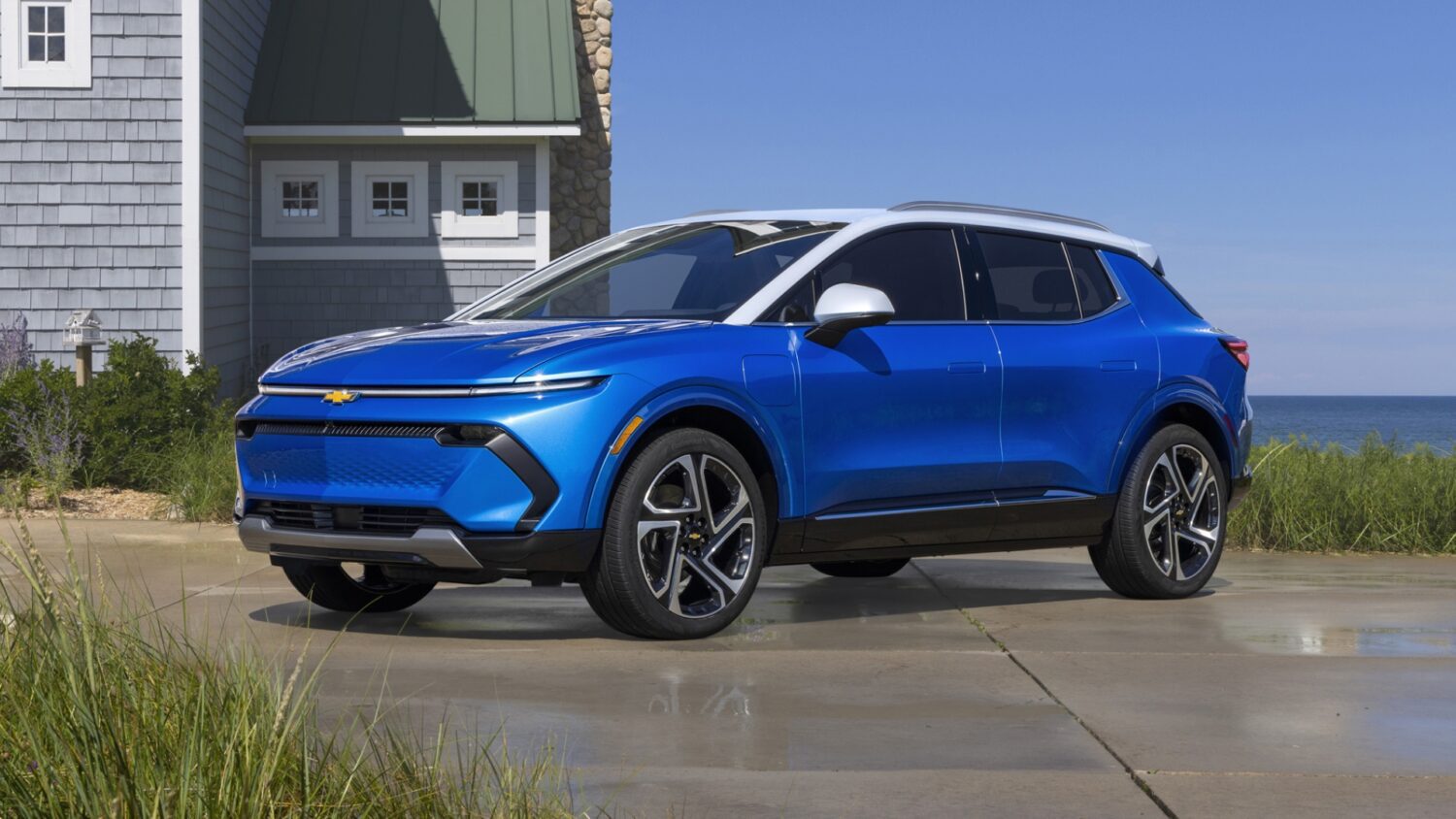
General Motors just put a hard number on what many in the auto industry have quietly acknowledged for months: the all-electric transition is proving far more expensive, complicated, and politically exposed than its earliest champions predicted. The company announced it will take $7.1 billion in special charges as it reshapes its electric vehicle production footprint, a move that underscores how turbulent the road to electrification has become, even for the largest and most experienced automakers.
This disclosure follows closely on the heels of Ford’s admission that its aggressive EV push resulted in roughly $20 billion in losses. The difference between the two companies is not the size of the miscalculation but the response. Ford is pulling back timelines and recalibrating expectations. General Motors, under CEO Mary Barra, is choosing to absorb the financial pain and press forward.
According to GM, $6 billion of the charges are tied directly to changes in its EV manufacturing strategy, including canceled supplier contracts and unused equipment that was originally slated for electric vehicle production. An additional $1.1 billion relates to the restructuring of GM’s China joint venture, a reminder that global market pressures are compounding the challenges of the EV transition. When combined with an earlier October 2025 filing that foreshadowed losses tied to abandoned EV plans, GM will have accounted for roughly $7.6 billion in losses connected to its pivot away from certain electric vehicle production efforts in 2025 alone.
These charges will appear in GM’s fourth-quarter results, scheduled for release on January 27, and they raise unavoidable questions about whether Detroit’s largest automakers misread the pace of consumer adoption, the resilience of charging infrastructure, and the staying power of government incentives.
Mary Barra, however, remains unapologetic. Speaking with the automotive press, she said she has “no regrets” about GM’s EV strategy. In her view, the disruption caused by regulatory changes in 2025 outweighed even the impact of tariffs, but GM’s ability to quickly reorganize its production footprint helped limit the damage to the company’s bottom line. That statement reveals how deeply policy-driven this transition has become. Automakers are no longer responding only to market demand but also to shifting regulatory targets, incentive structures, and geopolitical realities.
Barra has been clear that while the company will be more pragmatic in execution, its long-term destination has not changed. GM’s electric vehicles, she insists, remain the company’s “North Star.” The difference now is an acknowledgment that the journey will take longer and cost more than originally promised, particularly as incentives fade and infrastructure gaps persist.
This is where the disconnect between policy ambition and consumer behavior becomes impossible to ignore. Despite years of aggressive marketing, subsidies, and regulatory pressure, consumer demand for EVs has cooled. GM’s fourth-quarter EV sales fell 43 percent year-over-year to just 25,219 vehicles. That is not a rounding error. It is a sharp signal from the market that affordability, charging convenience, and long-term ownership costs still matter more to buyers than political timelines.
At the same time, the full-year picture tells a more complicated story. GM’s total EV sales for 2025 rose 48 percent to 169,887 vehicles, making it the second-best-selling EV manufacturer in the United States behind Tesla. That statistic allows GM to claim momentum even as quarterly results expose volatility. It also highlights how uneven EV adoption remains, with spikes driven by incentives and fleet sales rather than steady organic demand.
The China-related charges add another layer of complexity. China was once seen as the cornerstone of global EV growth, but regulatory uncertainty, local competition, and geopolitical tension have made it a far less predictable market for American automakers. GM’s decision to restructure its joint venture there reflects not just EV headwinds but a broader reassessment of international risk.
What makes GM’s position especially noteworthy is its refusal to abandon the all-EV narrative even after acknowledging billions in losses. Barra has emphasized that once charging infrastructure becomes more robust, EV adoption will accelerate. That may be true, but it assumes infrastructure expansion will keep pace without the same level of government incentives that initially fueled growth. It also assumes consumers will remain patient as prices stay high and technology continues to evolve.
From an industry perspective, GM’s write-downs are less about failure and more about timing. Automakers were pushed, both politically and culturally, to commit early and loudly to electrification. Those who hesitated were criticized as out of touch. Now, the cost of being first is becoming clear. Retooling factories, securing battery supply chains, retraining workers, and complying with shifting regulations require enormous capital, and those investments do not disappear simply because demand softens.
There is also a credibility issue at stake. When executives say they have “no regrets” after multibillion-dollar losses, consumers and investors alike are entitled to ask whether lessons are truly being learned. Pragmatism going forward is a necessary adjustment, but it raises the question of whether earlier forecasts were driven more by political alignment than by realistic assessments of consumer readiness.
GM’s experience should serve as a cautionary tale for policymakers as well. Mandates and incentives can accelerate innovation, but they cannot force market acceptance on a fixed timetable. The EV transition will happen, but not on command and not without detours. The companies that survive will be those that balance ambition with flexibility rather than those that lock themselves into rigid promises.
For General Motors, the next few years will test that balance. The company has the scale, engineering talent, and brand equity to compete in an electrified future. What it cannot afford is continued misalignment between production plans and real-world demand. The $7 billion charge is not just an accounting adjustment. It is a public acknowledgment that the road to an all-electric future is longer, bumpier, and far more expensive than advertised.
Consumers, meanwhile, are watching closely. They are not rejecting electric vehicles outright, but they are demanding better value, better infrastructure, and honest timelines. If automakers and regulators listen to those signals instead of dismissing them, the transition may ultimately succeed. If they do not, GM’s $7 billion reckoning may prove to be only the beginning.
Check out my full commentary on this story: https://youtu.be/QhkxUYSvoSQ
Looking for more automotive news? https://www.CarCoachReports.com
Listen to The Drive Car Show – https://www.youtube.com/@thedrivecarshow