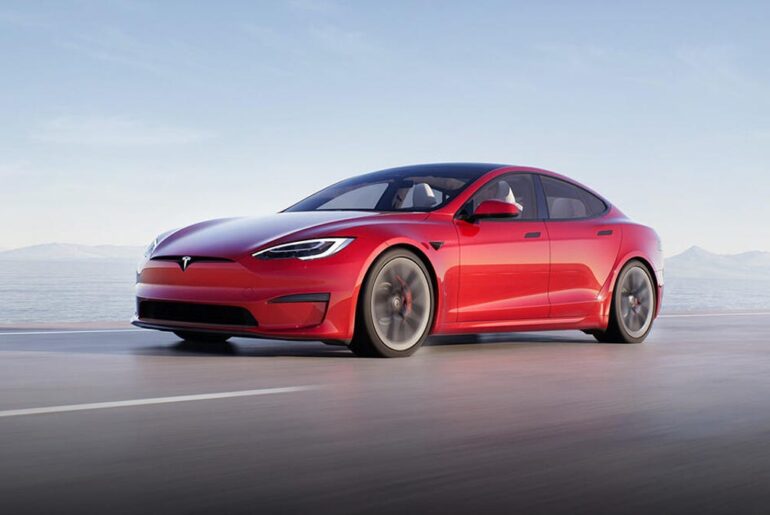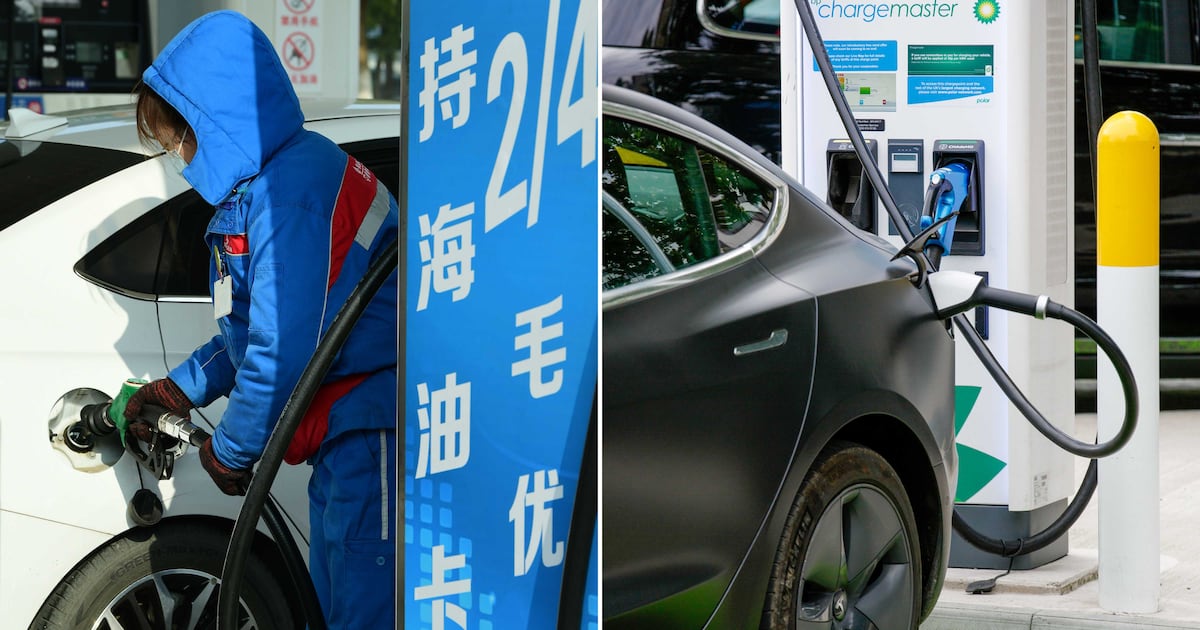
Electric vehicle giant Tesla Motors’ latest quarterly report showed weakening sales. The regional boss of Porsche says EVs are the future, but petrol cars will continue to chug along.
In any case, one thing is clear: battery-powered cars are leading the race when it comes to the future of transport.
Petrol-powered vehicles have been the standard since the late 1880s but never before has its dominance been as seriously challenged as it is being today.
And it is not only battery-powered vehicles that aim to overtake gas guzzlers: other options are emerging but each with its own pros and cons.
“There is no single, universal successor to the internal combustion engine,” Jennifer Considine, an honorary senior research fellow at Scotland’s University of Dundee, told The National. “What is emerging instead is a portfolio of solutions.”
These include battery-electric systems for light-duty, high-utilisation urban use; hydrogen and hydrogen-derived fuels for heavier, longer-range applications; and, crucially, advanced biofuels and e-fuels that “allow us to decarbonise the vast existing engine fleet rather than simply discard it”, she said.
Indeed, internal combustion engine (ICE) vehicles remain the favoured mode of road transport but there are a lot of factors trying to convince motorists to shift to other forms of power sources.
“ICE vehicles are already falling out of favour in early adopter markets, and the trend is spreading as total cost of ownership improves for electrified options and regulations tighten on emissions,” Mostafa Shaaban, director of the Energy, Water and Sustainable Environment Research Centre at American University Sharjah, told The National.
He cites Norway as a “clear example”, with about 96 per cent of new car registrations being fully electric, “showing that a rapid shift away from ICEs in passenger vehicles is achievable when incentives, infrastructure and consumer acceptance align”.
We take a look at battery-powered vehicles and other engine alternatives that are also rising to the challenge. Do note that the lists of vehicles respective to their engine types below are not exhaustive.
Biodiesel
What it is: Believe it or not, diesel is still in the mix – but, of course, with an eco-twist in the form of biodiesel.
While diesel is produced from petroleum, biodiesel – which falls under the broader biofuel category – is derived from other, greener sources such as vegetable oil, animal oil and fats, soyabeans, tallow and, notably, waste cooking oil.
The types of biodiesel are labelled by a ‘B’, followed by a number denoting the percentage of the biodiesel mixed in with the conventional diesel. For example, B20, the most common blend, means there is 20 per cent biodiesel and 80 per cent diesel in that mix; the highest is B100, which is pure biodiesel.
Popular biodiesel vehicles: Ford F-150, Jeep Grand Cherokee, a bevy of Chevrolet models, Volvo trucks.
Pros: Biodiesel does not produce net output of carbon, meaning it is generally carbon neutral. It also poses less of an environmental risk as it is non-toxic and rapidly biodegradable. And with a higher flash point, it is safer in the event of a crash.
But all these are relative, depending on what type of B mix is used.
Cons: Biodiesel’s biggest sticking point is arguably its cost to produce, considering the feedstock, processing and chemicals involved in the process, with the price then passed on to consumers. Other downsides are the potential to increase nitrogen oxide emissions, its tendency to gel in colder conditions, and the limited availability and types of vehicles that can use it.
Biodiesel is subtype of biofuels and they are “gaining importance because they provide low-carbon molecules in parts of the energy system where demand is growing and options to electrify are limited”, analysts at Norway’s Rystad Energy said.
Fun fact: Rudolf Diesel, who created the diesel engine in 1897, also experimented with using vegetable oil as fuel for his invention.
Natural gas
What it is: Natural gas is, along with coal and petroleum, one of the main types of fossil fuels – but it is the cleanest among them.
An alternative to petrol and diesel, it is a viable choice for vehicles that are high-mileage, belong to fleets, or are heavy-duty. Latest data from the US Alternative Fuels Data Centre shows about 8 per cent of cars on United States’ roads use natural gas.
There are three types of natural gas engines: those that run exclusively on it (dedicated); use separate tanks to house natural gas and petrol (bi-fuel); and use natural gas to power the vehicle but need diesel for ignition (dual-fuel).
Popular natural gas vehicles: Toyota Urban Cruiser, Maruti Suzuki Grand Vitara, Hyundai Aura, Ford Aspire.
Pros: Natural gas is an abundant source; it produces significantly less air pollutants, is more fuel-efficient and costs less than traditional fuel. Natural gas vehicles are also low maintenance and are relatively easy to retrofit to use it.
Cons: Natural gas vehicles typically cost more compared to petrol counterparts, partly because they are not mainstream vehicles. However, benefits will come in the long run because fuel costs less. There are also environmental concerns when extracting natural gas.
“Among alternative fuels, natural gas, and especially renewable natural gas, sits in a sweet spot of proven performance, mature infrastructure, reduced emissions and lower fuel costs compared to traditional diesel,” analysts at US services firm Penske Energy said.
“The economics depend heavily on electricity and diesel pricing, route consistency, charging strategy, duty cycles and vehicle utilisation.”
Fun fact: Abu Dhabi’s Adnoc Distribution has a service in which motorists can convert their vehicles’ engines into NGVs by adding only a few components, with no modifications needed.
Fuel cells
What it is: The closest relative to the batteries powering present-day electric vehicles, fuel cells, or electrochemical cells, are those that create energy from fuel and gas. The most common type are hydrogen fuel cells, using oxygen as an oxidiser.
In other words, fuel cells produce electricity via chemical reaction – AKA combining the elements’ atoms – not combustion. And unlike traditional batteries, they do not store power – they produce it only upon said reaction.
Popular fuel cell vehicles: Honda CR-V e:FCEV, Hyundai Nexo, Toyota Mirai.
Pros: The most obvious benefits of fuel cells is that their resources are abundant and renewable. Hydrogen fuel cells, in particular, do not emit carbon dioxide.
Cons: Which leads us to an important point: fuel cells that use other gases, such as ethanol and methane, do have carbon footprints. Also, fuel cells are more expensive to produce, making them costlier to run than petrol and EVs. And, as with any other battery, fuel cells deteriorate over time, meaning they will have to be replaced at some point.
The European Commission’s Joint Research Centre in a 2025 study noted the growing use of fuel cells in passenger cars, but “heavy-duty applications [such as in trucks] require significant technical improvements, including higher power output”.
Fun fact: In 1969, Nasa used fuel cells to power the Apollo 11, which was the first spacecraft to landed humans on the Moon.
Batteries
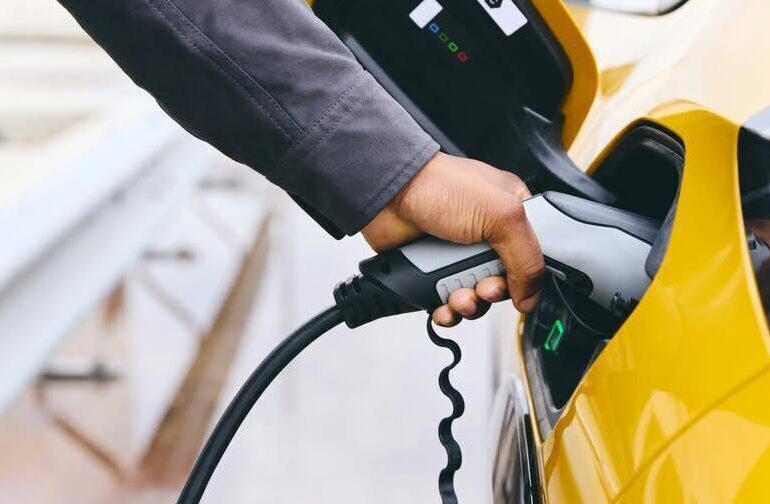
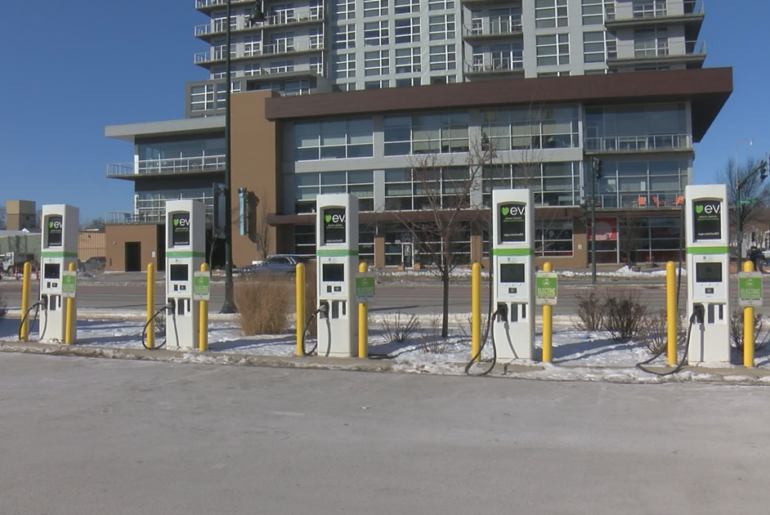
What it is: The current premier challenger to the old guard of petrol engines, battery-powered vehicles have been gaining traction since Tesla took off.
That spawned a whole new dynamic in transport, from emerging challengers (most notably from China), to old heads rewiring their strategies (US and European cars) and others playing catch-up (looking at you, Toyota).
There are three main types of battery cars: battery electric vehicles (BEVs), the most common type that uses batteries only, plug-in hybrid vehicles (PHEVs), which use both batteries and petrol, and hybrid electric vehicles (HEVs), which use a petrol-powered electric engine that produces less emissions.
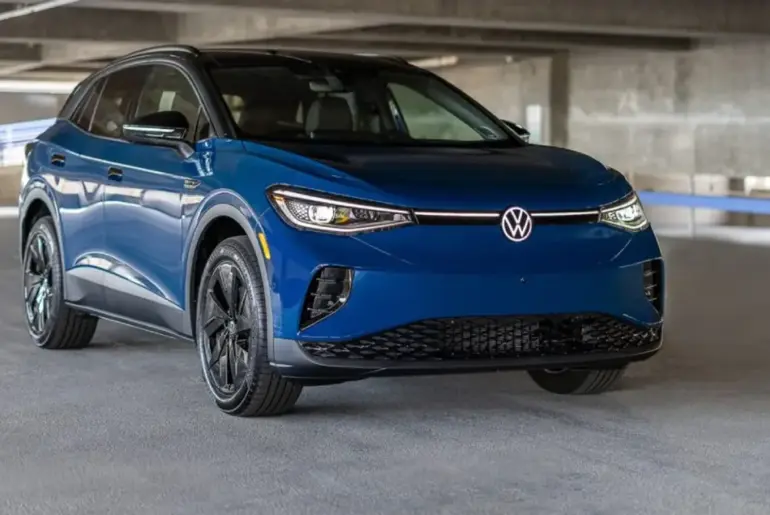
Popular battery vehicles: Nissan Leaf, Audi e-tron, Volkswagen ID.4, everything Tesla, BYD’s answers to Tesla.
Pros: The various types of battery vehicles have their corresponding pros and cons. But, generally, battery vehicles are better for the environment, quieter, do not require filling up and are less expensive to maintain. Their prices are still debatable: Tesla launched at a premium but competition has been able to bring industry prices down.
Cons: Arguably the biggest sticking point would be the lack of infrastructure for charging, relative to the number of established petrol stations, which leads to the dreaded range anxiety syndrome. Batteries themselves are also a concern, because of fire risks and the problem of disposal.
“Battery electric vehicles are exceptionally efficient at the point of use and well suited to urban environments,” Ms Considine said.
“But they carry hidden system costs – material intensity, grid constraints, charging infrastructure and upstream emissions that depend heavily on how electricity is produced.”
Fun fact: The first hybrid electric car, the Lohner-Porsche Mixte, powered by electricity stored in a battery and a gas engine, was invented by Ferdinand Porsche, who is, yes, the founder of the sports car company, whose regional boss recently told The National that while the future will indeed be electric, one foot will still be on the gas.