Tesla Inc. will spend over $20 billion on a dramatic reshuffling of factory lines reflecting Elon Musk’s repositioning of the carmaker coming off a multiyear sales slump.
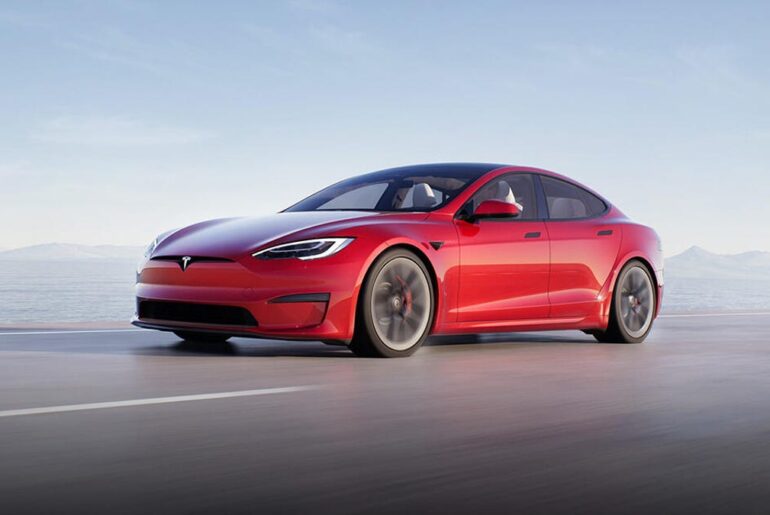
The capital expenditures planned for 2026 — more than double last year’s outlay and almost twice as much as Wall Street was expecting — will go to ramping up production of cars, batteries and robots across half a dozen plants. To make room for new Optimus humanoids, Tesla will discontinue its two oldest vehicles, the Model S sedan and Model X SUV.
“We’re making very, very big investments,” Musk said on a call after Tesla released better-than-expected quarterly results. Tesla shares fell less than 1% as the markets opened Thursday in New York, erasing a premarket gain.
Tesla also announced a surprise agreement to invest about $2 billion into Musk’s money-losing artificial intelligence startup, xAI, and signaled it’s likely to build a semiconductor manufacturing facility. The moves underscore Tesla’s ambitions to reorient around AI, driverless technology and robots at the expense of its car business, which faces more challenges in 2026 after consecutive annual sales declines.
Investors have broadly supported the reinvention, even as the new business lines either remain far off or uncertain to succeed. Neither the broader auto industry’s EV winter nor Tesla’s earnings beat garnered much attention on Wednesday’s call.
“This quarter officially marks the fundamental shift from EV company to an all-in bet on robotaxi, energy and Optimus,” said Andrew Rocco, an analyst with Zacks Investment Research. “It looks like they’re almost ready to tear off the Band-Aid on the EV business and go full in on autonomy.”
AI Agreement
Tesla agreed this month to acquire preferred shares in xAI as part of the closely held company’s latest funding round. The companies also entered into a “framework” accord to strengthen their relationship and “enhance Tesla’s ability to develop and deploy AI products and services into the physical world,” the company said in its earnings release.
The investment highlights the deepening ties between Musk’s business interests and reinforces the growing focus on AI.
The xAI agreement will likely be welcomed by many investors and overshadow the earnings results, said Matt Maley, chief market strategist for Miller Tabak + Co.
“If Tesla is going to do as well as the bulls are thinking, it’s going to be with the robotaxi and robotics,” Maley said. “So, this investment is exactly what the bulls wanted to hear.”
While Musk has previously voiced support for Tesla investing in xAI, the move follows an unsuccessful shareholder vote on the prospect in November. While more of Tesla’s shareholders voted for a nonbinding measure encouraging an investment, a significant number of abstentions meant the measure didn’t pass. Still, Tesla said then that it would continue to explore the possibility.
The two companies already work together. Tesla has sold Megapack energy storage systems to xAI, and xAI’s Grok chatbot is integrated into some Tesla vehicles. Bloomberg reported earlier this month that xAI told investors its aims to build AI will eventually power humanoid robots such as Optimus.
Quarterly Profit
Tesla’s adjusted earnings dropped to 50 cents a share in the fourth quarter, exceeding analysts’ average estimate. The company snapped a streak of four quarters in which profit on that basis was weaker than expected.
Musk has previously warned Tesla was headed for a rough patch navigating lower EV demand and waning US subsidies. While the company is finally bringing its long-planned Semi truck to market this year and will soon start making its two-door, two-seat Cybercab, production of the Model S and X will wind down in the next quarter. The S, which costs about $95,000, and the X, with a price tag of nearly $100,000, are much lower-volume vehicles compared with Tesla’s more affordable 3 and Y models.
The profit beat helps offset disappointment stemming from a steady decline in vehicle sales. Tesla earlier this month reported a 9% decline in 2025 deliveries. The company ended the year with a 16% quarterly vehicle sales drop, its steepest decline yet.
An increasingly crowded EV market, the end of US tax credits for EV purchases and a backlash against Musk’s polarizing politics and his role in the Trump administration contributed to the company’s woes.
One of the company’s lucrative revenue streams — selling regulatory compliance credits to other carmakers — is also coming under pressure, with sales falling 22% in the fourth quarter from a year earlier. That income has dropped since the US eliminated penalties for automakers exceeding fuel-economy standards.
Due to the regulatory credit revenue slide and drop in vehicle deliveries, Tesla’s annual revenue declined for the first time.
The company reported for the first time that it has 1.1 million active subscribers for its Full Self-Driving system, the suite of assistance features that drivers need to constantly supervise. Musk announced recently that FSD will transition to a subscription-only model starting next month.
Tesla said it aims to deploy robotaxis in Dallas, Houston, Phoenix, Miami, Orlando, Tampa and Las Vegas in the first half of this year. The only city where the company has offered rides without safety drivers is Austin, and the business fell well short of Musk’s predictions for expansion last year.
The company also operates a ride-share service via the same app in the San Francisco Bay area with safety drivers behind the wheel. It’s already secured permits for testing in Nevada and Arizona.
Carlson writes for Bloomberg.