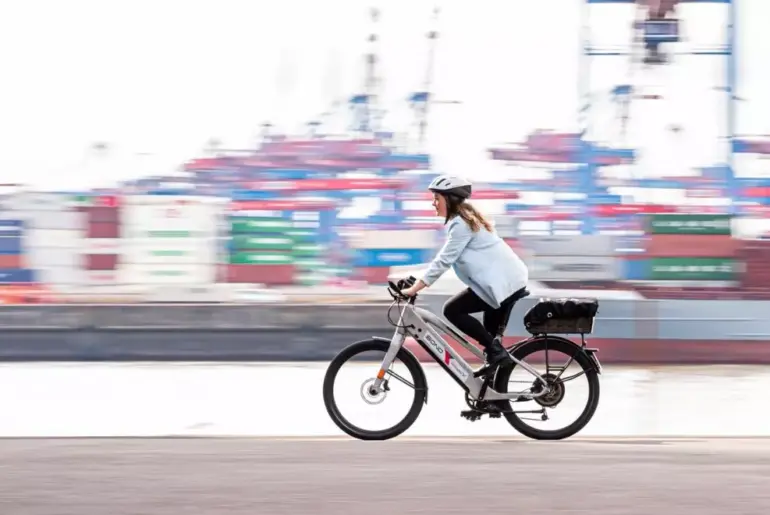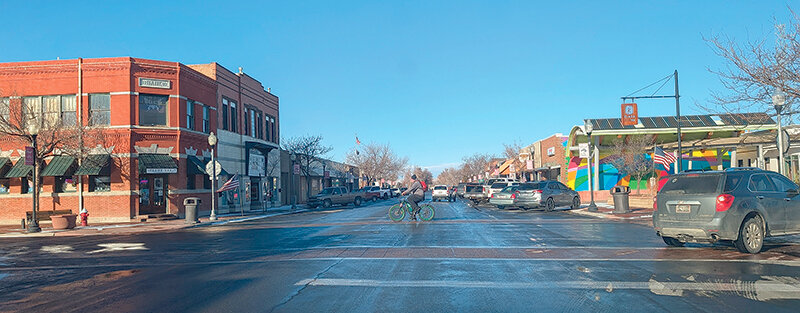
The City of Powell currently has no specific rules for the growing number of electric-powered bicycles and scooters that cruise the city’s streets, but that could soon change.
Last week, the city council gave initial approval to a set of ordinances that would put limits on the devices and potential fines for violations.
Mayor John Wetzel said the changes — which still face two more readings — are meant to address a safety concern.
“Bikes are getting faster, nimbler, more accessible,” Wetzel said at the Jan. 19 meeting, “so this gives the police department the ability to have chats with young kids and adults — people like myself — that ride these things, and make sure they’re doing it in a safe manner.”
Wetzel said the revised ordinances stemmed from numerous conversations he had with Police Chief Jim Rhea, starting with “just kind of an observation of how many more e-bikes there are out there.”
Councilman Steve Lensegrav, who serves as the assistant principal at Powell High School, mentioned that there have been “a lot of discussions about this around the schools as well.”
“Those bikes really flat go … and there’s people all over the place,” Lensegrav said, adding that the new rules would be “a good thing.”
New and continued rules
One of the proposed ordinances notes that — just like traditional, pedal-powered bicycles — electric bikes, electric and gas scooters, pocket bikes, go-peds, motorized skateboards and other similar devices are generally treated like vehicles when they’re ridden on the street.
The ordinances also lay out special restrictions for bikes and devices, including barring them from traveling on sidewalks. Riders can use sidewalks if they’re part of a designated path for devices, but they need to yield to anyone on foot and “give an audible signal or verbal warning before overtaking and passing any such pedestrian.”
The language is more restrictive than the city’s current ordinance, which says bicyclists can use most sidewalks, as long as they don’t interfere with or interrupt pedestrians.
Other provisions within the proposed ordinances say that riders can’t load their bike or scooter up with extra people or get pulled by a car, must keep at least one hand on the handlebars and generally need to stay as close as possible to the right-hand curb when traveling on the street.
Each device also needs to have working brakes and, if it’s being ridden after sunset, must have a white light on the front and a red reflector on the back. Minors need to wear a helmet if they’re aboard a class III e-bike — one that can go over 20 mph.
Police would be given the authority to cite anyone who they find riding in a careless or reckless way, with any violations punishable by an up-to-$750 fine in municipal court.
Speedsters could get a bit of a break, though, as the ordinances would scrap the existing ban on racing bikes. The current rules say such races can only happen with permission from the police chief and Rhea sees that as unnecessary.
No riding downtown
In one notable change, the ordinances would completely ban bike- and device-riding in the heart of downtown. Bicycles are currently barred from riding on the sidewalks of Bent Street between First and Third streets, and the new laws would extend that prohibition to the street itself. The change would effectively limit riders to walking their bike or scooter on the sidewalk within those two blocks.
Wetzel said he’s open to loosening up those rules — saying that as a biker, he doesn’t like to be restricted — but offered that, “with a lot of traffic and a lot of people downtown, it’s just a safety issue.”
Multiple council members indicated they were OK with prohibiting biking/riding in that area.
“The way we park on Bent, it’s rather hard to see,” said Councilman Troy Bray. “I mean, I have a little short car, and looking around some of these trucks to find other cars is hard enough; I’d hate to back out into a bicyclist.”
Lensegrav similarly mused that “it’s dangerous enough driving a car” within that section of the city’s main street.
Chief Rhea mentioned that the council could limit the prohibition to business hours and allow bikes and scooters to use the street in the early morning and evening. Multiple council members expressed an interest in that idea, suggesting they might make a tweak on the ordinances’ second reading.
Scootering under the influence?
Councilman Geoff Hovivian separately wondered if the city needed to specify that drunk e-bike and scooter riders are subject to driving while under the influence charges, but City Attorney Scott Kolpitcke said he believed the state’s DUI statutes already cover the devices.
Wetzel said the law also includes horses, referencing a 2009 incident in which Cody police cited a man for drunkenly riding his horse down a city street in a snowstorm. (In that case, which drew national headlines, the man was cited for public intoxication, not DUI.)
The legal landscape could soon change, though, as a Casper legislator has proposed a bill specifying that you can’t get a DUI for riding a horse, mule and other equine while impaired; Lensegrav quipped that horses are “the original Uber driver.”
The “Saddles, not steering wheels act” from Rep. Julie Jarvis, R-Casper, also known as House Bill 31, will need to get the support of two-thirds of the House in order to be debated during next month’s Budget Session.
Meanwhile, the City of Powell’s new e-bike and scooter ordinances are expected to come up for a second reading at the council’s Monday meeting.