Given how popular larger vehicles are with the UK car buying public, it’s no surprise that the majority of electric offerings are crossovers or large SUVs.
For years, the market has been calling out for more affordable options, with lower list prices, reduced weight and improved driving dynamics.
Thankfully, the small electric car market is burgeoning, and there’s an increasingly competent market for drivers after decent range and premium technology in a more compact package.
We’re seeing more options because battery technology has advanced significantly, enabling smaller, energy-dense packs and greater ranges. Where early electric superminis struggled with 150 miles, many now offer up to 250 miles.
The choice is broad, with brands like Vauxhall, Peugeot, and Citroën competing with new rivals from Renault, Mini and BYD.
Thanks to its fine blend of retro-inspired style, engaging driving dynamics and premium interior quality, our undisputed top pick for the best small electric car on sale in the Renault 5.
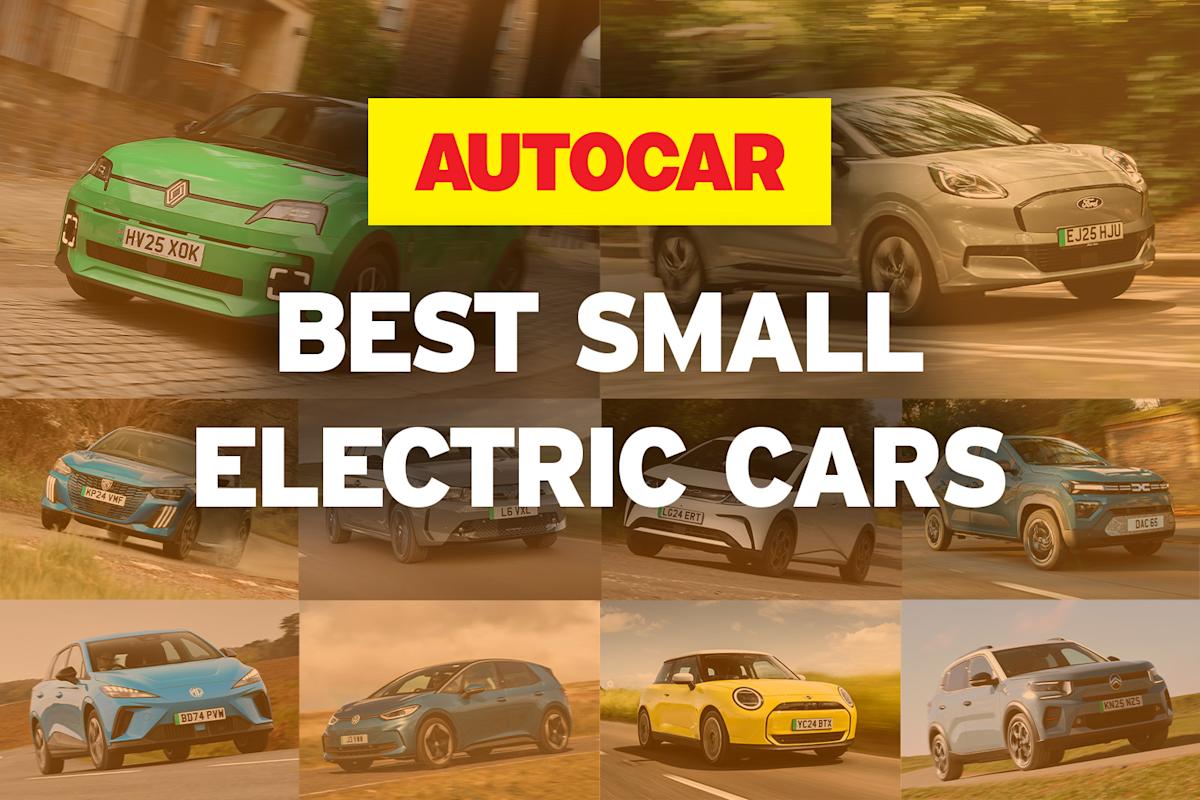
But which other models should you add to your shortlist? Check below for the models we think are the best small electric cars on sale in the UK today. While most focus on range and comfort, some cater to driving enthusiasts.
1. Renault 5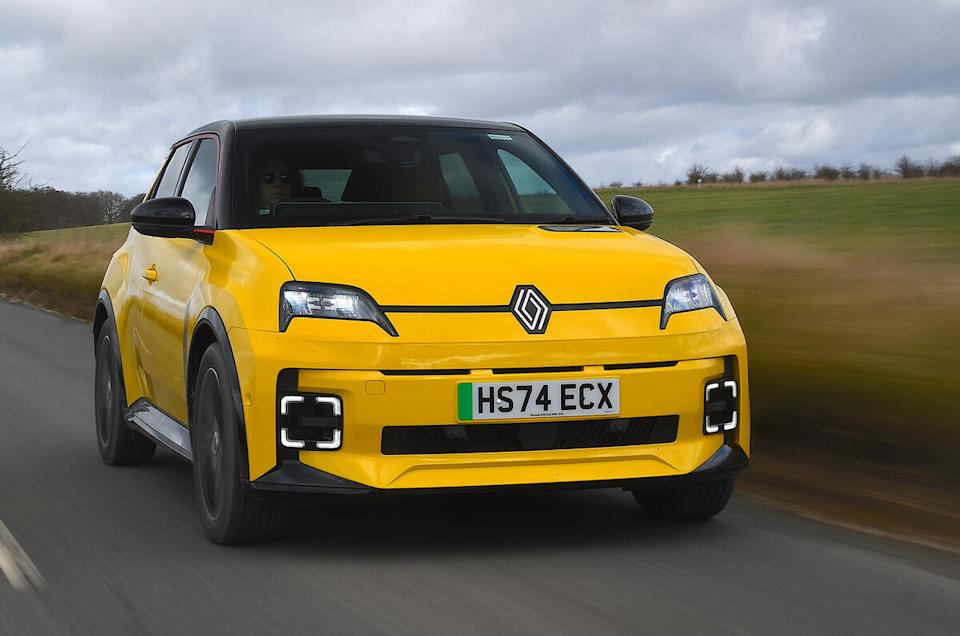
Best for: Driving dynamics
The best small electric car money can buy today is the class-leading Renault 5.
Not only does it look great with its retro styling, but it’s also excellent in several key areas that its rivals can’t match.
Power stands at 148bhp, but while that’s enough power, straight-line speed isn’t where the 5 particularly excels. Its talents range from its fluid, dynamic handling to its supple ride quality, which beats out the Mini Cooper E for comfort while remaining fun to drive.
Its interior is also top-notch, with cues from the original 5, strong material quality and eye-catching upholstery and a generally intuitive layout.
If there is anything to complain about with the 5, it’s its efficiency. It’s not awful, but its touring range isn’t as good as we would like it to be for motorway journeys.
2. Mini Cooper E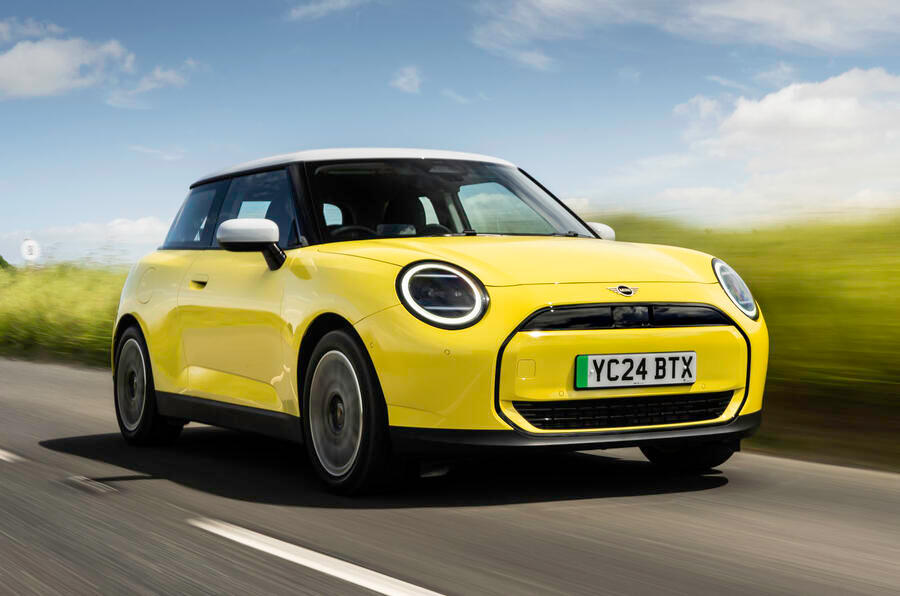
Best for: Style
The Cooper E is the battery-powered small EV we always wanted from Mini, being more refined and offering a better range than its predecessor.
While the old Mini Electric was fun, it was let down by its packaging and its very limited range.
The sleek new Cooper E is more powerful, has a broad choice of batteries and is packed full of usable digital technology from parent company BMW.
The Cooper E is powered by a 181bhp electric motor and uses a 40.7kWh battery that offers up to 190 miles of range, while the Cooper SE gets a 215bhp motor and a 54.2kWh battery for up to 250 miles of range.
This is a more grown-up proposition than the old Mini Electric, offering a far more usable range, faster charging and more premium lustre – and yet the price is very similar.
That said, it’s heavier than before, which is felt in the corners, and it has lost some of the driver reward widely expected from a Mini.
The interior is chock full of premium materials and it’s a lovely place to sit, but the fiddly, unintuitive infotainment may put some drivers off.
Despite those minor qualms, this electric hatchback is up there with the very best in the segment.
3. MG 4 EV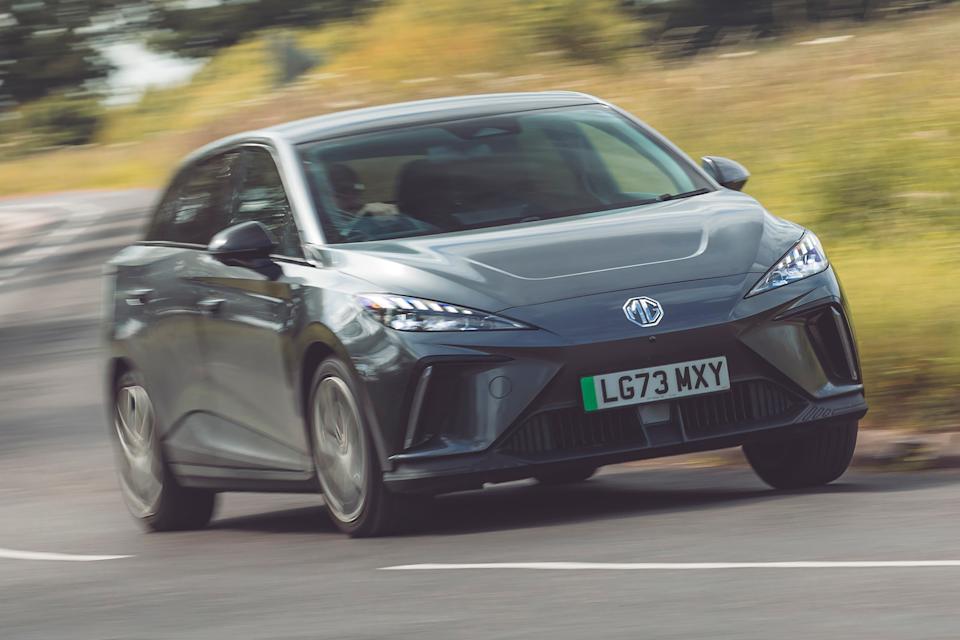
Best for: Long range
Other picks here not affordable enough? Try this. The MG 4 EV is an important moment in the development of MG Motor as a serious car maker.
Since the British brand’s relaunch under the ownership of the Chinese giant SAIC, it has always played the budget end of the market. With the 4, it still does, but with a car that is genuinely impressive in its own right.
This VW Golf-sized hatchback’s rear-wheel-drive layout lets it serve up some real handling thrills while its soft but controlled ride means it’s well suited to rough British roads.
It has a very competitive range and charging figures too, and all for around £27,000 – or £30,000 for the Long Range SE. There’s an Extended Range and a bonkers-fast 429bhp XPower model, but we wouldn’t bother.
You can see some of the cost savings in the low-grade interior materials and slightly haphazard infotainment and driver assistance features, but none of it is egregious enough to seriously detract from how much value for money the 4 offers.
4. Citroën ë-C3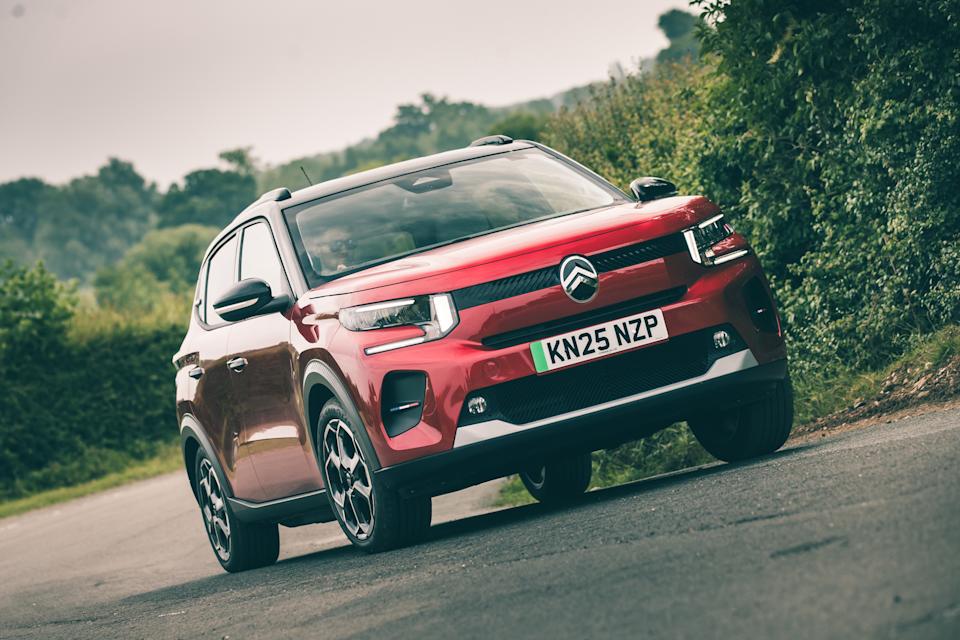
Best for: Compact proportions
Could the arrival of the new Citroën ë-C3 represent a watershed moment in the evolution of the electric car?
It’s certainly got a lot going for it. Priced from less than £22,000, the ë-C3 is one of the cheapest electric cars on sale in the UK.
Energy comes from a 44kWh battery, which offers a claimed range of 199 miles. It powers a front-mounted 111bhp electric motor that allows the ë-C3 to hit 0-62mph in around 11.0sec and a top speed of 84mph.
Although all ë-C3s have a 44kW battery at the moment, a smaller-battery variant may be UK-bound next year and priced nearer to the £15,000 Dacia Spring.
The ë-C3 could hardly be easier to drive and is packed full of usable standard kit.
Downsides? Its range of 199 miles might not be quite enough for some drivers, and while it’s fairly comfortable, it’s not the most dynamic car to drive, with numb steering.
5. Vauxhall Corsa Electric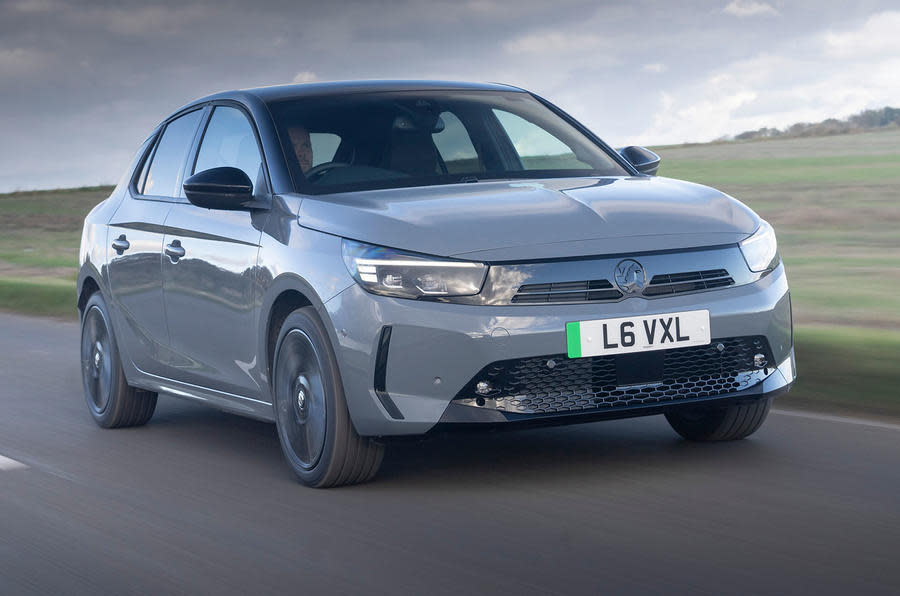
Best for: Dealer network
Vauxhall’s electric Corsa is one of the most appealing small EVs on sale, thanks to its low price, decent range and fast charging speeds.
Early versions were a little behind the technically related Peugeot e-208 on range, but an update that added a taller final drive ratio and a standard heat pump lifted the range from 209 to 222 miles – and now a battery capacity hike and a new electric motor have lifted it again, this time to 246 miles.
The Corsa Electric’s facelift also brought with it a thoroughly revised front end and a new multimedia system.
It might be a little plainer than the e-208, but to our eyes it still looks handsome enough, especially in its latest form.
The driving experience combines a genuine 220-mile everyday range with keen and competent handling and a comfortable ride, while 100kW DC rapid-charging compatibility as standard should be a selling point too.
Vauxhall also has purchase incentives such as free home charger installation and access to a special home energy tariff.
The brand’s large UK dealer network and desire to offer some decent discounts have helped to make this one of the UK’s best-selling EVs, converting people who hadn’t previously considered electric motoring. .
6. Dacia Spring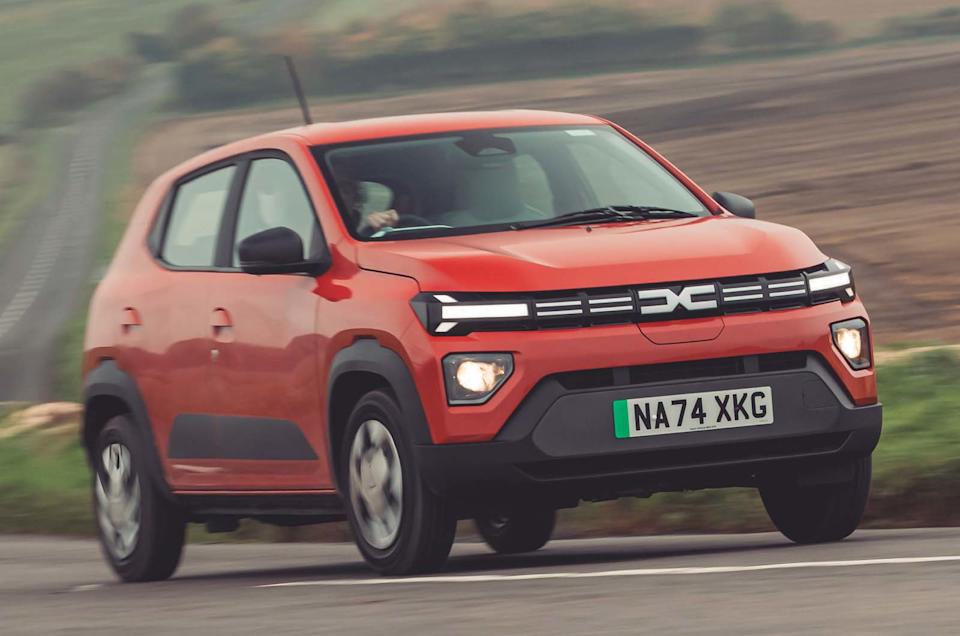
Best for: Value
The little Dacia Spring is the UK’s cheapest full-size electric car, with prices starting from under £15,000.
It also comes close to being the UK’s cheapest car overall, the Dacia Sandero and Kia Picanto being the only cars that undercut it.
Entry-level models are powered by a puny-sounding 44bhp electric motor, which hits 0-62mph in a leisurely 19.1sec.
The slightly pricier 64bhp variant reduces that to 13.7sec. Again, that might not sound all that quick (and it isn’t), but it’s about as quick as a 1.0-litre Volkswagen Up.
Both models are equipped with a 26.8kWh battery, which is good for a claimed 137 miles of range overall or 186 miles with some careful city driving.
Equipment levels are good too, with a 7.0in touchscreen, electric windows, cruise control and rear parking sensors included as standard.
7. BYD Dolphin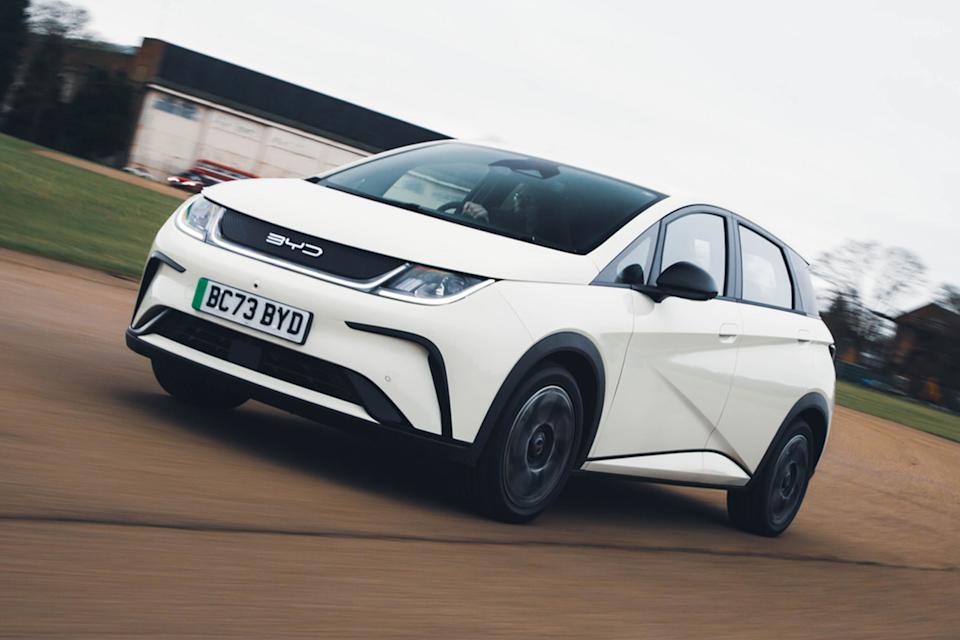
Best for: Equipment levels
If you are after value for money, particularly for an EV, the incoming Chinese car manufacturers are a good place to start.
The latest company with big plans for Europe is BYD, which is rapidly building a full range of electric cars, including the Dolphin supermini.
The Dolphin is by no means the best car on this list, but given it costs just over £25,000, rising to more than £30,000 for the fully loaded long-range version, some of its flaws can be excused.
The handling is quite woolly and the leatherette is a bit naff, but the main problem of all BYDs is that the infotainment system is infuriating.
Even though the touchscreen is huge, it hides important settings in deep sub-menus and doesn’t integrate with phone mirroring very well.
However, you get all the equipment you could possibly wish for, the ride is fairly plush and real-world range of comfortably over 200 miles is not to be sniffed at.
The Dolphin is also a tad larger than the other cars on this list, so it offers more interior space as well.
8. Volkswagen ID 3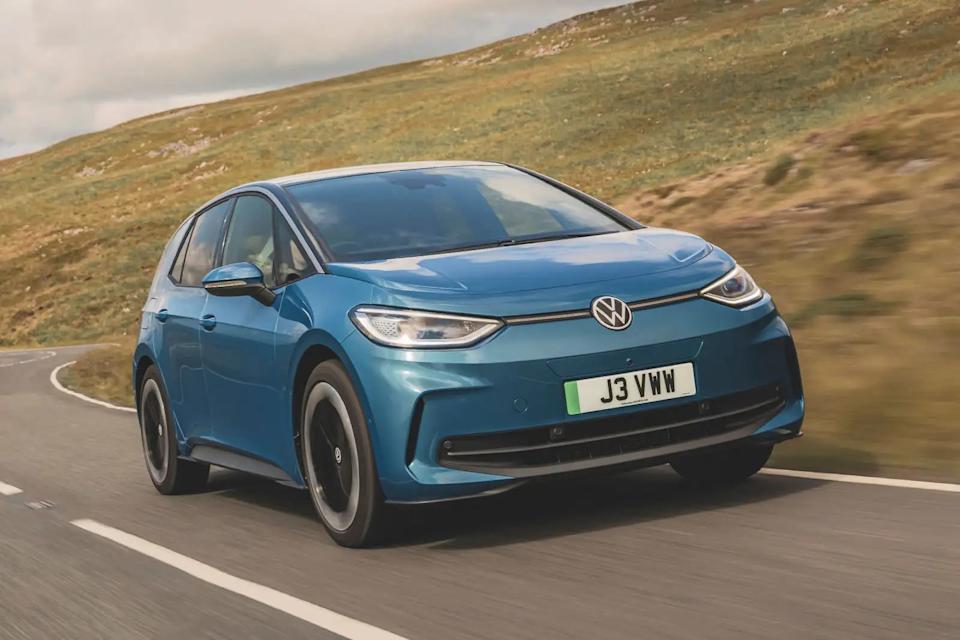
Best for: Refinement
While the ID 3 managed to secure plenty of sales from the off, it was plagued by issues that dented its progress in becoming a true Golf successor.
Early cars were afflicted by a poor infotainment touchscreen and a complex model line-up, not to mention the cabin that lacked material richness.
Volkswagen sought to assuage these faults by treating the ID 3 to a much-needed facelift, with the hatchback gaining a more eye-catching front end, a simpler model line-up and an uplift in material quality inside.
The touchscreen was also given a big overhaul, and it’s far easier to use than the one fitted to its predecessor – although the heating controls that sit below it are still touch-sensitive, as are those on the steering wheel.
The ID 3 range now includes the 52kWh Pure, 58kWh Pro and 77kWh Pro S, with the last of those promising up to 345 miles of range.
Prices start from around £30,000 , with the most expensive model being the sporty 322bhp GTX.
As for the drive, there’s little to dislike. It doesn’t engage you like the technically related Cupra Born, but the steering is agile enough and it’s very easy to pilot in town and manoeuvre around car parks. And much like in the Golf, ride quality remains intact, even for a heavy compact car with big wheels.
9. Ford Puma Gen-E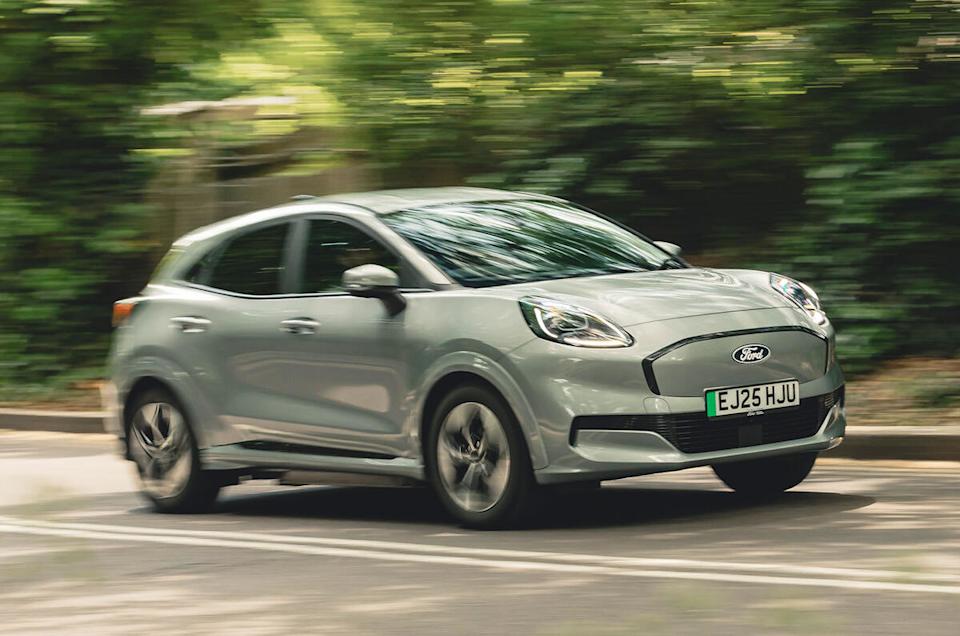
Best for: Boot space
While it’s not quite at the top of our list, the Ford Puma Gen-E might just be the most important, not least because it brings some genuine driver engagement to the class.
This is the all-electric version of the UK’s best-selling car, and it’s Ford’s second crack at an electric car that has been developed fully in-house, following the Mustang Mach-E (the Explorer and Capri were both co-developed with Volkswagen).
Energy comes from a 43.6kWh battery, which drives a 166bhp, front-mounted electric motor. According to Ford, you will get around 233 miles of range on a charge.
10. Peugeot e-208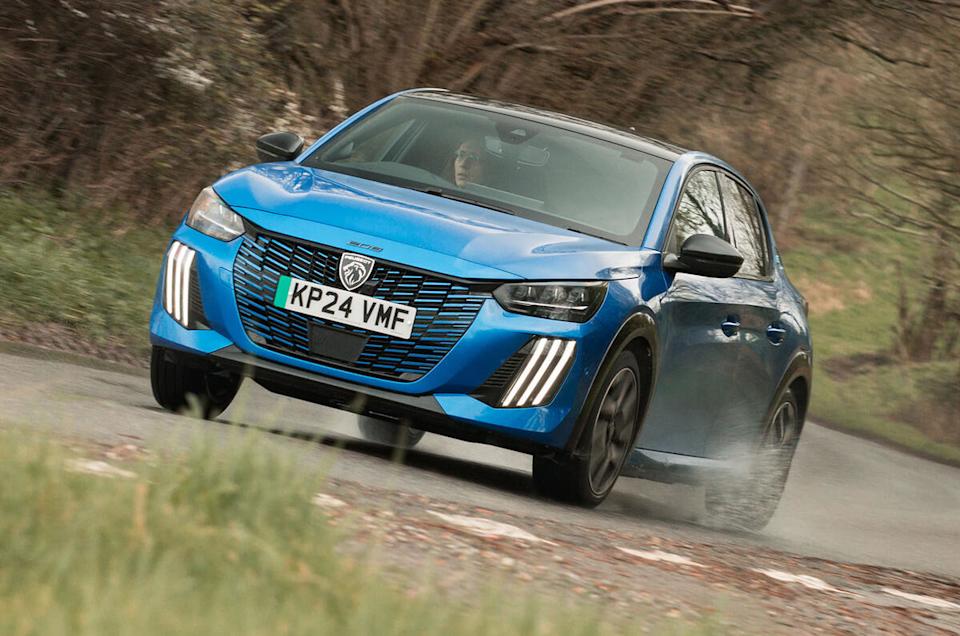
Best for: Its pleasant interior
As a traditional combustion-engined supermini, the Peugeot 208 doesn’t do an awful lot to stand out from the crowd.
However, in an electric guise, it makes good use of its genuinely usable range, good performance, practicality, style and perceived quality.
There are some flaws, such as its high entry price, its disappointing interior and a confusing powertrain and trim line-up.
But its steering is striking for its directness, although body control deteriorates a little if you drive more enthusiastically.
All that said, it’s largely the same as the Corsa underneath – but significantly more expensive. A style pick over sense, perhaps.
]]>