Van Rysel’s new concept bike, tauntingly called the FTP^2, grabbed headlines when it was revealed at the Velofollies bike show on Friday. Because that’s what it was designed to do. It’s a wild looking, intentionally provocative ebike. But a closer look at Van Rysel’s beast does actually hint where the future of bike design is going. Some of it is surprisingly practical, adding some form in with the folly.
Here’s a few hints and confirmations of where the bike industry is going. Whether consumers are driving this direction or being dragged along by brands is… up for debate.
Brands are all-in on smart design and integration…
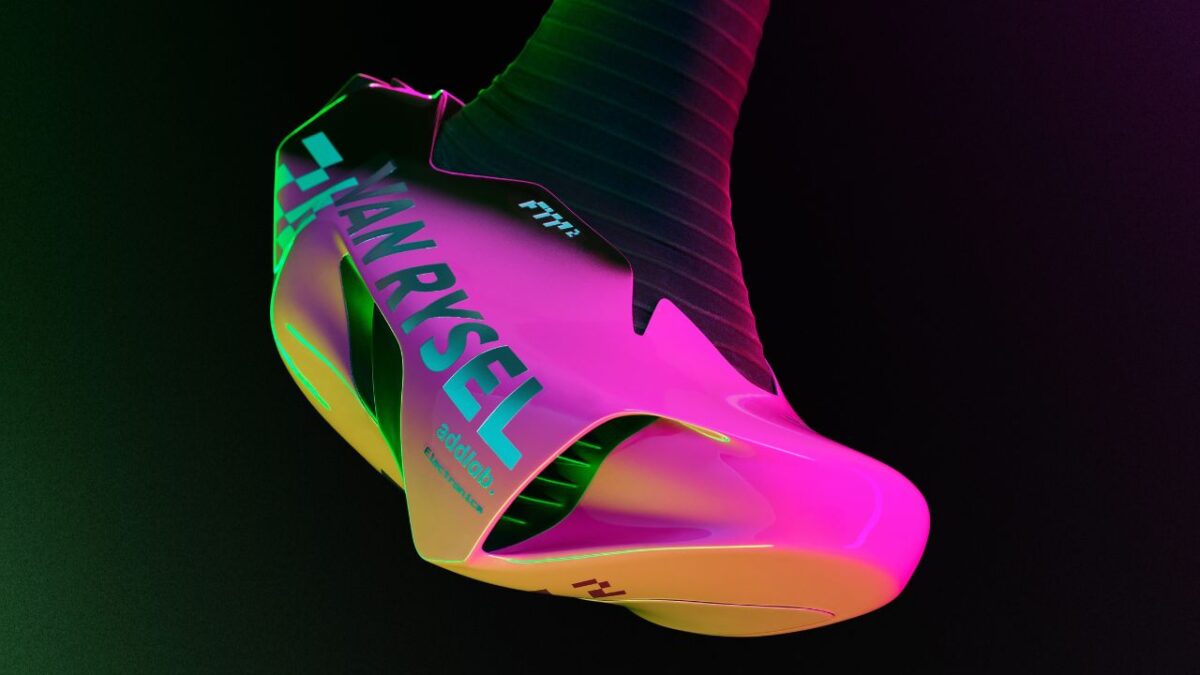
… consumers be damned. Now, there’s good integration and bad integration. I’m quite confident that no one, even at the highest levels of the sport, needs batteries to micro-adjust their shoe laces via handlebar remotes. No one. Even in the most urgent race finish, we’ve all seen riders find the time to reach down and tighten their shoes. So, what benefit does this actually serve, other than showing off that it’s possible to do?
On the other end of form vs function, Van Rysel integrated lights into the FTP^2’s frame.
It all shows how myopically focused brands are – and this is in no way limited to Van Rysel – on adding more electronics to the simple experience of riding a bicycle. That these shoes are so focused on aero gains that they’re directly mounted to the pedals is a different story. There’s very obvious reasons why that will always remain a concept design. But bike brands have batteries to weirder places for more mundane reasons in recent years, so that is something that could move forward, if on a less wild shoe. Or shoe/pedal. Whatever that is.
Someone is actually taking rider safety seriously
For years, riders have asked race organisers to take safety more seriously. That chatter has ramped up recently as every year seems to see a new record average speed for the biggest races, and every crash seems to see more riders more seriously injured.
Instead of waiting for the UCI to act, Van Rysel worked with Jonathan & Fletcher workshops to integrate motorcycle-standard anti-abrasion materials and protective padding to the skinsuit.
It wasn’t the only moto-inspired skinsuit on display at Velofollies, either. A micro-airbag system, called Aerobag, showed off a C02 powered skinsuit that it says World Tour team Picnic PostNL will be wearing in races soon. This sort of technology has long existed in MotoGP and, for different reasons, backcountry skiing. It was only a matter of time before it could be made small and light enough for cycling. It can’t come soon enough.
Aero doesn’t have to be complicated
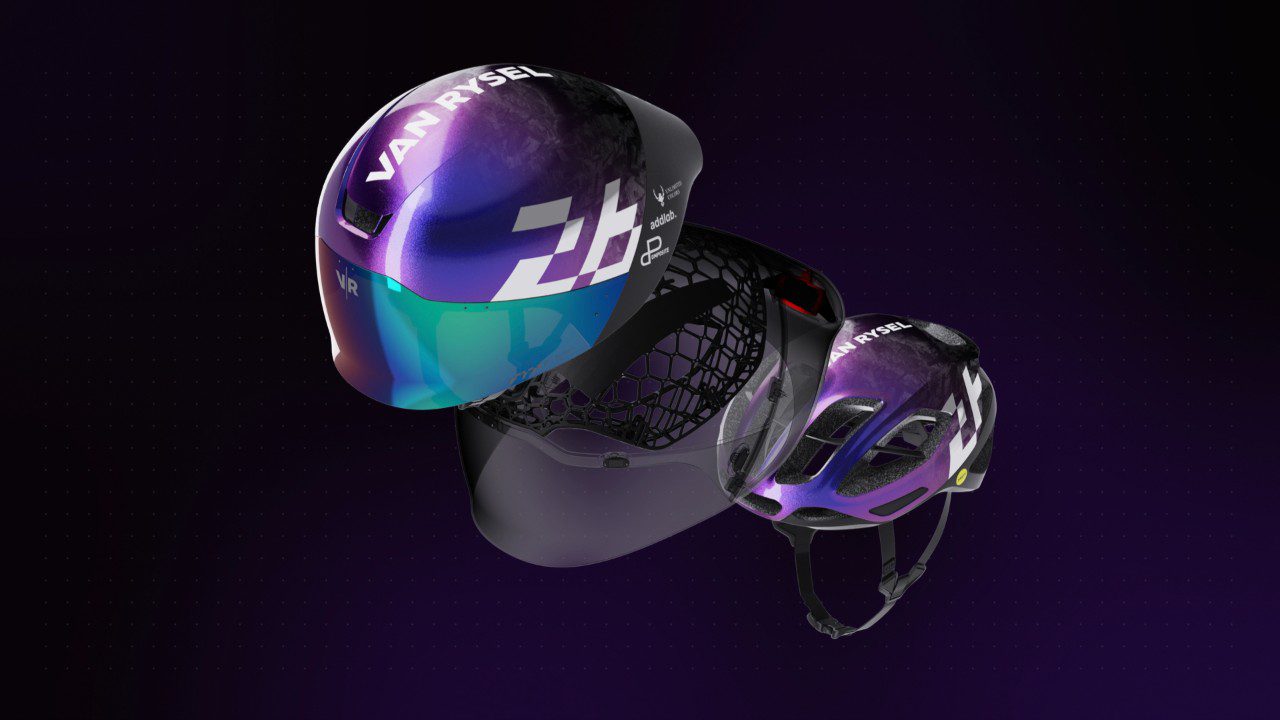
While I’m not always a fan, personally, of the wild aero helmets out there these days, I like Van Rysel’s concept RC-R aero helmet, developed with Swiss Side. Why? Because it’s just a normal helmet. Showing that you can get all the aero gains you want without having to buy a second helmet is practical, smart design.
Sure, the pros get a room full of free helmets, if they need them. But your local junior trying to make it through provincials or nationals? Not so much. If this means that kid has to spend less money to compete against better funded juniors in a TT because they don’t have to buy two helmets, I’m on board. Just like banning TT bikes in junior racing. A 2-in-1 helmet that gives real aero performance lowers barriers to entry in the sport. Not something you’d usually expect out of a high-dollar concept bike presentation, but great to see.
Brands are chaffing at ebike regulations
While the shoes were, uh, eye-catching, the real headline was at the BB. Van Rysel designed this bike around a Mahle M40 motor system. It is is usually used in mountain bikes. It is usually restricted to, depending on your location, 32 km/hr. Not this one. Van Rysel and Mahle worked together to make the frame capable of safely handling speeds up to 100km/hr, and to make the M40 capable of getting the FTP^2 (and a rider, I guess) getting up to that speed.
That’s obviously well above the regulated maximum speed for ebikes. Van Rysle’s quick to cover its ass by saying this is “not intended for commercialisation.” But it’s a big turn in attitude for a brand to not just admit, but show off what the motors in all these e-bikes are actually capable of.
If there’s one thing that I’ve learned from covering the development of eMTB over the last 10 years or so, its that e-bike brands only advertise a capability like that if they want to sell it. And if they think they can get around regulations enough to get some form of it to consumers. Look at the introduction of DJI Avinox system last year. It offers 1,000W of power and 105 Nm of torque. Staggering numbers that it is only allowed to sell to consumers by exploiting a legal grey zone around peak power vs continuous power output.
Swinging back to road bikes, it is entirely understandable that brands, and probably rides, are chafing at the 32km limit on eRoad bikes. After all, even a mid-level group ride can average near 30km/hr on road bikes already. So what’s the point of the motor? I don’t know how Van Rysel and other brands will get around the hard limit on assist above certain speeds. The FTP^2 shows that they want to. Ebike hate is so very tired and out of fashion these days. But if brands do find a way around that limit it could be a problem for all of us.