Electric utilities are taking a leading role in addressing the daily affordability of electric vehicles (EV), offering direct-to-consumer subsidies and other incentives at a time when the federal government has pulled back on initiatives to bring down the cost of the vehicles.
Companies in California are planning to launch programs that would make funding available for needy households to use public EV charging networks. Meanwhile, an electricity provider in the state’s Bay Area is helping to subsidize its customers in their purchase of hundreds of electric bikes (e-bikes).
“This supports our mission to deliver clean and affordable energy by reducing the financial barriers to EV charging,” Jeff Monford, senior adviser for Corporate Communications at Edison International, parent company for electric utility Southern California Edison (SCE), said. Doing so, he added, “is the same thing as reducing the barriers to EV adoption.”
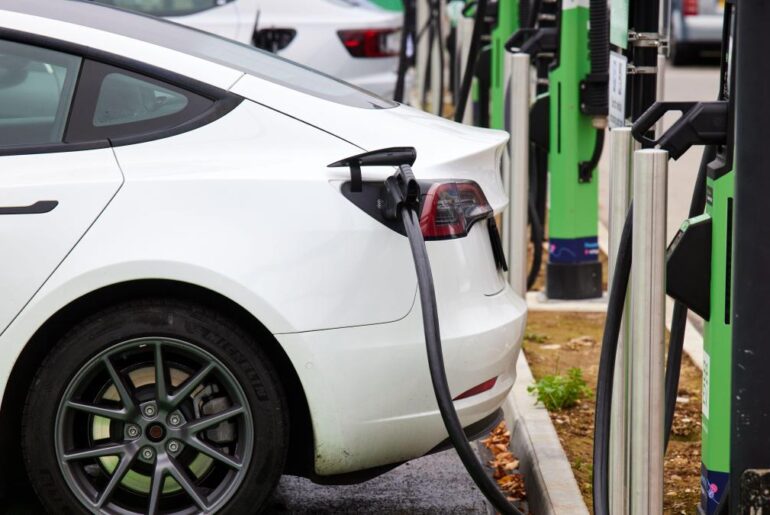
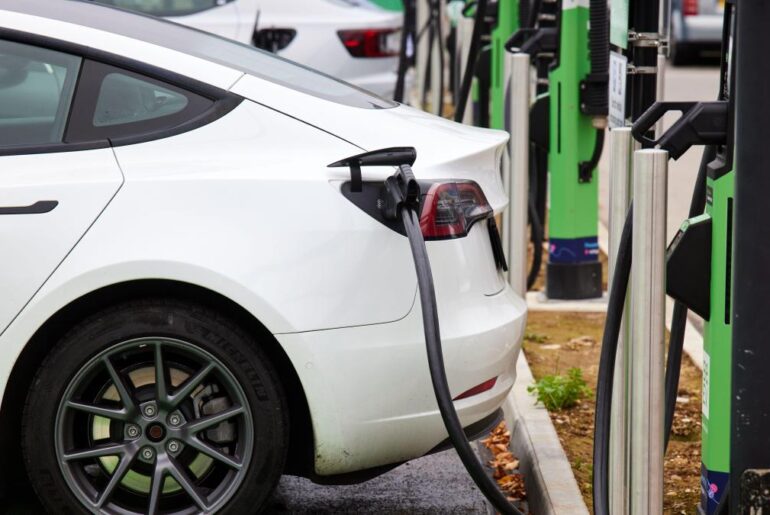
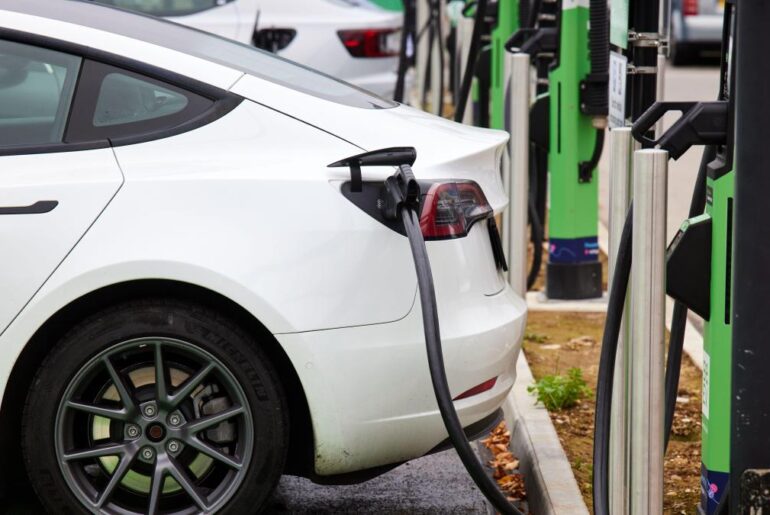
SCE, in partnership with San Diego Gas and Electric and Pacific Gas and Electric, will launch a program later this year making pre-loaded debit cards available to income-qualifying households that can prove they do not have access to home EV charging. The debit cards would provide $50 a week, up to $2,600 a year, to be used at public charging locations.
The income qualifications align with SCE’s Pre-Owned EV Rebate credit program and are based on enrollment in public assistance programs like Medi-Cal — the state’s version of Medicaid — or the CalFresh food assistance program, among others.
The program will work in partnership with utility providers in the Bay Area and the San Diego metro region, making millions of low-income households eligible for the $21.8 million, three-year initiative.
In Northern California, Ava Community Energy, a nonprofit electric utility serving about 600,000 customers in Alameda and San Joaquin counties, has issued 9,400 rebates to San Joaquin customers who purchased e-bikes. Rebates start at $400 and can reach $1,000 for income-qualified participants. Rebates for electric cargo bikes bring a higher return; they start at $900 and reach $1,500 for needy qualifiers.
So far, about 2,750 rebates have been redeemed, Lisbeth Gallegos, a marketing associate at Ava Community Energy who heads up the program, said.
“Participants report using e-bikes not just recreationally, but for everyday transportation, such as commuting, errands, and replacing short car trips, helping make biking more accessible and reducing car dependence,” Gallegos said in an email.
The EV bike rebate program launched in June, and more than 14,900 residents applied. Roughly 22 percent of those who did have been qualified based on their income. Funding is still available, and Ava intends to continue the program through December, as part of a longer-term transportation and emissions-reduction strategy, with the final random drawing currently planned for September.
These programs and others center on addressing the affordability of EVs, targeting their overall cost of ownership, a strategy advocates and policy leaders have offered as an updated talking point as the EV movement stalls or retreats in the U.S. in the face of diminished federal support.
California, the state with the largest share of EVs on the road, hopes to blunt any slowdowns in their adoption by its nearly 28 million drivers. Gov. Gavin Newsom’s latest proposed budget would allocate $200 million for EV incentive programs, largely targeting the light-duty market, a move that received mixed reviews from advocates.
“On one hand, the one-time commitment to support electric vehicle incentives for light-duty drivers is welcome, as it helps offset the lack of federal incentives. On the other hand, the budget falls woefully short when it comes to incentives for zero-emission trucks, buses, and community mobility options,” Michael Berube, CALSTART CEO, said in a statement.
The governor’s budget, Berube said, “effectively zeros out” $750 million in discretionary funding to support clean-transportation programs.

Skip Descant writes about smart cities, the Internet of Things, transportation and other areas. He spent more than 12 years reporting for daily newspapers in Mississippi, Arkansas, Louisiana and California. He lives in downtown Yreka, Calif.
See More Stories by Skip Descant