Joseph Conrad called colonial ventures in Africa “the vilest scramble for loot that ever disfigured the history of human conscience”. After reading this book you might want to add the words “until now”. Nicolas Niarchos exposes how the metal cobalt gets from the mines of the Democratic Republic of the Congo to the battery factories of China and into the electric vehicles that purr along our streets — and who profits.
That surname, Niarchos, might ring bells. Nicolas is the son of the billionaire Greek shipping magnate Spyros Niarchos and the socialite Daphne Guinness, whose grandmother was the fascist Diana Mitford. A work of gritty investigative journalism is not what you might expect.
Niarchos, though, has earned his stripes. He is a respected investigative journalist for The New Yorker, and has taken real risks with this book — it includes a bum-clenching account of his detention by the Congolese secret police.
The book is a serious exposé. Yes, it is no secret that the DRC is corrupt, that children labour in its mines, that business can be rapacious. As for electric cars, sceptics have been claiming for years that they are less environmentally friendly than gas-guzzlers, given their polluting production and the swift obsolescence of their batteries.

What makes this book worthwhile is the detail and quality of the reportage. Niarchos traces the webs of multibillion-dollar international deals that enmesh Congo’s cobalt mines and juxtaposes this material, painfully, with boots-on-the-ground descriptions of Congolese lives.
At the heart of the book he puts a single “artisanal miner” or creuseur — one of those modern-day misérables who dig cobalt with little more than a sharpened steel rod. Odilon Kajumba Kilanga is “a laconic man, rail thin, with the type of largish head that suggested nature had intended him for corpulence, even if circumstance had conspired to keep him slender”. (The writing is very good, if very New Yorker.) His father — “the best father in the world” — wanted him to get an education, but he died of malaria and typhoid, and the mines were his son’s only option.
The worst thing, Kajumba told Niarchos, were the nightmares. Collapses. Metal-poisoned children. Twelve-hour shifts in the dark. And little to show. He invited Niarchos to his single-room home with embarrassment. It contained an old TV, a hanger for clothes, shampoo, toothpaste and a toothbrush. And a single bed, which he shared with two other diggers.
• Read more book reviews and interviews — and see what’s top of the Sunday Times Bestsellers List
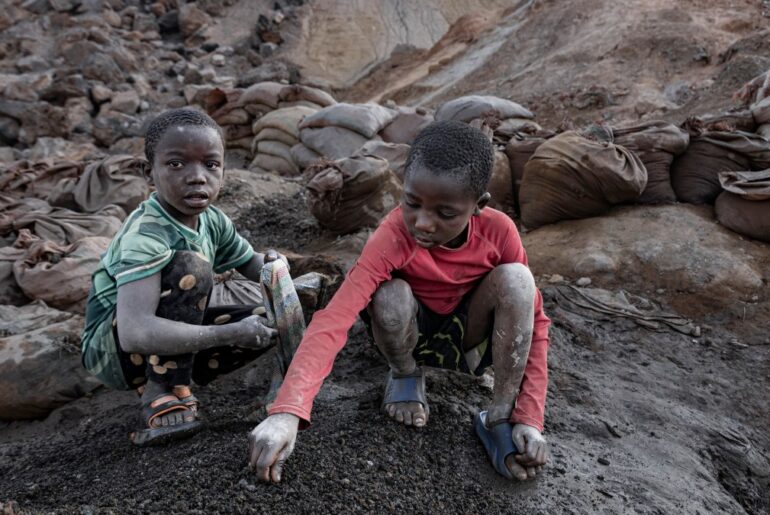
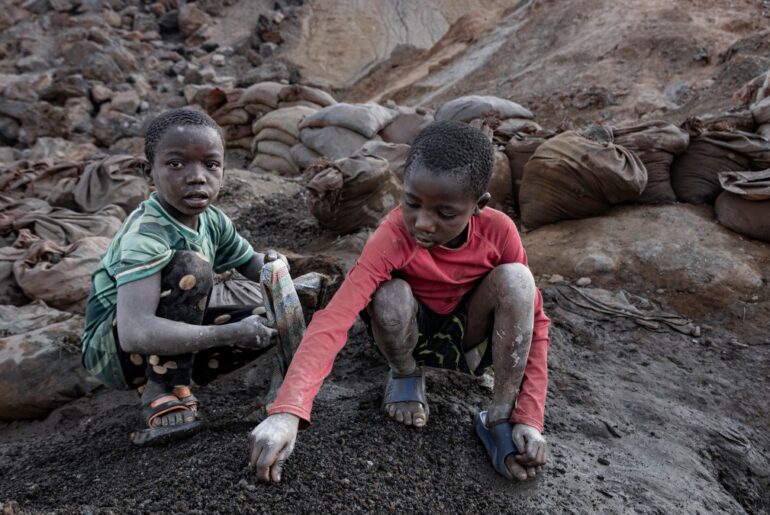
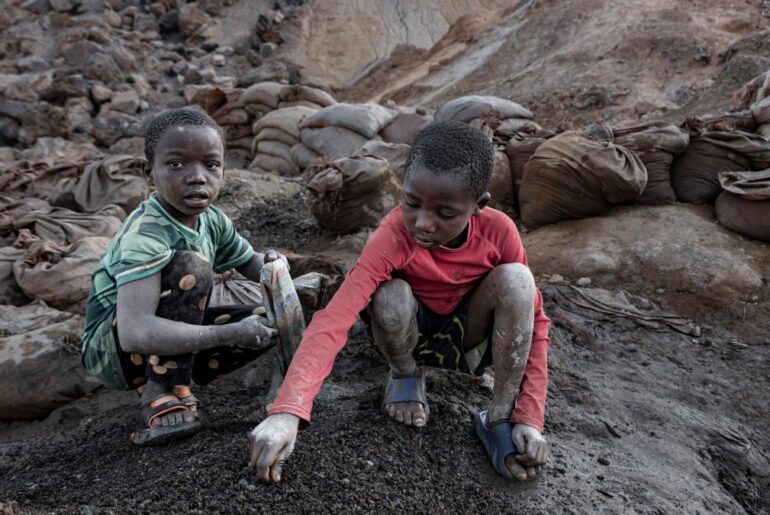
Niarchos visited Congolese mines — formal ones and “makeshift shafts dug into the red earth of people’s back gardens”. In a Chinese-owned mine, he saw workers without helmets, goggles or even shoes. They used cut-off half jerricans to haul ore. He interviewed former child miners and heard how they were given drugs to suppress fear and hunger. He heard that some miners believed that sex with a virgin makes you lucky. Some of them raped young girls.

Miners working at the Shabara artisanal mine in the Democratic Republic of the Congo in 2022
JUNIOR KANNAH, AFP
Reporting from the DRC can be fraught with danger. Niarchos drove along the cobalt highway, along which endless lorries haul ore to Zambia and South Africa on their way to China. At a checkpoint, a lorry crashed into his car. The driver stumbled from his cab and asked Niarchos if he wanted to go and smoke a joint.
Less farcical was his arrest by the Congolese secret police. An attempt to meet and interview the Congolese warlord Gédéon — reputed to be a cannibal — turned out to be a sting, and Niarchos was driven away by Kalashnikov-carrying soldiers. He was incarcerated, interrogated and threatened with death. Taken on a flight to Kinshasa, he managed to covertly scribble a note on a page from a paperback and pass it to a stranger, asking them to alert the US embassy. After a week of detention in a mosquito-infested cell he was deported — but not before all his computer files were deleted and his laptop taken away.
The book’s parallel story of the mining and battery business is, if anything, darker. Niarchos dives into back-alleys of detail, covering everything from Congolese colonial history to the chemistry of lithium-cobalt-oxide batteries and the etymology of the word cobalt. (It comes from the “kobold”, a goblin-like creature that German smelters blamed for making their silver impure.)
The result can be bewildering. A huge cast of characters includes corrupt Congolese politicians, megalomaniac Chinese entrepreneurs, CIA agents, scholarly battery scientists and billionaire mining investors. They all swirl about in a murky capitalist soup.
• Inside the mines fuelling Congo’s brutal war — and the world’s tech
That said, some do rather stand out. Augustin Katumba Mwanke, for instance — the éminence grise of Joseph Kabila’s regime, who was killed in 2012 when his plane slid off a Congolese runway. Or there’s the Israeli investor Dan Gertler, who leveraged his friendship with Kabila, later Congo’s president, and became a billionaire on the back of a web of mining interests. Niarchos carefully notes that Gertler has denied paying bribes in Congo.
Equally compelling is Wang Chuanfu, the founder of the Chinese electric car giant BYD. He grew up in grinding poverty before getting into battery production — building his company’s success by copying Japanese technology while driving down costs. It is striking that the name didn’t stand for anything at first, except, it was joked, “brings you dollars”. Now they say it’s for “build your dreams”.
BYD is a case study in how China has managed to outcompete the West, dominating the battery market and cobalt supply chain alike. State-enmeshed corporations such as Wang’s are crucial, along with the Chinese government’s “mutable and pragmatic” policies. So are the small-scale Chinese entrepreneurs who work all over Congo — all over Africa. Niarchos compares them to the wildcatters of the American gold rush.

BYD’s founder Wang Chuanfu
YUAN CHEN/VISUAL CHINA GROUP VIA GETTY IMAGES
The result is that China does not just own many of Congo’s cobalt mines, which produce almost three quarters of global supply, it is involved in every aspect of the battery supply chain. It extracts much of the value. If that sounds colonial, it is. So is the Chinese rhetoric about how wonderfully it is helping Africa to develop. So is the endemic racism towards Africans.
Western companies, by contrast, have found it too difficult or risky to invest in countries such as Congo. With a few exceptions — notably the controversial Anglo-Swiss mining company Glencore — the western corporate strategy has been to “let China do the dirty work and then reap the profits further down the chain”.
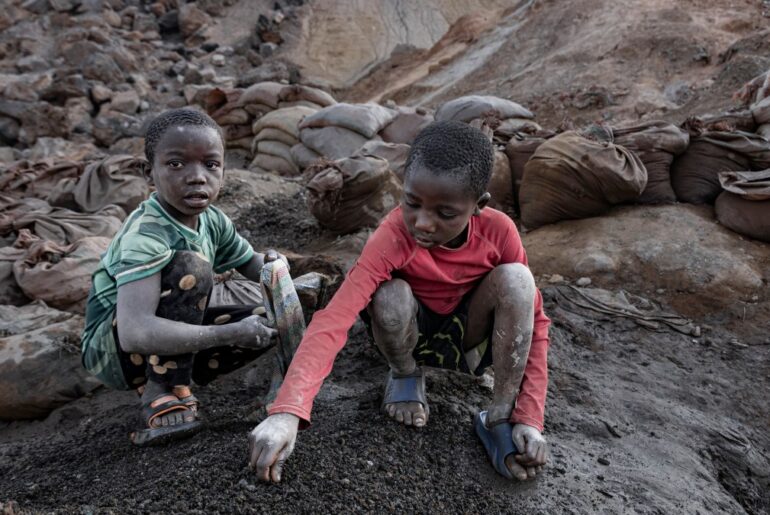
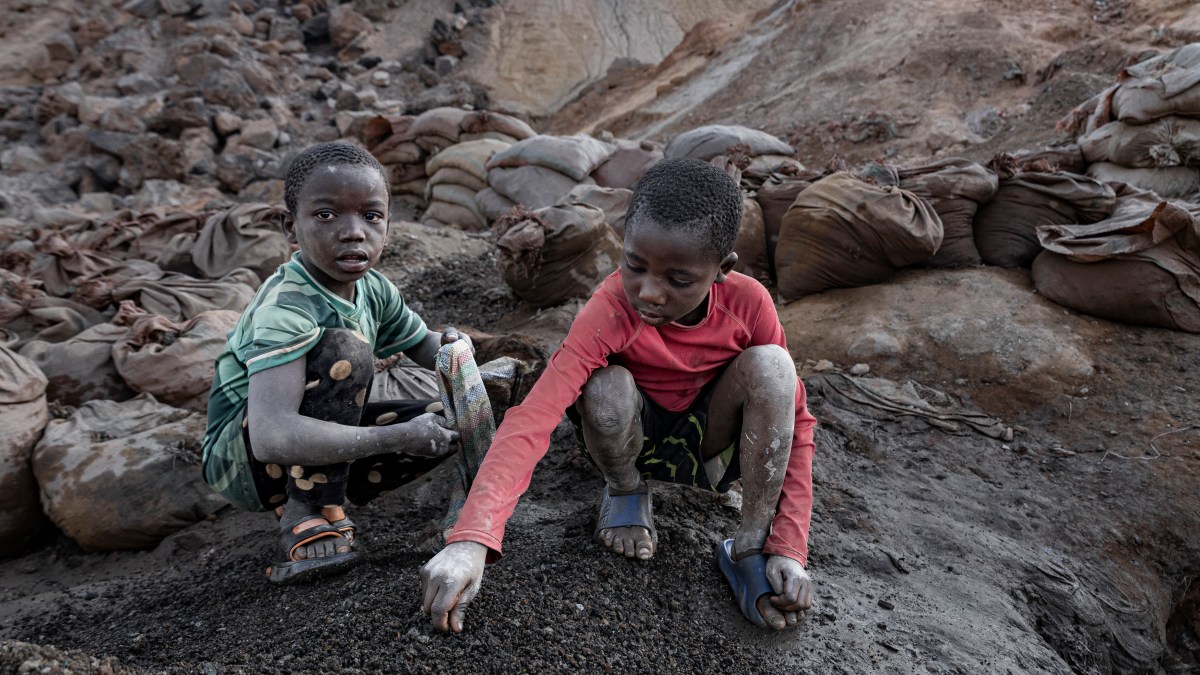
Niarchos uses Elon Musk to illustrate this disconnection. The Tesla boss responded to complaints about child labour by promising to put webcams in cobalt mines. For Niarchos, this just demonstrates his ignorance of the issues. Children mostly work above ground as porteurs or ramasseurs, carrying the ore in plastic sacks on their backs or picking through slag. There may be hundreds of thousands of them. No one really knows.
US disengagement, however, may be ending. Niarchos concludes with the US efforts under Joe Biden to build an alternative cobalt supply chain and research new kinds of silicon or sodium-based batteries.
Or there’s the old way. In June 2025, after this book was finished, President Trump oversaw the signature of a peace deal between Rwanda and Congo. It involved a minerals agreement. Trump trumpeted how “we’re going to take out the rare earth, take out some of the assets, and pay… Everybody’s going to make a lot of money.”
Everybody, presumably, except the creuseurs.
The Elements of Power: A Story of War, Technology and the Dirtiest Supply Chain on Earth by Nicolas Niarchos (William Collins £25 pp480). To order a copy go to timesbookshop.co.uk. Free UK standard P&P on orders over £25. Special discount available for Times+ members