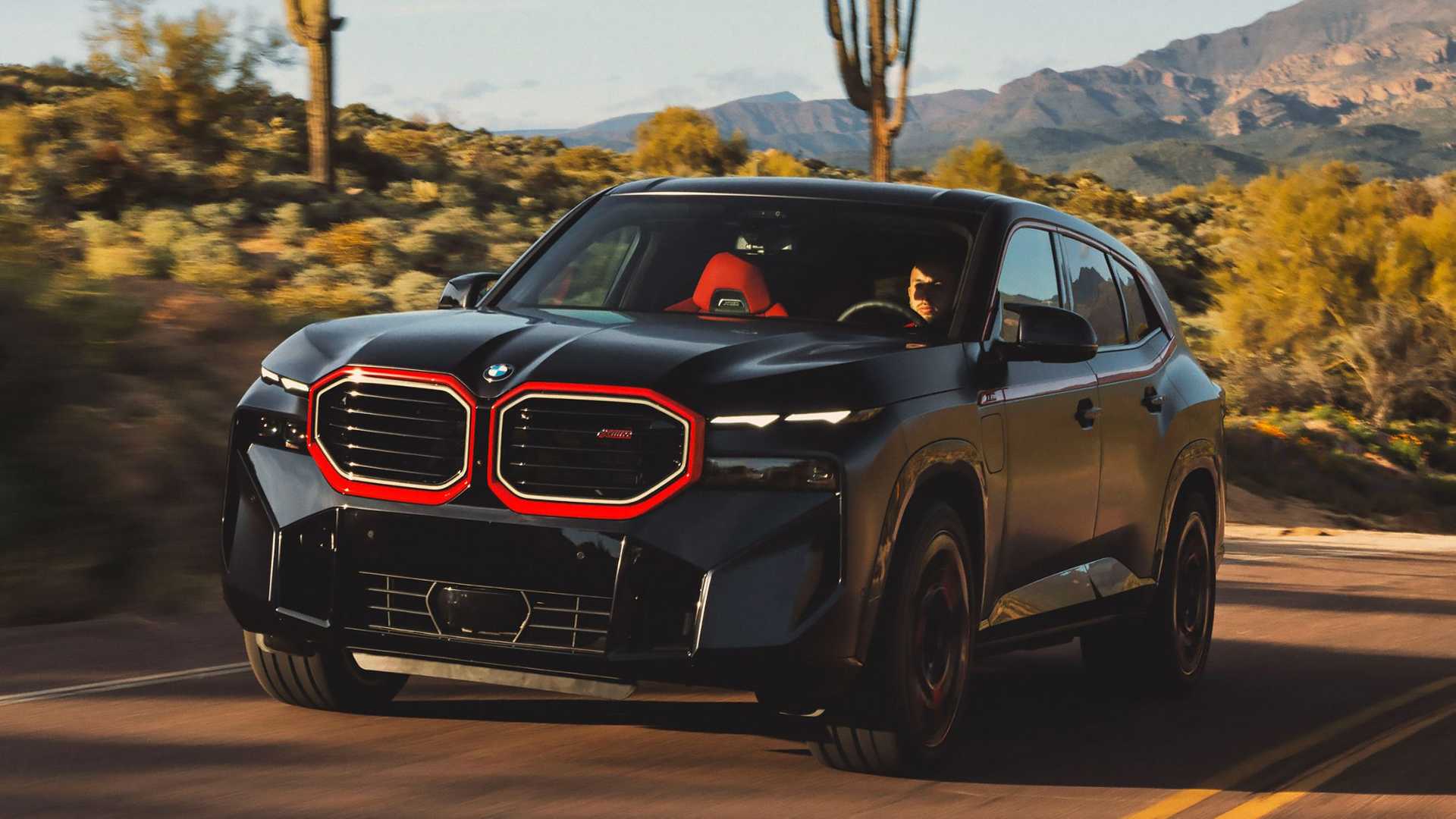
The BMW XM Label is now $25,400 cheaper.
It’s still one of the most expensive vehicles built in America.
BMW sold only 1,878 XMs in the U.S. last year.
BMW robbed us of a mid-engine supercar to build the XM instead, a decision met with immense criticism from fans of the fabled roundel. Sales numbers haven’t been encouraging either, as the plug-in hybrid SUV has consistently sat at the bottom of the rankings. In 2025, only 1,878 vehicles were sold in the United States, where even the Z4 roadster fared better.
Reports of massive discounts have reinforced the impression that BMW is struggling to move XMs off dealer lots. For 2026, the polarizing luxobarge in Label flavor receives a substantial price cut aimed at luring buyers who want something far more striking than an X5 M. It now starts at $159,600 MSRP, making it $25,400 cheaper than before. The new pricing closely aligns with the base XM, which kicked off at $159,000 before being discontinued for the 2026 model year, leaving the XM Label as the sole offering. The six-cylinder XM 50e isn’t sold in the U.S.
Even with the much lower asking price, the electrified brute is likely to remain a tough sell, especially since the X5 M Competition is $28,600 cheaper. It may be down more than 100 horsepower, but it isn’t necessarily any slower, thanks to the significant weight difference between the two. It’s also easier on the eyes than the XM, unless you’re an extrovert looking for something wildly different.

When BMW launched the XM a few years ago, it forecast that the U.S. and China would account for nearly half of global demand. The company hasn’t said whether that projection has come true, but America was expected to be the single largest market with a 26-percent share. China was pegged at 23 percent, followed by the Middle East at 8 percent, with Germany and South Korea at 7 percent each.
The XM was touted as the first dedicated M model since the M1 of the late 1970s and early 1980s. BMW justified prioritizing a gigantic SUV over a spiritual successor to its iconic supercar by citing a shift in demand toward sport utility vehicles. In doing so, it chose to take on the Lamborghini Urus rather than create a focused performance flagship to crown the M lineup.
That decision doesn’t appear to have worked out in Munich’s favor, though sales were never likely to be strong to begin with. The XM was an extremely expensive product from day one, and it remains so even after a substantial price cut. An X5 M offers nearly the same bang for a lot less buck.
Motor1’s Take: We’re curious to see what the future holds for the XM. A second-generation model would need to be radically different to stand a better chance of attracting buyers. A pure V8 setup that sheds weight could improve its odds, while going fully electric would likely be the wrong move, despite BMW’s promises that exciting M EVs are on the way.
A less in-your-face design could also broaden the XM’s appeal, but BMW would still be left with a more expensive alternative to the X5 M. With a second-generation X7 M Performance model in the pipeline, along with a successor to the Alpina XB7, there’s already significant overlap at the top of the SUV lineup.
We want your opinion!
What would you like to see on Motor1.com?
– The Motor1.com Team