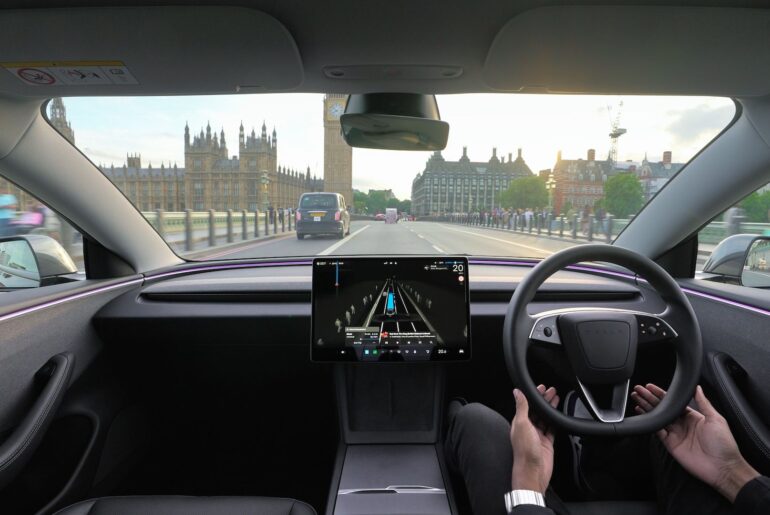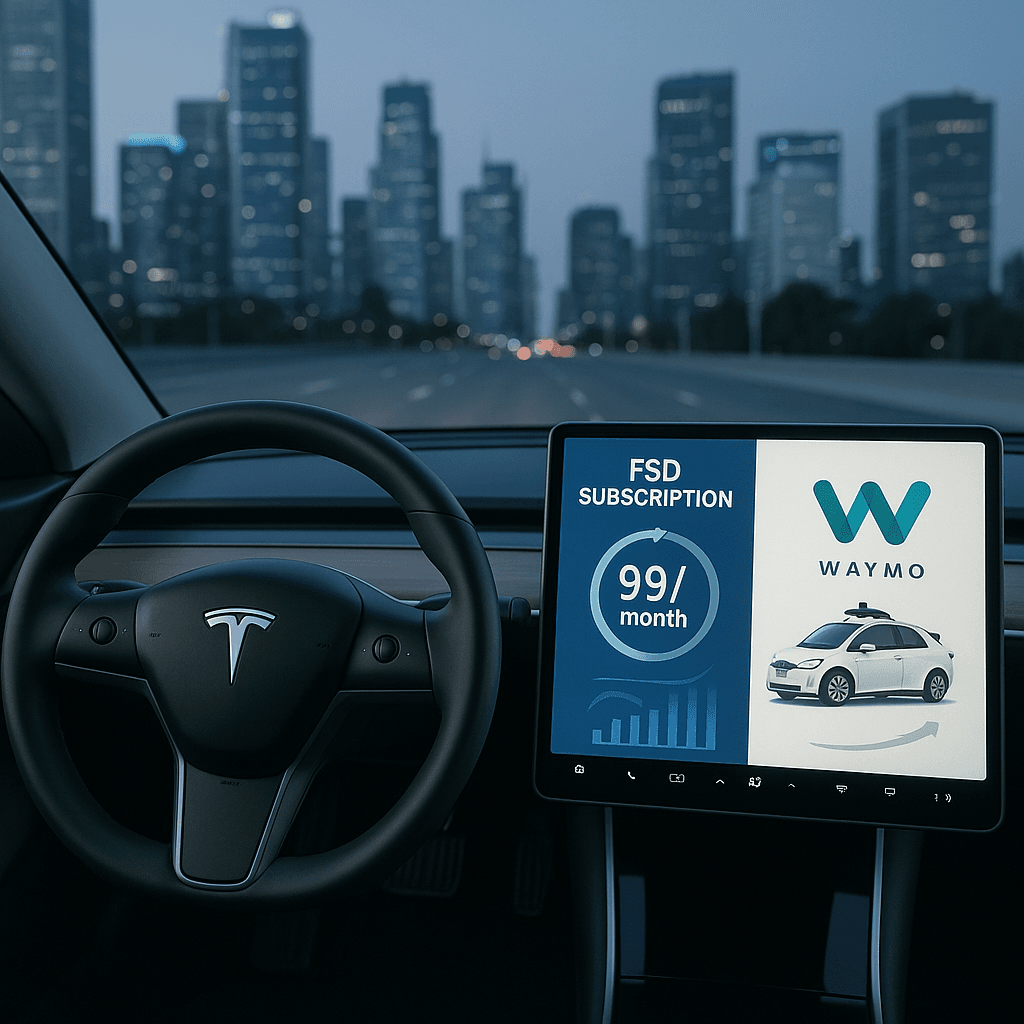
Tesla just pulled the plug on selling its Full Self-Driving software as a one-time $8,000 purchase. Starting February 14th, the system will only be available as a $99-per-month subscription, CEO Elon Musk announced Wednesday. The move signals Tesla’s desperation to establish recurring revenue from autonomous driving as it falls far behind Alphabet’s Waymo, which hit 450,000 paid weekly rides in December.
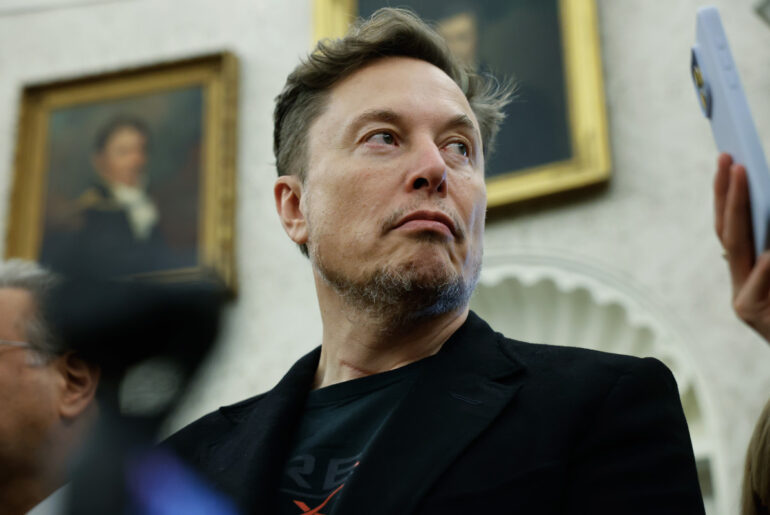
Tesla’s shift to a subscription-only model for Full Self-Driving marks a dramatic pivot in how Elon Musk wants to monetize the automaker’s autonomous driving technology. “Tesla will stop selling FSD after Feb 14,” Musk posted on X early Wednesday morning. “FSD will only be available as a monthly subscription thereafter.” The move eliminates the $8,000 flat-fee option that had been available to buyers willing to commit upfront.
The timing matters. By forcing a monthly commitment, Tesla switches from a one-time transaction model to what the company hopes becomes a sticky subscription business. At $99 per month, the annual cost works out to $1,188 – a fraction of the previous purchase price. But here’s the catch: Tesla doesn’t disclose how many people actively use or subscribe to FSD right now, making it hard to judge whether the subscription push will actually work.
The announcement landed during a particularly rough stretch for Tesla. Stock prices fell 1.8% on the news, closing out a day that reflected broader investor concerns. More troubling for Musk’s ambitions: Tesla’s Q4 2025 deliveries came in at 418,227 units, down 16% year-over-year according to Tesla’s January numbers. This marks the second consecutive annual decline for the EV maker.
But the real pressure comes from elsewhere: Waymo, the Alphabet-owned autonomous vehicle service, is eating Tesla’s lunch. According to investor letters from Tiger Global, Waymo hit more than 450,000 paid weekly rides in December alone. Let that sink in. That’s not a pilot program or beta testing – that’s real, paying customers using a driverless service week after week.
Waymo operates across five major markets: Austin, San Francisco, Phoenix, Atlanta, and Los Angeles. The company plans to expand to several more cities in 2026. Meanwhile, Tesla launched a robotaxi service with very limited availability in Austin, Texas, and offers ride-hailing in San Francisco but keeps a driver in the vehicle. The gap between aspirational technology and deployed service couldn’t be wider.