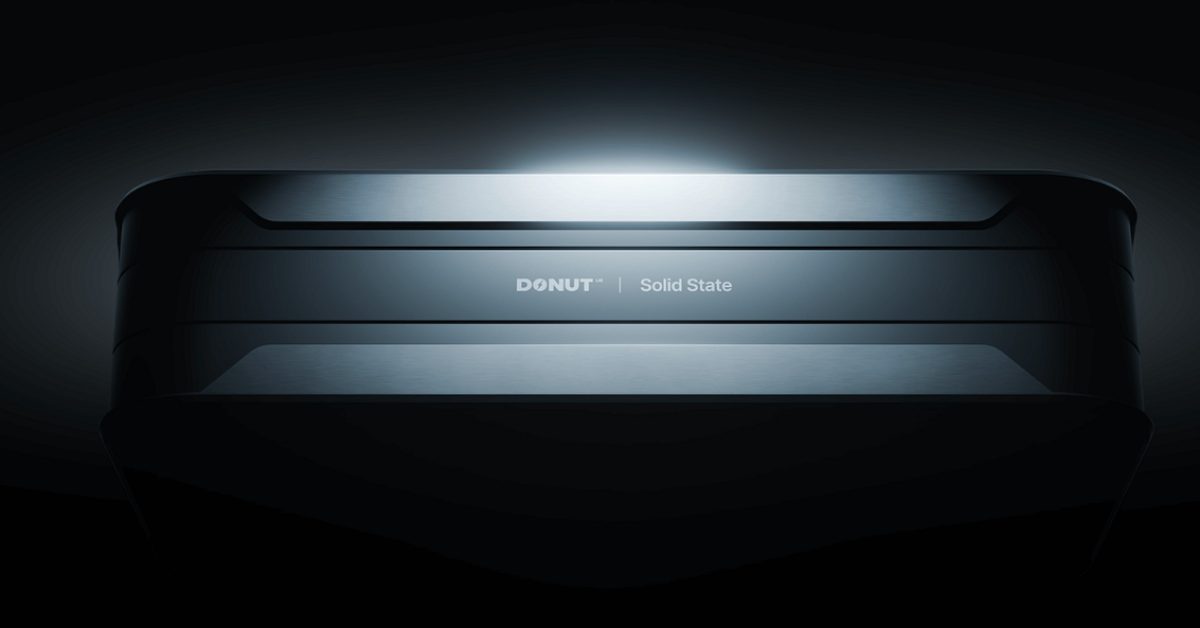
Donut Lab lit the EV and energy storage industry on fire last week with its announcement of a 400 Wh/kg solid-state battery cell that can last for 100 years. At face value, if true, we are looking at the single most disruptive announcement in the history of the electric vehicle industry and energy storage as a whole.
We aren’t just talking about a better motorcycle battery. If the claims of a 5-minute charge, 100,000-cycle life, and ~400 Wh/kg energy density are accurate and scalable, as Donut Lab claims, this is the holy grail of energy storage.
Battery breakthrough announcements generally don’t catch fire like this, but Donut Lab’s did because it said that the cell was already in production and will be in a production vehicle, Verge’s electric motorcycle, this quarter. It gave credibility to the claim, pushing everyone to report on it.
Now, we have interviewed Donut Lab’s CEO and investigated the technology. At this point, it looks like either this battery changes the world within the next 3 months, or it will make the CEO look like a fool. In this article, we discuss the impact of the battery, whether real or not, as well as clues about the secret sauce behind its chemistry.
Advertisement – scroll for more content
The Holy Grail of Energy Storage
Consider the implications. A battery that lasts 100,000 cycles is effectively immortal in human terms. You could charge it every single day for 270 years, and it would still be working. It means the battery outlives the vehicle, not just once, but ten times over. It changes the economics of transportation entirely: you buy the battery once, and you swap it into your next five cars.
The power density required for a 5-minute charge and the 400 Wh/kg of energy density opens the door to commercial electric aviation, a sector currently strangled by the weight and slow charging speeds of lithium-ion. It solves the grid storage problem by offering a medium that doesn’t degrade, meaning utility companies could amortize the cost over a century rather than a decade.
If this is real, the internal combustion engine didn’t just die today; it was buried 100 feet deep, and every other battery is not far behind. But, and this is a massive “but”, extraordinary claims require extraordinary proof, and Donut Lab has yet to release that proof. And that brings us to the man making them.
The Man Betting His Reputation
I spoke with Marko Lehtimäki, the CEO of Donut Lab and Chairman of Verge Motorcycles. My goal was simple: ask him about the chemistry behind his battery and, if that doesn’t work, look him in the eye and figure out if he’s selling vaporware or if he’s sitting on the breakthrough of the century.
Marko isn’t a random guy shouting about a battery breakthrough that will change the world.
He is a legit entrepreneur. A computer scientist who built a no-coding app builder years before “vibe coding” was even a thing and sold it to SAP. After the successful exit, he became an investor and serial entrepreneur with his biggest, or most well-known, company being Verge Motorcycles, which has real products on the road.
By announcing that this “miracle battery” is already in production and will be shipping in customer vehicles within 10 weeks, he is betting his entire personal reputation on this technology. If he misses this timeline or if the specs are fake, Donut Labs and Verge Motorcycles might not survive the credibility loss. He has a lot to lose here.
In my article about the battery announcement last week, I noted that Marko’s presentation was incredible. He basically described a perfect battery: record energy density, incredible charge rate, unprecedented longevity, no rare metals, a cost lower than traditional Li-ion cells, and in scalable production right now. Sounds too good to be true?
The only thing he didn’t share was details about the chemistry, beyond saying it doesn’t use lithium or other rare metals.
What’s the point of protecting the chemistry if the battery is already in production and it will be in a product shipped this quarter? If that’s true, the battery will be reverse-engineered before the snow completely melts.
We discussed it with Marko during our interview. His logic is that once the bikes ship, competitors will tear them down and figure it out anyway. But that won’t happen for another 10 weeks or so, and the head start is critical for a technology this disruptive.
In the meantime, Donut Lab’s goal with the announcement was to get the attention of OEMs and ship them battery packs for validation. Marko said:
We are right now shipping demo packs to OEMs under NDAs and under tight disclosures so that they can test that all of that is true, which serves our business very well [better than disclosing the chemistry].
But these programs with OEMs are likely to take a long time before they become public.
Shorter term, there’s Verge Motorcycles shipping bikes with the battery by the end of the quarter. Before that, Marko also said that we should soon see third-party testing of those cells:
We rather right now ship it to authorized research and science center that tests everything without opening it and telling everybody what’s in there.
In short, we should have a good idea whether the claims are true or not in just a few weeks no matter what.
What does Marko, or Donut Lab, have to gain by lying about this? I also discussed this with Marko and the only thing I could come up with is if he happens to be raising capital right now, but he shut that down:
There are a million investors chasing us right now, but we are literally not talking to anybody. We tell investors that we can discuss terms after we have done all our disclosures.
Marko insisted that Donut Lab is not taking any investment until they have proven their cells work.
In short, it’s hard to find an upside for Donut Lab in making this announcement if the claims are not true. It doesn’t mean that they are, but it makes you think.
The Investigation: What Is the “Donut Battery”?
So, what is the secret sauce? Marko wouldn’t say, but after digging into public records, supply chains, and research papers, I believe we have a pretty good idea.
Let me preface this by saying that I’m not a chemist or physicist, but I’ve been a journalist covering electric vehicles for more than a decade, and I’m pretty good at connecting the dots, and in this case, I’ve had the help of a couple of great sources, too.
I’m not saying that this is the Donut Lab battery, but since they are not sharing much, we have to speculate, and all evidence points to a Finnish nanotechnology startup called Nordic Nano and its Chief Scientist, Dr. Bela Bhuskute.

Donut Lab invested in Nordic Nano in October 2025, just months before this announcement. At the time of writing this, the press release has fewer than 200 views. The announcement went under the radar, and while Marko said that Nordic Nano is more of a “solar company” during our interview, the announcement mentions both solar and energy storage.
Dr. Bhuskute’s research at Tampere University focuses on amorphous Titanium Dioxide nanostructures, which could benefit many different technologies, including batteries.
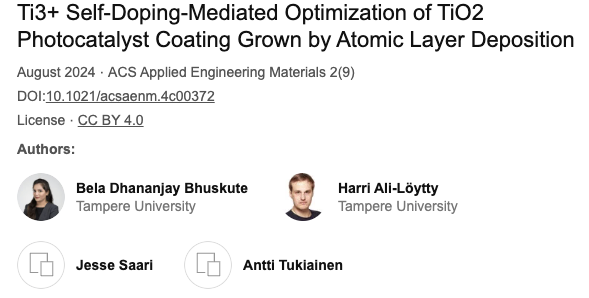
It fits the “miracle” specs perfectly:
100,000 Cycles: Traditional solid-state batteries are crystalline (like a brick wall) and crack when ions rush in. Dr. Bhuskute’s amorphous Titanium Dioxide is disordered (like a sponge) and “breathes,” allowing it to expand and contract without breaking.
5-Minute Charge: This chemistry stores energy via “pseudocapacitance,” which is basically like Velcro. Ions stick to the surface almost instantly rather than having to burrow deep inside the material.
The Manufacturing: Nordic Nano uses a “nanofluid” printing process for its solar product using the technology. This aligns with Donut Lab’s description of a “clay-like” material that enables an easier manufacturing process. Some call this “battery printing”, which could explain Donut Lab’s ability to bring this to production in record time.
When I asked Marko for the volumetric energy density (Wh/L), he claimed he “couldn’t remember”. Volumetric energy density is one of the few specs that Donut Lab hasn’t released. This battery is lighter than lithium-ion, but it could be bigger due to the amorphous nature of the titanium dioxide.
However, the CEO claimed it has a higher volumetric density than traditional Li-ion batteries, without providing a specific number.
If that’s true, not only could electric vehicles and energy storage switch to this new chemistry, but even personal electronics, such as smartphones.
In 2025, Nordic Nano has been making moves, including securing a former large retail location in Imatra, Finland, near the Russian border:


It could be where the company has set up production.
Following investment from the Finnish government, Nordic Nano had to elaborate a bit on its products and confirmed that it is working on “solar energy systems and energy storage solutions”:
The company’s range of products includes two product families: solar energy systems and energy storage solutions: The ultra-thin and flexible solar film collects twice the amount of energy compared to traditional silicon-based solar panels. Solid-state salt batteries are manufactured by printing from nanofluid, which enables the efficient use of space and the production of batteries in varying shapes.
Furthermore, the company confirmed that it is using a “screenprinting” manufacturing method. This is not new. Other companies have produced battery cells with this technology with varying degrees of success.
It appears that the bet is that the amorphous rather than crystalized titanium dioxide nanostructure could be more easily adapted and scaled with this manufacturing technology.
Electrek’s Take
I’m naturally skeptical, and this screams “too good to be true”, but I can’t find anything that categorically rejects the claims.
I get battery breakthrough announcements in my inbox every week, and most of the time they never amount to anything. If I decide to spend some time researching them and talking to experts, I generally quickly hit a problem or two that make them commercially unviable.
This announcement is different. We can’t really investigate the actual breakthrough; we can only speculate about it, since it is guarded.
Marko’s logic for guarding the chemistry is sound, and the incentives to lie about what they have aren’t clear if he is not currently raising money.
Then, because they claim this is already in production and will be in a deliverable product within weeks, we will know whether the claims are true in short order, and their reputations, especially Marko’s, are on the line.
During my interview, Marko didn’t seem too worried about it. It doesn’t sound like someone who needs to quickly figure out how to deliver this, but rather someone who has a couple of aces in their hand and is looking to maximize them.
It’s also strange that this innovation and then production quickly comes from a relatively small company.
I thought researching Donut Lab would make me more skeptical about the claims, but it’s the contrary.
It confirms that their technology stems from years of research, backed by university and government funding for its commercialization.
Could it be that this critical research went under the radar and a small electric motorcycle startup in need of a significant bump in energy density stumbled upon it? Then, a savvy entrepreneur quickly found a way to optimize the impact of this potentially groundbreaking tech by spinning out a startup from the motorcycle company to market the battery to a broader market. Maybe?
This could be real, or it could be hype. Again, I’m still skeptical, but I can’t point to anything specific that would disprove any claim made about this miracle battery.
Again, if this is true, we are talking about a complete reset of the entire energy and transportation sectors. Donut Lab would become one of the biggest companies in the world. A Nobel Prize would be coming to Dr. Bhuskute and her colleagues in the near future.
If it’s not, Marko and Donut Lab’s reputation would be destroyed.
There might also be a middle conclusion where the battery is nearly as good as they claim, but when you ramp up production, other problems arise, such as scrap, which has been the undoing of another company that recently tried screenprinting batteries.
Who knows? But it sounds like we should find out soon. Within weeks, we should get independent verifications of the specs. Then the bikes get delivered within months. You can fake a presentation, but there are things you can’t fake.


FTC: We use income earning auto affiliate links. More.