Nearly half of carbuyers interested in going electric are rethinking their plans after the government announced a per-mile charging for such cars, research from AutoTrader has revealed.
Nathan Coe, the chief executive of the vehicle buying and selling platform, said the decision by Rachel Reeves to bring in a 3p per mile-travelled tax on electric vehicles (EVs) from 2028 was “incoherent and inconsistent” with government policy of promoting EVs.
In a report entitled No Driver Left Behind, AutoTrader found that the largest barrier to buying an EV was low household income and the the purchase price. The report found that 62 per cent of motorists are considering buying an electric car as their next vehicle.
• Could you still save with an EV if you have to pay per mile?
But that percentage fell to 48 per cent for those with a household income of less than £40,000 per year, compared to 73 per cent for those whose annual income is above £40,000.
Electric cars are typically about 17 per cent more expensive than their petrol model equivalent. While that gap is closing as the cost of battery technology begins to come down, the AutoTrader research found that EV price was not the only inhibitor.
The research found that while 72 per cent of 17 to 34-year-olds were considering going electric, the proportion fell significantly to 35 per cent for the over-55s.
• Rachel Reeves must avoid stalling the EV revolution
There was also a ten percentage point difference between men and women in the likelihood of going electric. Women are less likely to be swayed, citing worries over charging EVs and anxiety of batteries running out while driving the family.
The research found that — at 72 per cent— drivers who live in cities are readier for the transition than those in rural areas.
AutoTrader said this may be counterintuitive as those living in rural areas were more likely to have off-street parking and therefore easier access to far cheaper home-charging even, if the public charging network was not so advanced.
The research also found that, at 80 per cent, there was a greater likelihood of ethnic minority motorists to go electric, though AutoTrader conceded the data may be skewed as such motorists were also more likely to live in urban areas.
• Is now the time to buy an electric car?
The AutoTrader report concluded cost was the single largest inhibitor. Manufacturers — both European brands and their Chinese rivals — have focused on more profitable SUVs than the smaller hatchbacks that had long been popular in the UK.

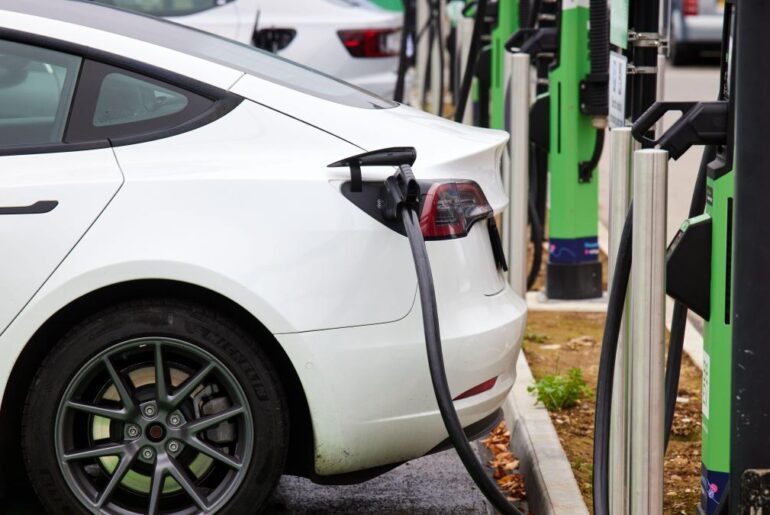
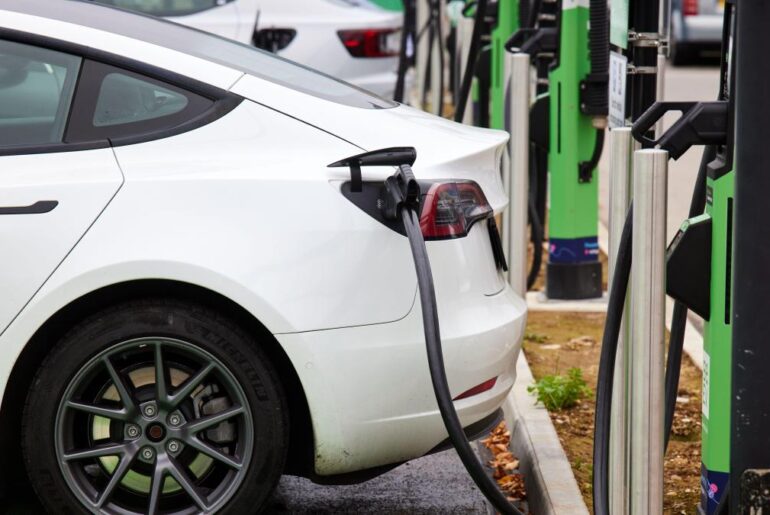
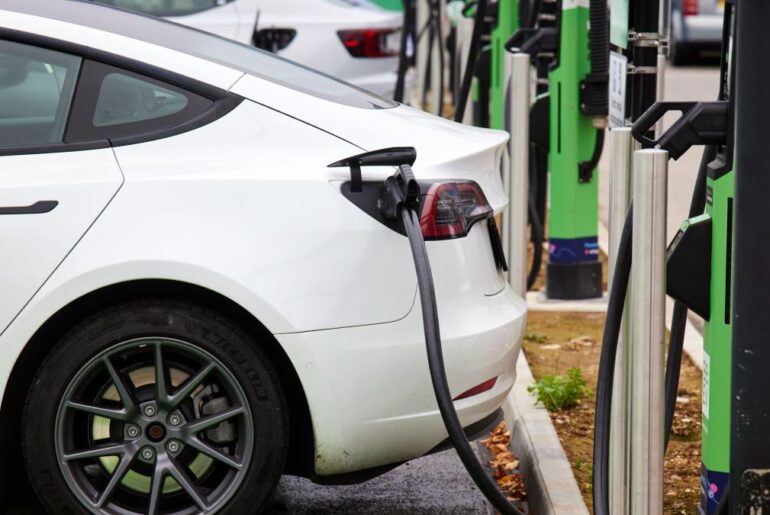
Many residents in cities such as London do not have off-street parking
ALEX SEGRE/UCG/UNIVERSAL IMAGES GROUP/GETTY IMAGES
“We’re at a pivotal moment for the UK’s electric vehicle transition but there is still a lingering wealth divide,” Ian Plummer, Autotrader’s chief customer officer, said “This new data also busts the myth that those who can charge at home will definitely switch. The driveway divide is no longer so clear cut.
“If lower income households can’t access affordable vehicles, we risk creating a two-tier system where the benefits of cleaner, cheaper motoring accrue to those already better off.
“The path forward is clear: more choice at lower price points, greater transparency on battery health metrics and practical charging solutions for people without driveways. Do that, and we unlock electric vehicles for everyone — not just the few.”
Almost one in every three new cars — 32.3 per cent — sold in Britain last month was an all-electric model, according to the Society of Motor Manufacturers and Traders. However, December was the only month in 2025 when EV sales hit the government target for last year that 28 per cent of new cars should be electric.
Overall, all-electric cars accounted for 23.4 per cent of the market last year. Manufacturers face penalties for underperformance or are forced to buy “credits” from those electric carmakers that do exceed the threshold.