The built-in battery doesn’t power the wheels, but Honda’s prototype all-electric camping trailer offers all the benefits of electricity far from the grid.
Lofty words about “challenging convention” and being “deeply committed to innovation” and taking “bold actions” for a new product are almost a staple of automaker presentations. Occasionally, however, the language may be justified.
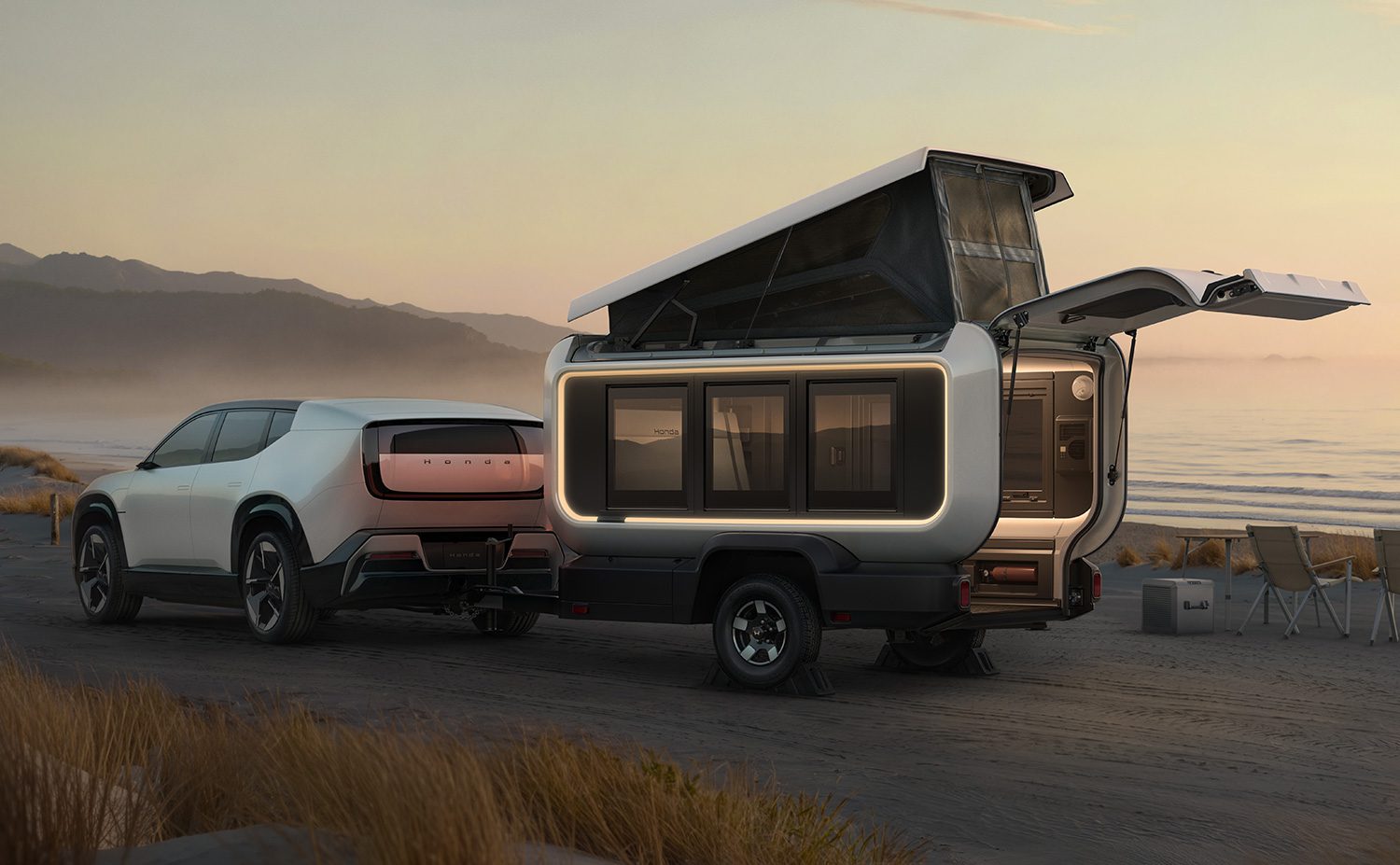
Today, Honda announced its Base Station Prototype, a lightweight, enclosed trailer that includes an onboard lithium-ion battery plus solar panels to recharge it when away from grid power.
R&D’s camping fans
As recounted by Honda’s vice president of R&D Jane Nakagawa, the Base Station idea emerged from discussions among the same group at Honda R&D that developed Honda’s quirky, foldable MotoCompacto personal electric scooter. Located in Irvine, California, the group had numerous camping fans, some among the 15 million new campers—with an average age of 30—who’ve joined 65 million existing campers in the six years since the global Covid pandemic boosted the nature getaway craze into high gear.
They started to debate: How could we democratize camping? What would it take to have a proper, high-quality camping trailer that differs from darker, more cramped offerings now on the market? One towable by nothing larger than a compact SUV—including a battery-electric one?
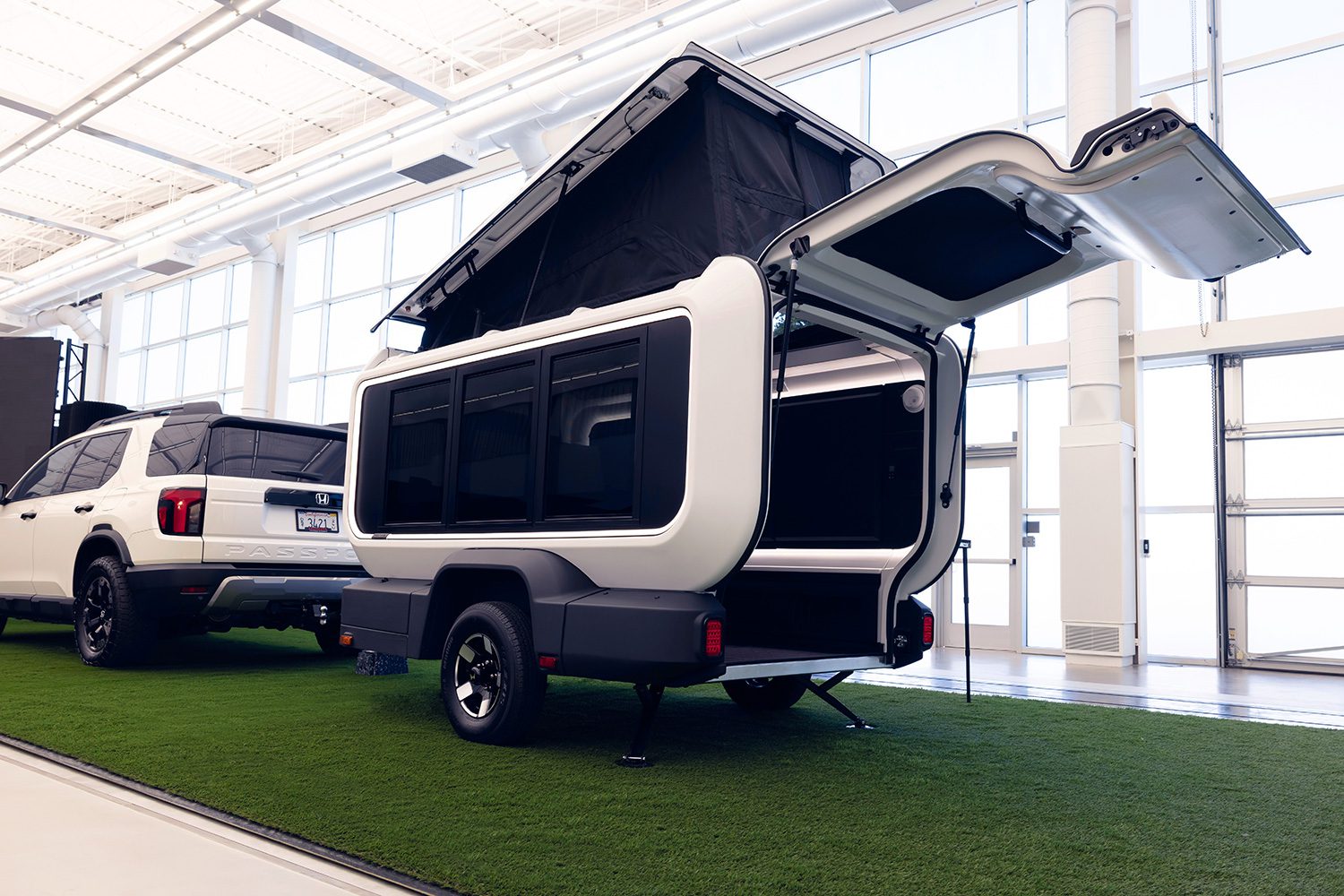
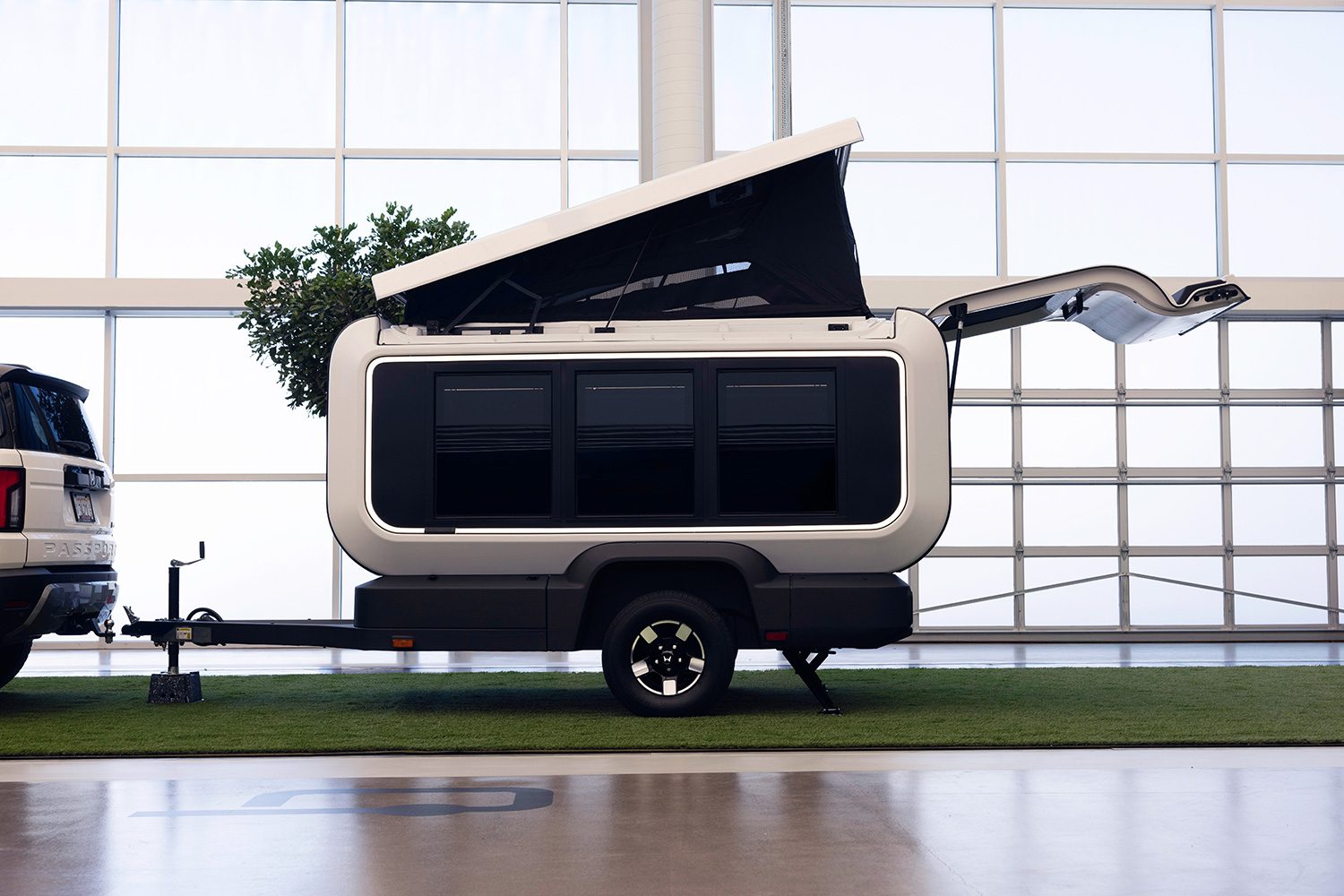
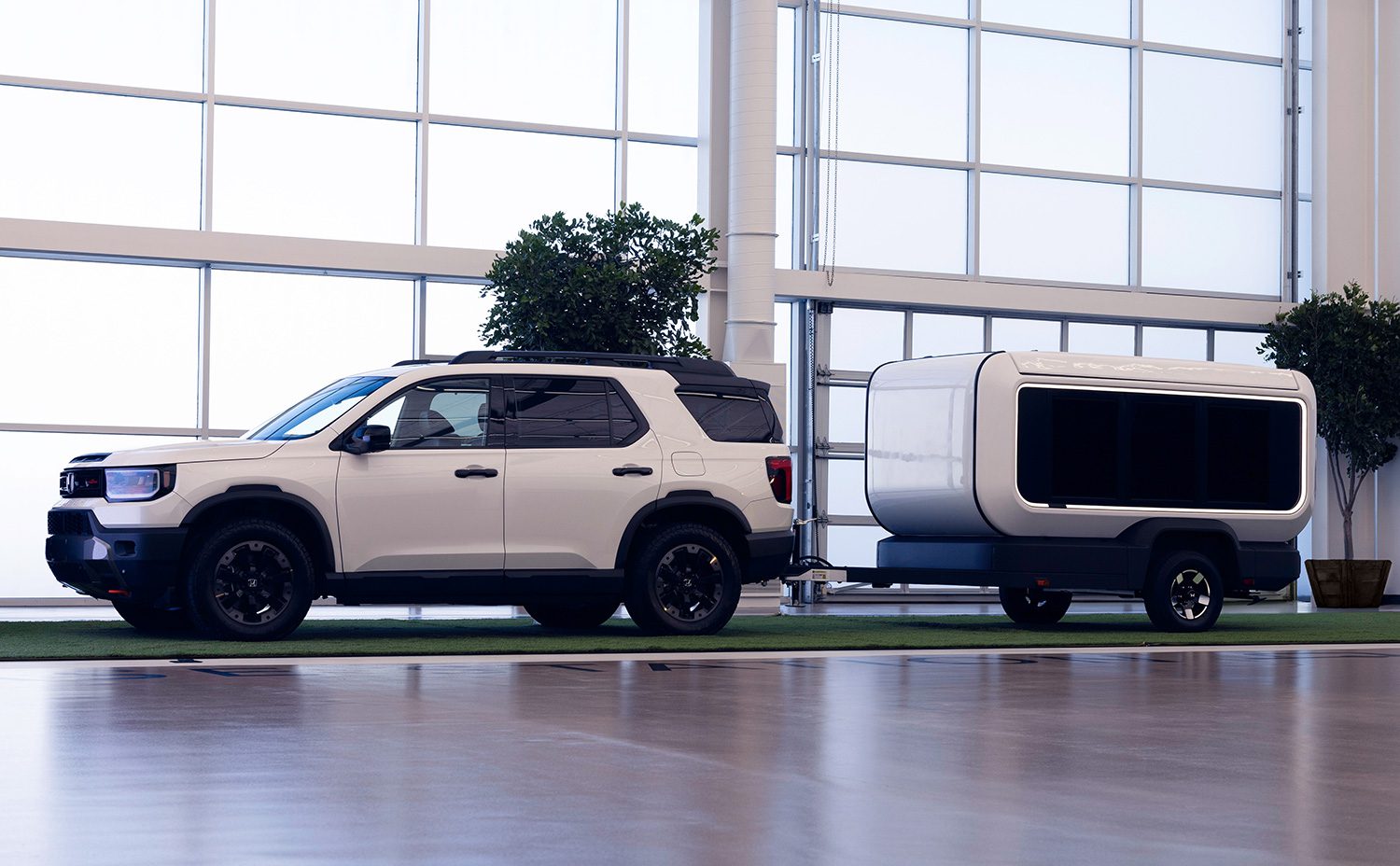
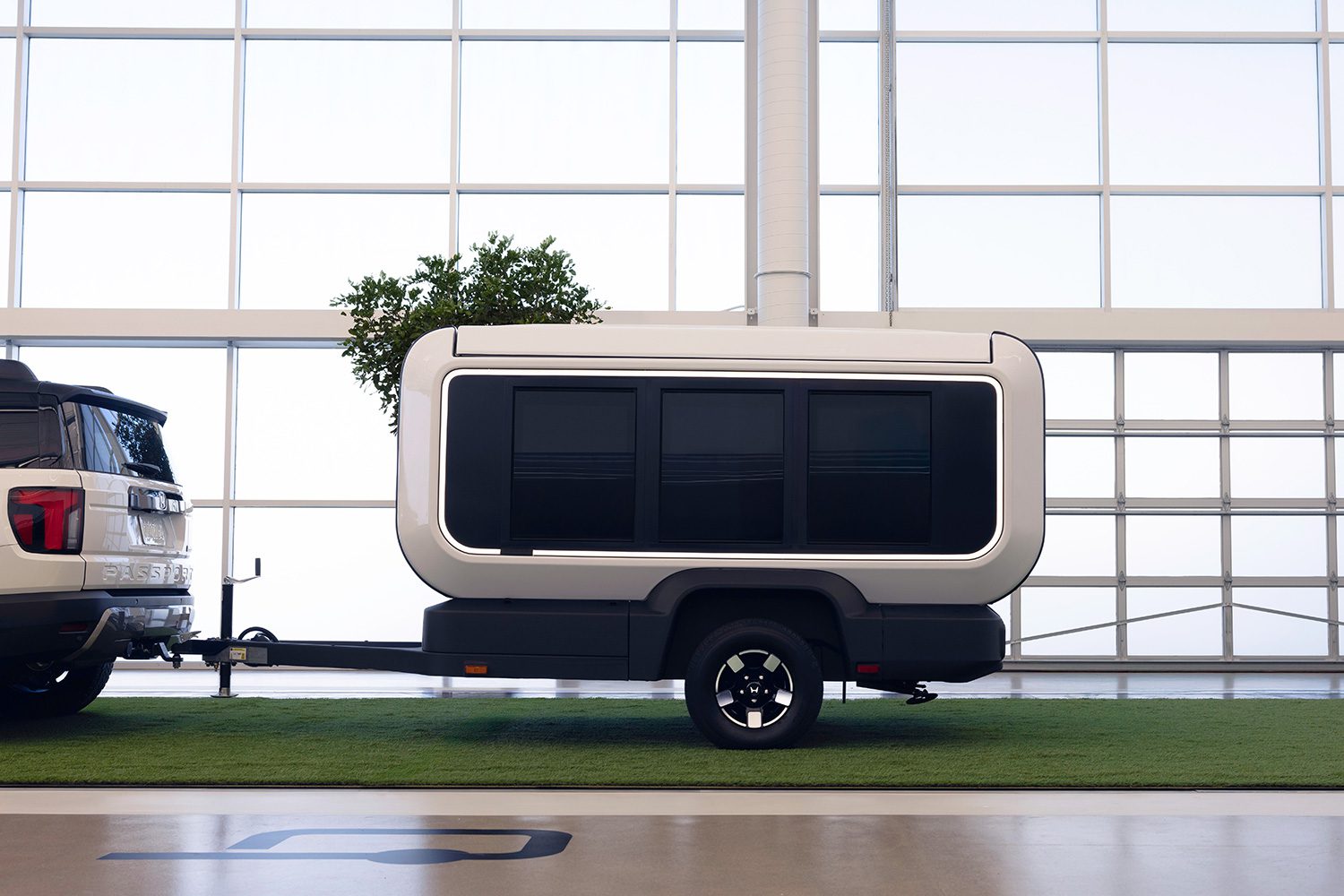
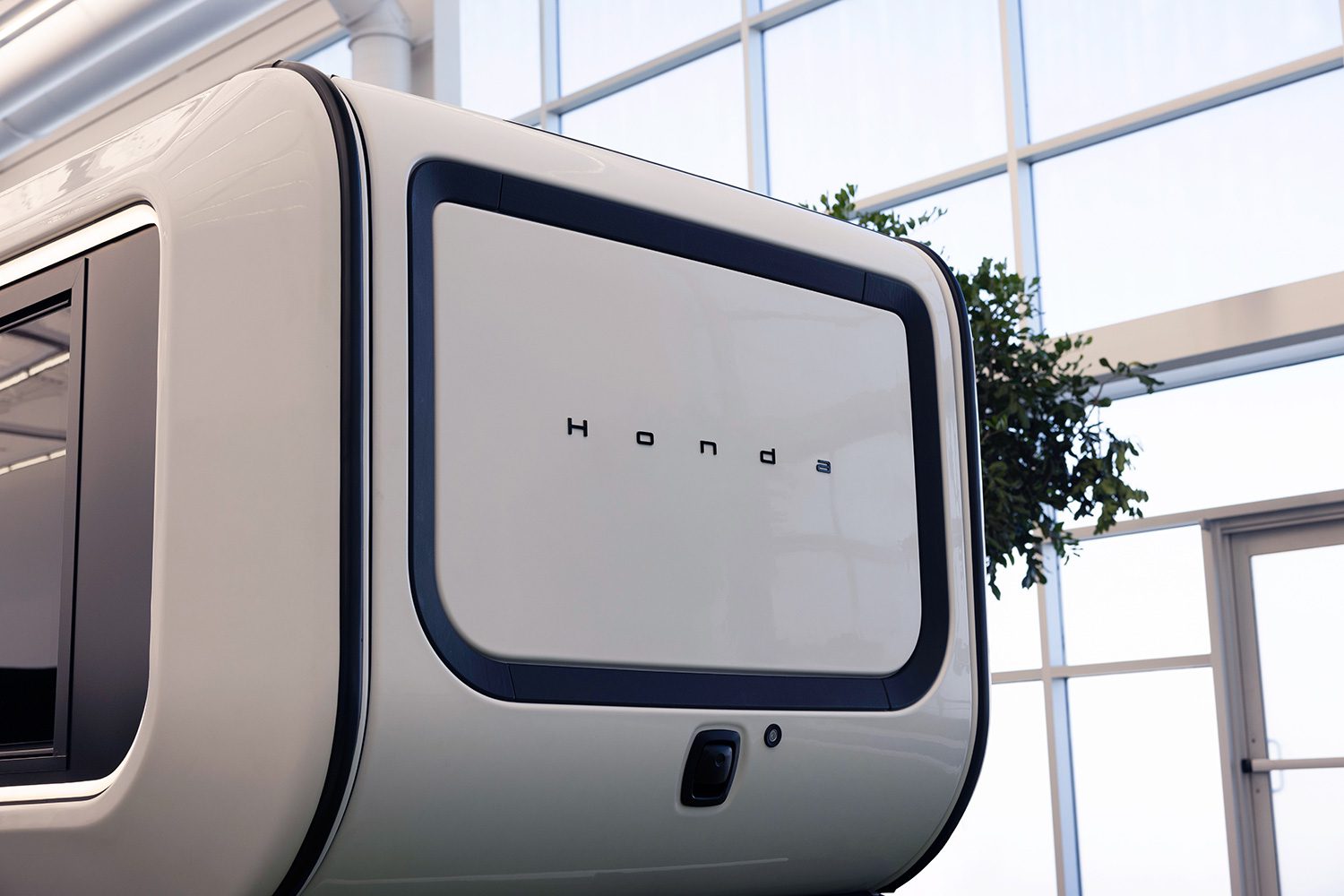
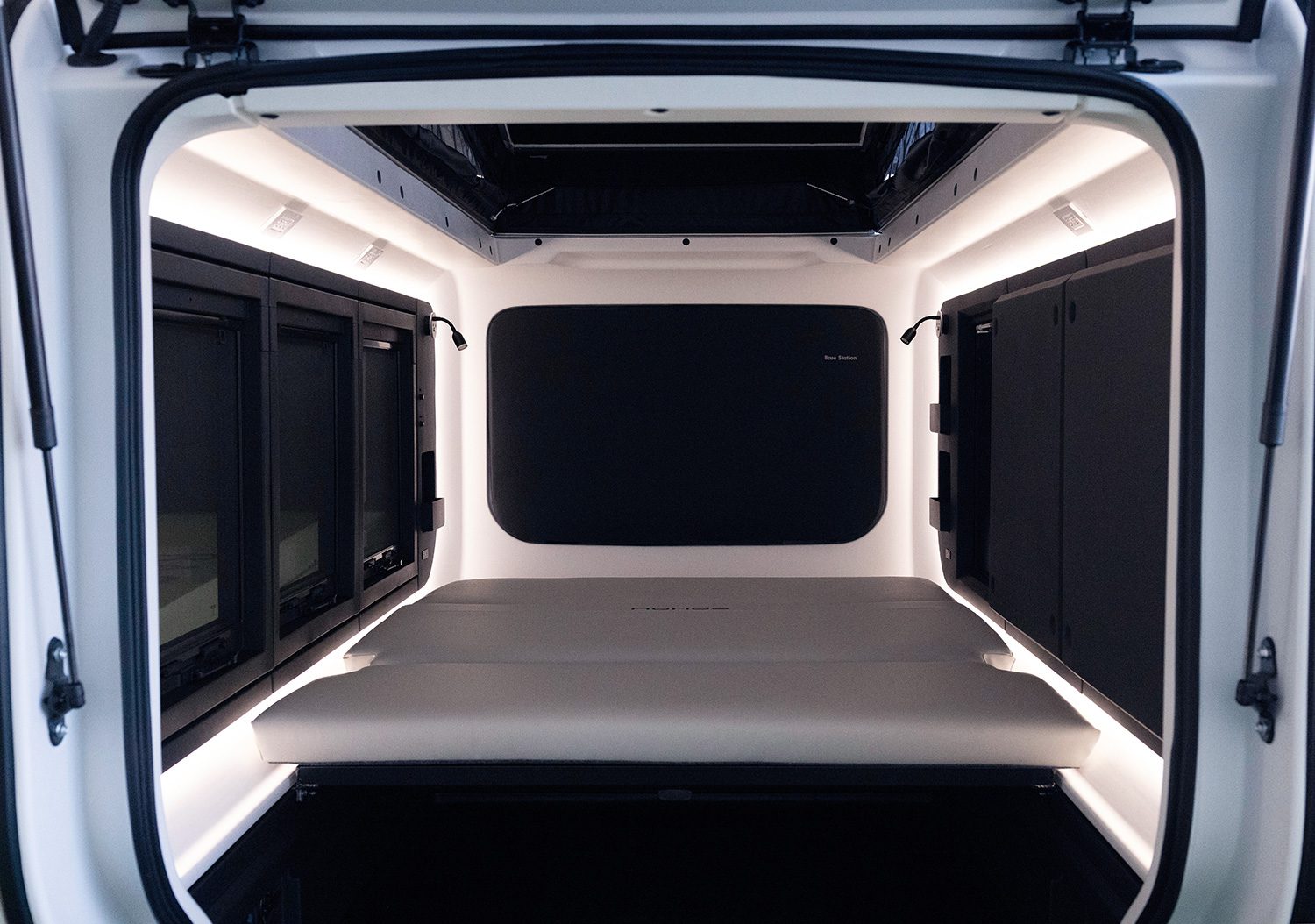
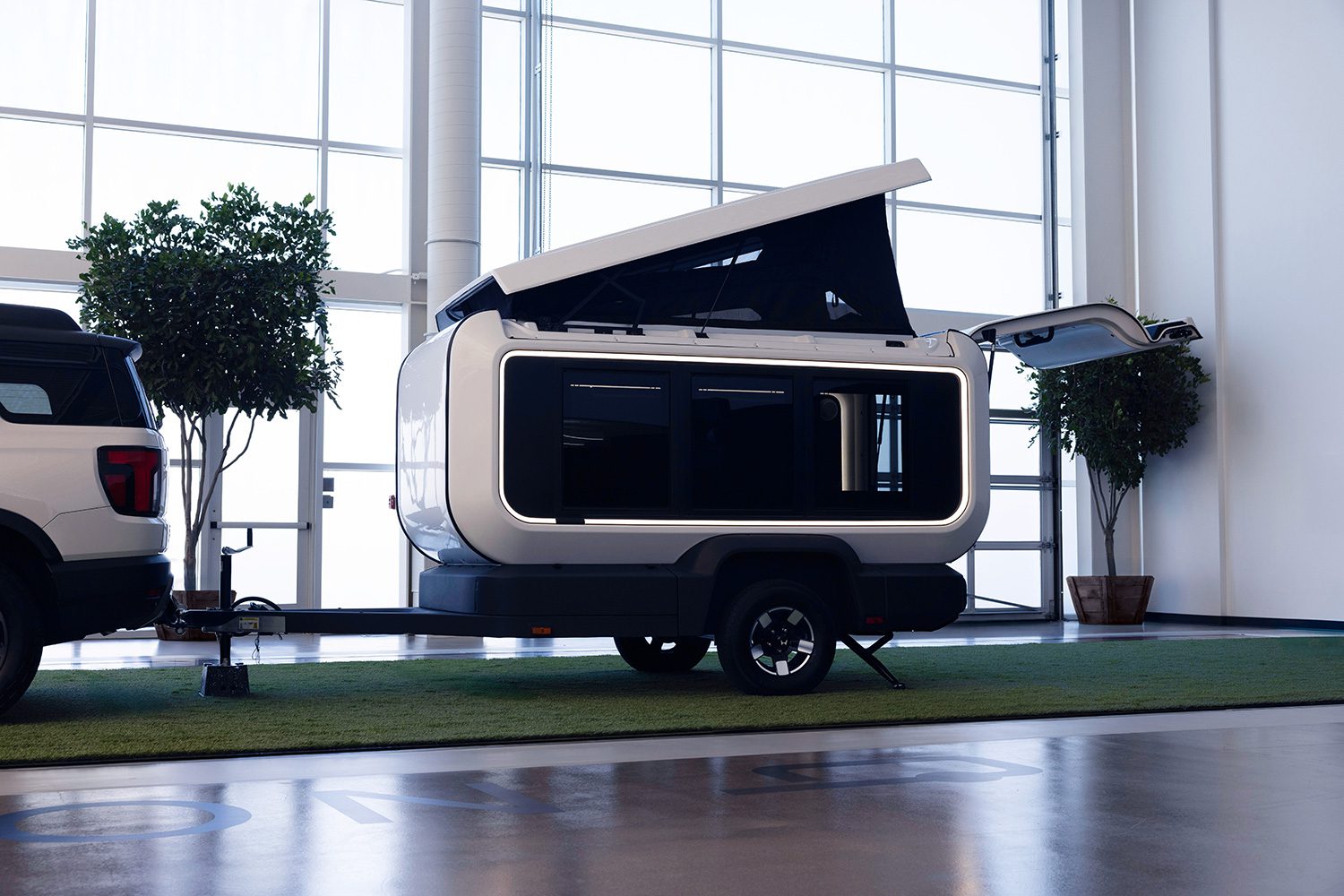
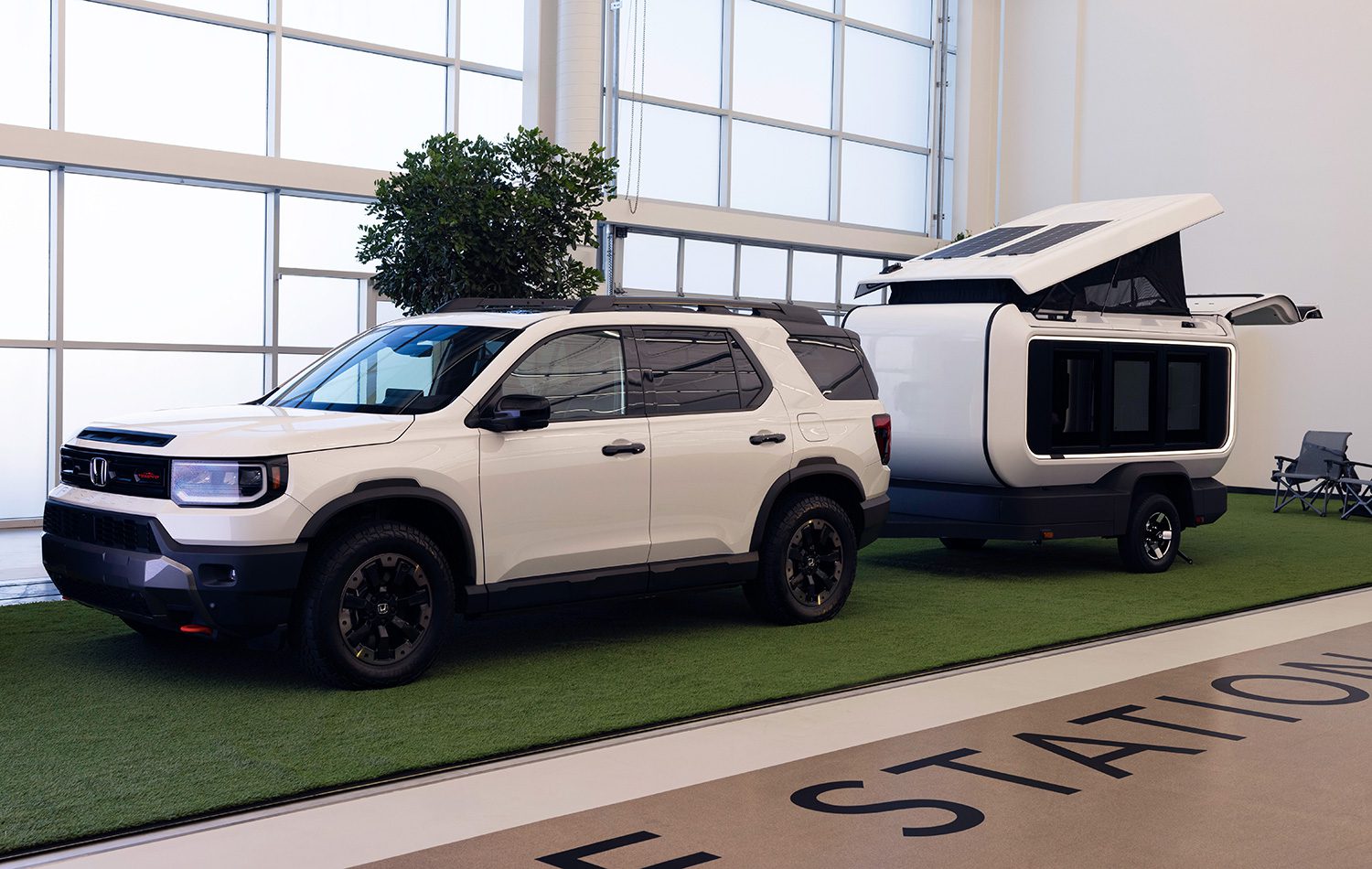
Five years later, the result is the prototype for the Honda Base Station trailer, with a target weight of less than 1,400 pounds, capable of fitting into a standard-size home garage. It is eminently customizable, both by do-it-yourself owners and through a variety of electric accessory modules to be offered by Honda. At launch, they will include an external kitchen with an induction cooktop, an external shower, and an air conditioning unit.
The roof pops up so occupants up to 7 feet tall can stand upright. The large top-hinged rear tailgate opens to the floor, adding to the light from five large side windows—some of which can be replaced with the user’s choice of accessory modules. LED light rings around the windows can illuminate a campsite for easier night-time setup. Awnings are a further option.
The light weight comes from an aluminum cage structure, with fiberglass exterior panels. While the accessories clearly add heft, the weight target was chosen to fit within the 1,500-pound towing capacity of certain compact hybrid or battery-electric crossover utility vehicles. Honda notes that buyers can choose modules of specified weights to stay within the tow rating of the vehicle they’ll use to pull it.
Battery, outlets, and solar panels
Underneath the futon couch, which converts into a queen bed, sits a lithium-ion battery—Honda declined to specify its capacity—plus associated inverters and electronics that power the electric accessories. Fully charged, it will power the camper for “a long weekend of camping,” though the Base Station also comes with a 120-volt charging cord rated at 30 amps. Inside the camper are both 120-volt outlets and USB ports. A pair of solar panels—no specs on those yet, either—will help to compensate for “a lot of usage” no matter what the occupants do.
From the start, the Base Station was designed for the lowest possible aerodynamic drag behind a variety of tow vehicles, especially EVs. The chamfered edges and profile minimize the effect of side winds. Honda EVs today are limited to the Prologue midsize SUV, but next year, that car will be joined by the 0 Series SUV, built in Honda’s own plant in Ohio. (The Prologue is built by General Motors on the underpinnings of the Chevy Blazer EV.)
A few features were omitted to lower cost and keep weight down. It has no built-in water storage, for instance, nor is there notable insulation in the walls and roof for cold-weather camping. An electric resistance heater comes standard with the Base Station, as does built-in cove lighting. Experienced trailer towers expect, and will get, hydraulic brakes that work with the car’s own braking system through the trailer-wiring connection. And it includes a full-sized spare tire.
Product leader Dillon Kane, an avid off-roader and camper, told Charged a user will be able to go from arrival at a campsite to sleeping in bed in no more than 5 minutes. Presuming the Prototype becomes a production Honda, specs, details and prices will be released closer to its on-sale date.
Honda provided transportation and meals to enable Charged to bring you this first-person report during a trip to the Los Angeles Auto Show.

![Watch Kia's smallest electric SUV in action for the first time [Video]](https://www.evshift.com/wp-content/uploads/2026/01/1768404341_Kia-smaller-EV-EV2-1-770x515.jpeg "Watch Kia’s smallest electric SUV in action for the first time [Video]")