The automaker is shifting its short-term strategy amid regulatory changes but maintains its long-term EV commitment.
On the Dash:
GM scaled back EV investments after fuel economy rollbacks and the end of federal EV tax credits reduced demand.
Mary Barra said electric vehicles remain GM’s long-term strategy despite near-term market and regulatory challenges.
The automaker is pursuing flexibility by expanding hybrid options while monitoring future regulatory changes.
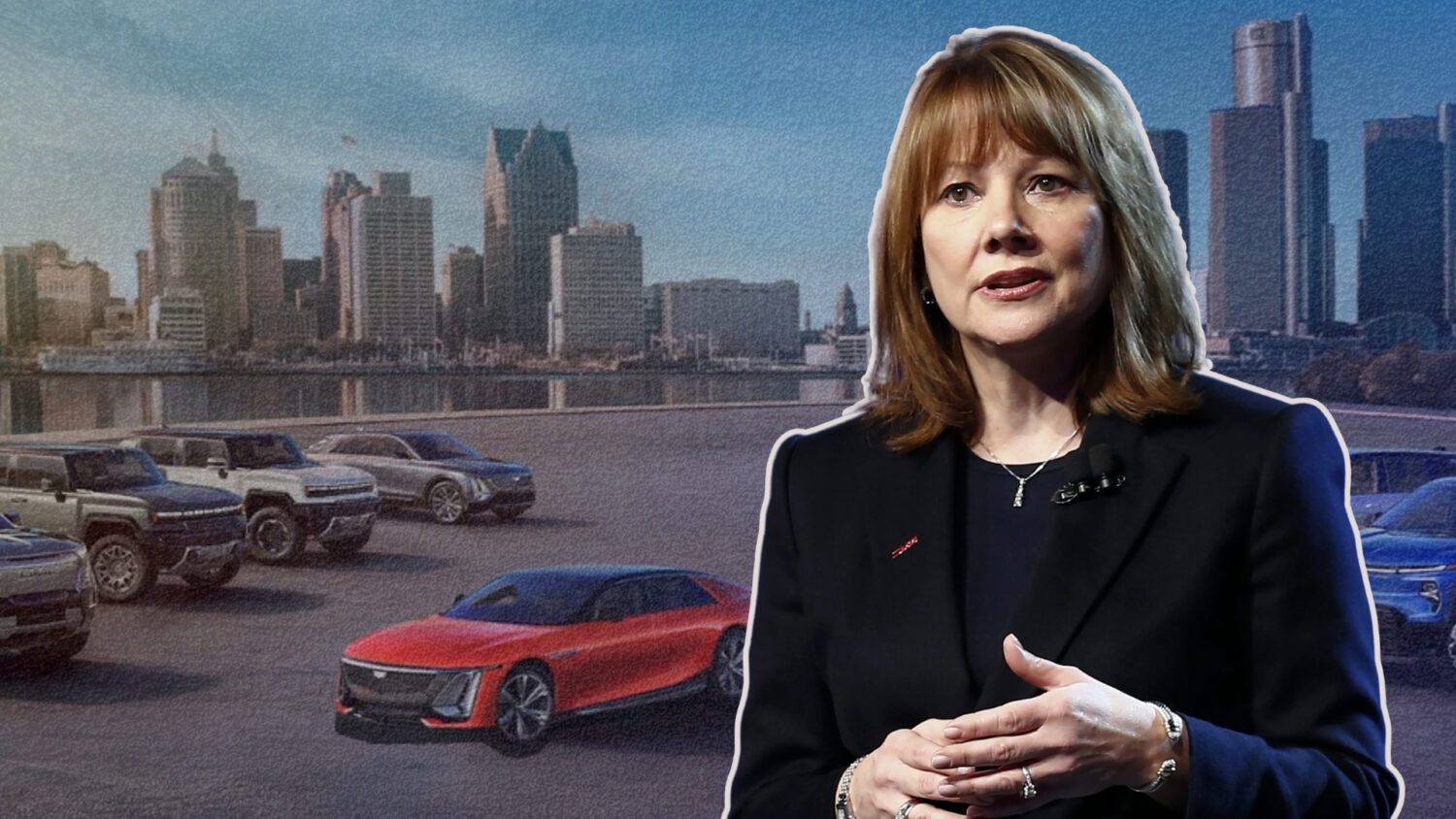
General Motors CEO Mary Barra said regulatory changes under the Trump administration have had a greater impact on the automaker’s strategy than recent trade policy shifts, even as GM continues to view electric vehicles as its long-term goal.
Speaking at an Automotive Press Association event ahead of the Detroit Auto Show, Barra said the rollback of fuel economy standards and the elimination of the $7,500 federal EV tax credit forced GM to quickly revise its product and investment plans. Those changes included scaling back billions of dollars in electric vehicle spending while placing more emphasis on internal combustion engine models.
Barra said GM made those adjustments as demand for EVs slowed following the loss of consumer incentives in late September. She noted that regulatory uncertainty has made near-term planning more complex, particularly as federal emissions and fuel economy targets continue to shift.
Despite the pullback, Barra said GM still believes battery electric vehicles will eventually gain broader adoption as charging infrastructure improves and vehicle costs decline. She described EVs as the company’s long-term destination, even if the transition takes longer without government support.
GM has also expanded its electrification strategy by developing plug-in hybrid vehicles that can operate on electricity before switching to a gasoline engine. Barra said the company is also evaluating traditional hybrids, though EVs remain a priority because of their performance and customer benefits.
Several automakers across the industry have scaled back their electric ambitions. Ford recently took a multibillion-dollar writedown tied to canceled EV programs, highlighting the financial pressure created by slower demand and changing regulations.
GM disclosed earlier this month that it would record a $6 billion charge related to unwinding some EV investments, following a $1.6 billion charge in the third quarter. Barra said she was surprised by how quickly some competitors are stepping away from electrification, noting that future regulatory conditions remain uncertain.
She emphasized the importance of flexibility as administrations change and policies evolve, and pointed to proposed reductions in fuel economy standards by the National Highway Traffic Safety Administration as another factor influencing long-term planning across the industry.