India’s tryst with electric two-wheelers began as early as the 1990s, but meaningful momentum only arrived decades later. Early policy interventions—such as subsidies offered by the Ministry of New and Renewable Energy (MNRE) between 2010 and 2012—laid the groundwork. The launch of the FAME (Faster Adoption and Manufacturing of Electric Vehicles) scheme further accelerated adoption, drawing both startups and legacy manufacturers into the electric mobility race.
Yet, despite this progress, one segment remains conspicuously underdeveloped: electric motorcycles. A joint NITI Aayog–TIFAC study published in June 2022 estimates that India’s two-wheeler manufacturing capacity could exceed 20 million units annually by 2030. However, electric motorcycles account for only a negligible fraction of this future potential.
Royal Enfield’s Electric Bet Rekindles Debate
As India’s foremost motorcycle manufacturer, Royal Enfield’s move into electric mobility represents more than product diversification—it marks a fundamental technological transition for a brand long associated with large-displacement engines, mechanical character, and long-distance touring capability. Entering the electric motorcycle space forces a redefinition of performance, shifting the emphasis from displacement and acoustics to torque delivery, thermal control, software, and system integration.
The company has signalled its electric intent through the Flying Flea platform, with two derivatives planned for launch after 2026. Beyond the product itself, the real story lies in the underlying technology stack Royal Enfield is building for the electric era.
According to Matt Cardenas, Head of EV Product Strategy at Royal Enfield, much of the vehicle’s technology has been developed in-house to optimise user experience. Over 200 engineers are engaged in powertrain development, with 42 patents already filed. The company has also partnered directly with NXP and Snapdragon to co-develop motorcycle-specific chips—an uncommon move in the two-wheeler industry.
For a company built on the appeal of powerful combustion motorcycles, Royal Enfield’s electric strategy suggests a broader reimagining of power itself. In the absence of exhaust notes and mechanical mass, performance is being reconstructed through torque curves, thermal discipline, and digital intelligence. How successfully this engineering-first approach translates into rider acceptance may ultimately determine whether electric motorcycles can move beyond the margins of India’s two-wheeler market.
Where Does India’s Electric Motorcycle Market Stand?
In August 2025, NITI Aayog convened a high-level meeting with major two-wheeler OEMs—Hero MotoCorp, Bajaj Auto, TVS Motor, Ola Electric, Ather Energy, and Revolt Motors—to explore strategies for improving electric motorcycle adoption.
The current market structure highlights the challenge. Internal combustion engine (ICE) motorcycles still account for nearly two-thirds of India’s two-wheeler market. Electric scooters, by contrast, have achieved around 15% penetration within the EV segment and now represent almost one-third of all two-wheelers sold. Electric motorcycles, however, contribute just 0.1% of the total two-wheeler market, according to NITI Aayog.
It’s partly because motorcycle manufacturing is dominated by some heavy-loaded challenges, ranging from the weight of the battery to efficiency and experience.
The Weight of the Battery Problem
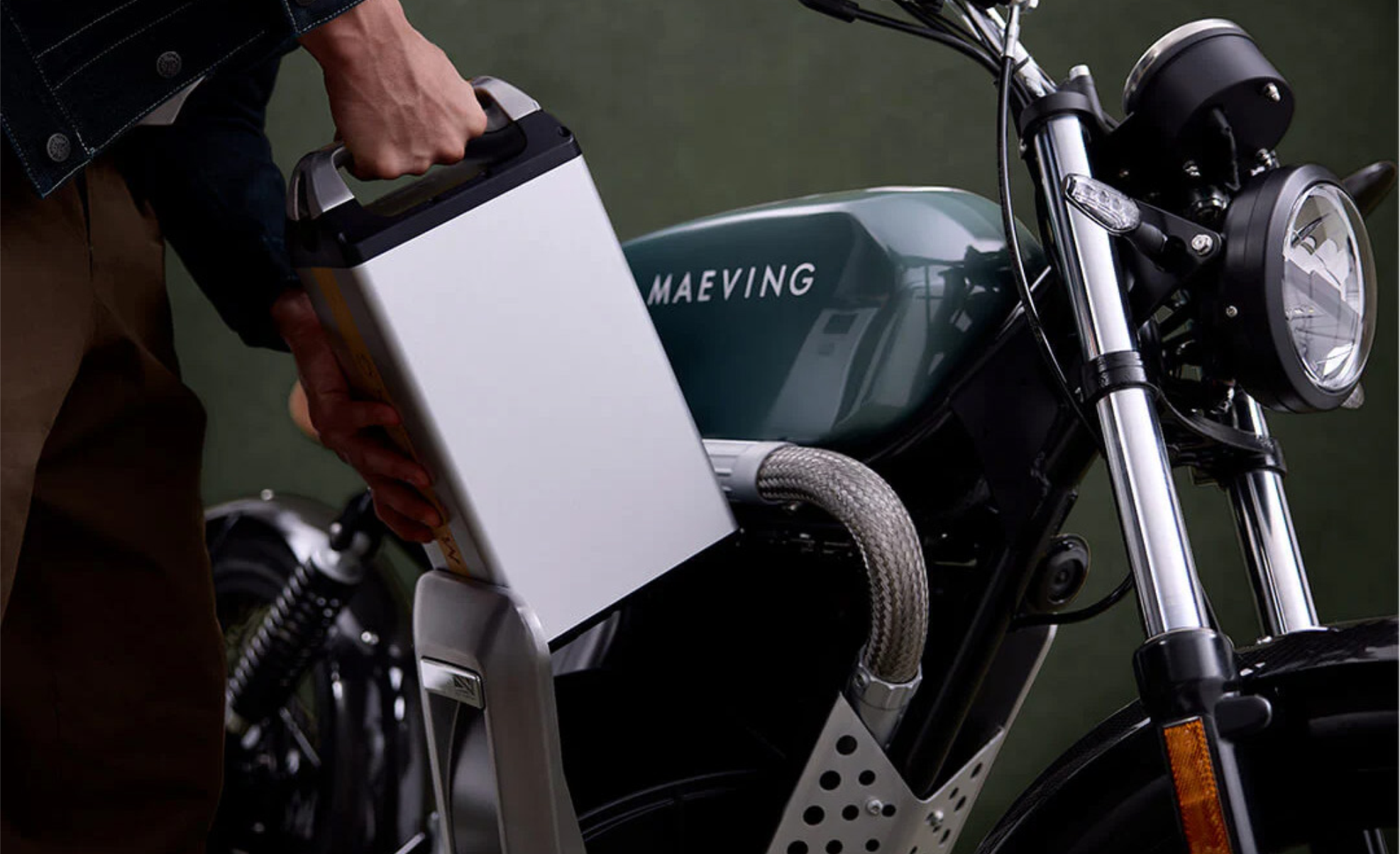
Battery weight remains one of the most fundamental constraints. Unlike four-wheelers, motorcycles are highly sensitive to mass distribution. For long-distance and off-road riding in particular, maintaining balance, agility, and stability becomes increasingly complex as battery size grows.
Engineers must carefully position the battery to preserve handling characteristics while reinforcing the frame without adding excessive weight. Ergonomics also demands rethinking, as the traditional engine layout is replaced by a bulkier energy storage system. Suspension and braking systems require complete recalibration to match the altered dynamics of an electric powertrain. In effect, designing an electric motorcycle is far more complex than simply swapping an engine for a motor.
Reflecting the same idea, Ather’s leadership has noted that practical and cost considerations currently favour electric scooters over bikes in India — an observation directly linked to the challenges electric motorcycles face in matching affordability and everyday utility.
Efficiency Gains That Don’t Fully Translate
On paper, electric motors are vastly more efficient than ICEs, converting 80–90% of electrical energy into motion, compared to just 20–30% for combustion engines. Regenerative braking and fewer moving parts further enhance theoretical efficiency.
However, these advantages shrink when evaluated on a well-to-wheel basis. Petrol has a far higher energy density by weight than today’s lithium-ion batteries. A small fuel tank can deliver long range with minimal mass, while an equivalent amount of stored electrical energy adds substantial weight. For long-distance riding at sustained speeds, the heavier battery pack can negate much of the motor’s inherent efficiency advantage, resulting in shorter real-world range than ICE motorcycles.
Transmission, Maintenance, and the Rider’s Bond
Electric scooters have benefited from simple, gearless drivetrains that translate easily into electric architectures. Motorcycles, especially those with gears, face greater design and manufacturing complexity. This also affects maintenance and repair—areas of particular importance to India’s motorcycle culture, where self-repair and aftermarket modifications are deeply ingrained. Limited service familiarity and proprietary components can dampen enthusiasm among seasoned riders.
The Sound of Silence
For many long-distance and enthusiast riders, motorcycles are as much about emotion as engineering. The sound, vibration, and mechanical feedback of a combustion engine form a core part of the riding experience. Electric motorcycles, with their near-silent operation, can feel less visceral—even if they deliver superior acceleration.
That said, this argument is not universal. Electric bikes offer tangible benefits: drastically reduced noise pollution, smoother power delivery, and instant torque that can feel both controlled and exhilarating. For a new generation of riders, these attributes may redefine what performance and pleasure mean on two wheels.
A Weak Global Reference Ecosystem
Globally, electric motorcycles lack the ecosystem support that helped electric scooters scale. The NITI Aayog study notes the absence of learning spillovers from international markets. While India benefited from mature Chinese supply chains and proven designs in e-scooters, no comparable global blueprint exists for electric motorcycles. As a result, manufacturers must build R&D capabilities largely from scratch.
Only a handful of players—Revolt Motors, Ultraviolette Automotive, Oben Electric, and Matter Motors—are currently active in India’s electric motorcycle space. This contrasts sharply with the success of Ola Electric and Ather Energy in the scooter segment. Internationally, the picture has also dimmed, highlighted by the bankruptcy of Italian high-performance EV motorcycle maker Energica in October 2024. While brands like Kawasaki and Zero remain prominent globally, volumes remain limited.
Also, executives from Bajaj Auto’s electric two-wheeler business have acknowledged that the industry initially struggled with supply chain readiness and cost structures, and that building a sustainable EV business requires a measured approach rather than aggressive cash burn — indirectly underscoring how complexity and cost are barriers for electrifying performance-oriented two-wheelers.
The Road Ahead
For now, innovation appears to be the only force capable of sustaining momentum in electric motorcycles. Breakthroughs in battery chemistry, thermal management, lightweight materials, and modular platforms will be critical. Until governments worldwide offer stronger policy support—through targeted subsidies, charging infrastructure, and R&D incentives—electric motorcycles are likely to remain a passion project rather than a mass-market reality.
The ride ahead, much like the machines themselves, will demand balance, patience, and relentless engineering ingenuity.