Author | Zhang Ziyi
Editor | Yuan Silai
In the first year after leaving XPeng Motors, He Tao tried out all the things he could play with. He went to Europe, the United States, and Southeast Asia, “playing like crazy.” He climbed mountains, surfed, and sailed yachts. He did whatever was exciting.
As time went on, He Tao felt empty. While strolling in a luxury neighborhood in the United States, he saw those retired corporate bosses indulging in taking care of their gardens and setting up automatic watering systems. He seemed to see his own future. “It felt so terrifying,” he said.
He Tao said he couldn’t stay idle. After experiencing the ups and downs of business battles, he had long been addicted to the thrill of adrenaline rushing to his heart. Many bosses are similar “risk addicts.” Some may challenge increasingly dangerous extreme sports, while others keep starting new businesses. He Tao chose the latter.
So, in the bustling streets of Indonesia in 2024, listening to the roar of gasoline-powered motorcycles, He Tao decided to continue “building vehicles.” This time, it was to build “electric motorcycles” overseas.
Indonesia is the world’s third-largest motorcycle market. According to data from the AISI Indonesian Motorcycle Industry Association, by 2023, the total motorcycle sales in Indonesia reached 6.24 million, and the total number of motorcycles in use was approximately 120 million – 130 million, which means that about every 2 – 3 people own a motorcycle. Almost every young Indonesian who graduates and leaves home receives a motorcycle as their first gift.
Counterintuitively, motorcycles in Indonesia are not cheap. Japanese brands like Honda and Yamaha occupy more than 95% of the market, and the price of mainstream products is around 10,000 yuan. Many people take years to pay off the loans for their motorcycles.
This easily reminds people of the Chinese automotive market a decade ago.
Meanwhile, the Indonesian government has set very aggressive goals. It hopes that 2 million electric motorcycles will be on the road by 2025 and 13 million by 2030. The huge “gap” and a population of 286 million with an average age of 30 clearly imply infinite business potential.
In 2024, He Tao officially established a new company – OMOWAY. The team is quite luxurious. Jiao Qingchun, the former vice president of XPeng, serves as a co-founder. The team members include Xiao Zhiguang, the former head of XPeng’s autonomous driving, Zhang Lihua, the former design director of XPeng P7, and Chen Bifeng, the former head of VIVO in Indonesia, who joined the team to be responsible for market expansion in Indonesia. In June last year, OMOWAY launched its first intelligent electric motorcycle prototype, the OMO X, in Jakarta, Indonesia.
The OMO X of OMOWAY has become the world’s first self-balancing intelligent electric motorcycle to be mass-produced and delivered. Moreover, intelligence has become an important indicator for the OMO X. OMOWAY has invested in features such as an automotive-grade chassis, independent suspension, double wishbones, and reverse assist in this motorcycle.
Yingke has exclusively learned that OMOWAY, founded by He Tao, a co-founder of XPeng Motors, has successfully completed two rounds of financing, the Pre – A and Pre – A+ rounds, with a total amount of tens of millions of dollars. The rounds were led by Sequoia China and Xinghang Capital respectively, and all institutional shareholders, including ZhenFund, Huiyou Capital, and He Tao himself, continued to participate in the investment. The financing will mainly be used for product mass production and global market development. Only half a year has passed since OMOWAY announced its previous round of financing, and it has been two years since He Tao left XPeng Motors.
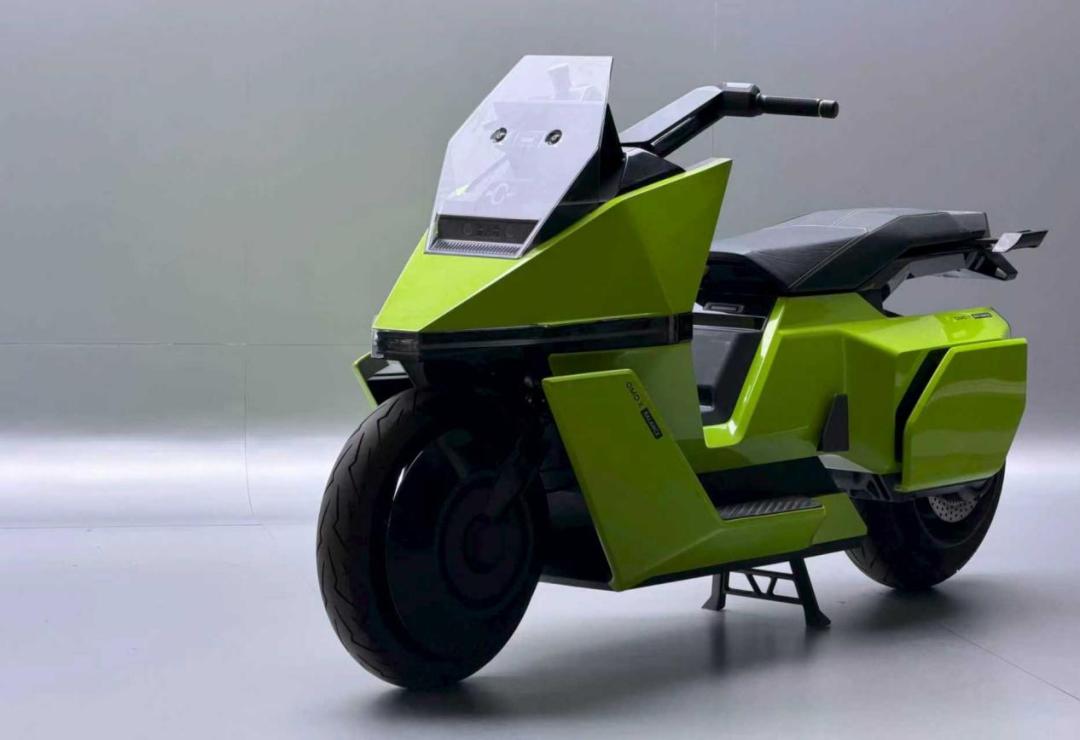
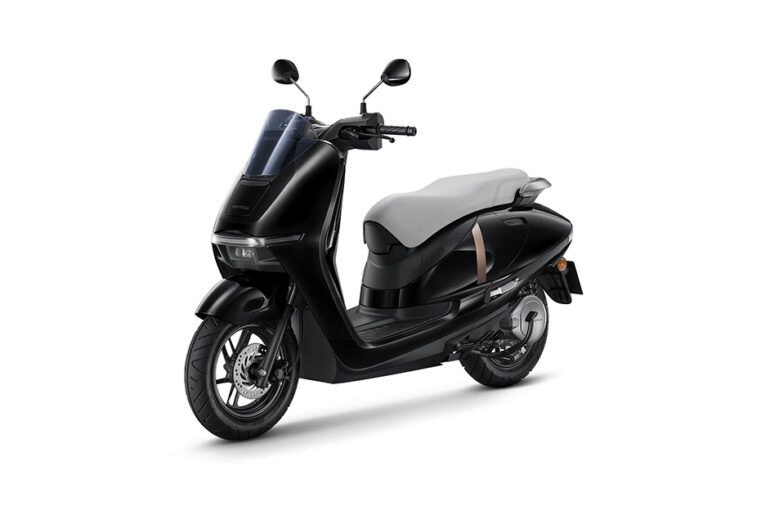
The prototype of the OMO X about to be delivered to the market (Source: Company)
It seems that the eve of the explosion of new Chinese automotive forces is about to happen in the overseas market. However, in He Tao’s view, for electric motorcycles to replace gasoline-powered motorcycles, their experience must be several times better. The overflow of production capacity from the Chinese automotive supply chain enables companies to gain a significant advantage.
Southeast Asia is just the first step. In the global trillion – dollar motorcycle market, Southeast Asia accounts for about 25%, and Indonesia alone takes up half of the Southeast Asian market. He Tao believes that choosing Indonesia is not only choosing a market but also directly targeting the core of the global motorcycle industry.
The overseas market is still unfamiliar to He Tao. He told the team not to be too proud and not to think that they can easily outperform others. However, he couldn’t help but sigh that things have gone quite smoothly so far. After experiencing the intense competition in the Chinese automotive market, he is not afraid of challenges overseas.
Actually, before starting to work on electric motorcycles, He Tao had never even ridden a motorcycle. Now he has started riding, but he can’t do any fancy tricks yet. In the lobby of OMOWAY’s office, besides the prototype of their own motorcycle, there is a BMW motorcycle, and the red Ducati belongs to He Tao. He is wearing a thin leather jacket, with slightly curly hair and no sign of weight gain. The fast – paced startup life has indeed made him look younger.
We had a long three – hour conversation with He Tao, talking about his entrepreneurship, his company, and his perseverance and expectations.
01 “I like to see a large number of people using the products we make”
Yingke: Actually, there aren’t many people like you who start a new business after achieving success.
Todd: I think life needs some excitement, and starting a business is the biggest source of it. Before starting this business, I went to the United States and saw those people in the luxury neighborhoods. They are also corporate bosses, spending their days researching how to maintain their gardens and setting up automatic watering systems. I thought it was so terrifying.
I don’t think a relaxed life is necessarily a comfortable state. People have to live their lives anyway. Lying in bed all day is one way to spend a day, and getting up to do something is another. What excites me is large – scale manufacturing. I like to see a large number of people using the products we make. It gives me a sense of pleasure. I don’t need to think about the so – called meaning. As long as it makes me feel fulfilled and happy, that’s enough.
Yingke: Your product was launched very quickly. How did you control the rhythm, especially in a special overseas market like Indonesia?
Todd: Previously, we knew neither the product form nor the overseas market. We really started to investigate the market at the end of 2023. The company was established in July 2024, and we started working on the first product around August. It took us more than half a year to figure out who our target customers were.
I think this is very important. You have to personally understand the local consumers and get a feel for the market to create a product that suits them. After all, we are a To – C company. Just like in the automotive industry, consumers have diverse needs, and you need to find the right niche for yourself.
We changed our product strategy many times. At first, we wanted to make a supplementary means of transportation for families, a relatively low – speed, delicate short – distance vehicle. For example, if a family already has a gasoline – powered motorcycle, they could buy an electric one for short trips. However, we later found that this market was actually the electric bicycle market, which has a low entry barrier and is not suitable for us. It wasn’t until July or August last year that we decided to target the mainstream market and replace existing products like those from Honda and Yamaha.
Yingke: Why did you decide to enter the mainstream market at that time? What opportunities did you see?
Todd: There is some inertia. When we made the first car at XPeng, the focus was on the family’s second car. However, the situation is different now. When XPeng started in 2014, batteries were expensive and the range was poor, so we could only make supplementary vehicles. But after years of development in the Chinese electric vehicle industry, the industrial chain and intelligent technologies are very mature. I think electric motorcycles have the potential to directly replace gasoline – powered motorcycles and become the first vehicle for young people.
Secondly, the situation in Indonesia is different from that in China. There is hardly such a thing as “supplementary transportation.” Most families have two vehicles, and both are the main means of transportation. As long as the distance is over 5 kilometers, people will definitely ride a motorcycle because they don’t have many options for public transportation.
I think this is also an advantage for startups. We can adjust our direction quickly. We don’t hire consulting firms for market research. Instead, we go and ask people ourselves. We talk to the local motorcycle association and individual typical consumers one by one.
Yingke: Were there any unexpected findings during the research?
Todd: What was unexpected was that although the local purchasing power is much lower than that in China, motorcycles are very expensive. According to the local income level, a motorcycle is equivalent to a car in China. Moreover, the experience of these motorcycles is still stuck in the last century.
We found that most families have at least two adults, and each of them has to buy a motorcycle. Just in Indonesia, there are 120 million motorcycles in use, and there are 300 million in Southeast Asia. Each motorcycle costs about 10,000 yuan. Considering replacement and upgrades, it is a market worth hundreds of billions of yuan every year. This is truly a huge market and a good entry point.
If you want to buy a decent motorcycle, you have to spend at least 8,000 yuan. The products from Chinese two – wheeled vehicle manufacturers, which cost only a few thousand yuan, mainly target those who used to walk or ride bicycles. If people want to travel seriously, they still have to buy a gasoline – powered motorcycle.
Yingke: Why are they so expensive? Is it because of high production costs?
Todd: A very important reason is long – term monopoly. Honda accounts for 80% of the sales, and two Japanese companies account for more than 95%. You can imagine that in around 2000, a Santana cost 200,000 yuan. It’s hard to imagine that a car of that level could be sold at such a high price now.
Indonesia lacks an industrial foundation, especially in the fuel market. Gasoline – powered vehicles are more complex than electric vehicles, with engines and gearboxes. So I think this is an opportunity for Indonesia. If it can develop its electronics industry like China did in the past, it has the chance to build its own industrial chain. There are also local entrepreneurs working on electric motorcycles now. I hope they can succeed. I don’t want the market to be monopolized by one or two companies. It would be healthier if there were four or five leading companies in Southeast Asia.
Yingke: Did you decide to work on motorcycles because you wanted to do something related to vehicles from the start, or was it because you went to Indonesia?
Todd: I didn’t really plan to always work on vehicles. At first, I did think about doing the automotive business. After all, I’ve been in the automotive industry for more than 20 years, but there were no new opportunities in China. After looking around, I found that the automotive market in Southeast Asia is very small and not a good choice.
When I went to Indonesia for a trip, I was shocked to see the streets full of motorcycles. The locals said it was like Guangzhou in the 1990s. I asked about the price, and it was quite high, over 10,000 yuan for a gasoline – powered motorcycle, and the experience didn’t match the price. I thought this might be the same opportunity as the electrification trend in China a decade ago, but this time it’s happening in the two – wheeled vehicle market.
I hope to create something on a large scale. Seeing that people’s lives are improved by using my products is very important for an entrepreneur. Moreover, for my second startup, I want to build a large company. It’s hard to feel a sense of achievement if I just do something small.
The more I got into the motorcycle business, the more I realized that it has a high entry barrier. It requires 10 – year – long efforts in terms of quality and large – scale manufacturing, which suits my background of running large factories and producing thousands of products.
Yingke: Many electric motorcycle companies went to Indonesia in 2022 and 2023, but why didn’t they succeed?
Todd: To replace existing products, the most basic requirement is that the new product must be better than the existing ones.
The second point is timing. Before 2023, lithium – ion batteries for motorcycles were very expensive. Although there were many electric two – wheeled vehicles in China, more than 90% of them used lead – acid batteries, which meant that the lithium – ion battery industry for two – wheeled vehicles had no scale. At that time, in Southeast Asia, an electric motorcycle with a capacity of two or three kilowatt – hours would cost nearly 30,000 yuan, mainly because of the high battery cost.
However, in 2024, the price of lithium – ion batteries dropped very quickly and was very close to the price of automotive lithium – ion batteries. One reason is the introduction of the new national standard, another is that more and more companies are using lithium – ion batteries, and the third is the overflow of automotive battery production capacity.
So I think timing is very important. In the past, those products were more expensive than gasoline – powered motorcycles and not as good. Our strategy is to offer a product at a similar price to gasoline – powered motorcycles, but with a usage cost that is 1/5 to 1/7 of theirs, a similar service life, and much better experience and comfort.
02 Redefining Electric Motorcycles: Self – Balancing Technology and Automotive – Grade Supply Chain
Yingke: What pain points in Southeast Asia did you find during your on – site visit?
Todd: First, there is heavy traffic congestion. It’s the most uncomfortable for motorcycle riders during traffic jams because they have to keep their feet on the ground, and the ground is often muddy and dirty. Second, the road conditions are much worse than in China, and the rides are very bumpy. Third, people ride for a long time. It’s normal for an ordinary person in Jakarta to ride 30 – 50 kilometers to and from work, which takes one or two hours.
To address these issues, we installed an independent suspension from the automotive industry on the motorcycle for the first time in the industry, which makes the ride smoother on bumpy roads. To solve the problem of fatigue during traffic jams, I later put forward the idea of a self – balancing system. We also designed the motorcycle to be charged once every three days. All these are quite different from the situation in China.
Yingke: OMOWAY became the world’s first to mass – produce and deliver a self – balancing motorcycle. Technically, why hadn’t anyone succeeded before?
Todd: Some people had tried before, but they didn’t do it well and didn’t achieve market delivery. To do it well, we need to solve problems related to stability, reliability, power consumption, cost, and durability.
First of all, choosing the right technical route is very important. Some solutions involve adjusting the center of gravity (shaking the battery). Since the battery is very heavy, shaking it is not only unsafe but also slow to react. Some adjust the handlebars, which may conflict with the rider’s control. And using an inertial wheel (flywheel) will make the motorcycle very heavy.
Choosing the right technical path is crucial. In addition to the path, we also need technical capabilities. We need to predict the rider’s actions. For example, if the rider leans to the right, we need to know how to help them balance. This requires reinforcement learning and cannot be solved by simply writing rules. We also need engineering capabilities to reduce the cost and control the weight. In fact, it is a long – chain and quite complex process.
Yingke: How does the self – balancing system work in complex road conditions?
Todd: Any system has its limitations. For example, it can’t balance if the motorcycle falls into a big hole. In the early stage, we will let the user actively press a button to enter the self – balancing mode. For example, when encountering a red light or traffic congestion, the user can press the button, and the motorcycle will