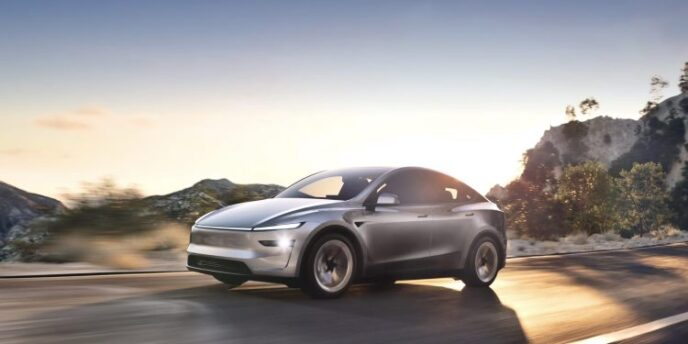
On paper, China’s Chevrolet Equinox Plus Plug-In Hybrid seems like a shoo-in for the United States. Here’s a familiar nameplate, in a practical crossover body, that pairs a gas engine with battery power for more than 600 miles of total range on China’s testing cycle.
But for a litany of reasons, it’s not coming to this market, leaving Americans with the gas Equinox and the popular Equinox EV instead. In the U.S., General Motors has broadly stayed away from hybrid power of all sorts in order to focus on what CEO Mary Barra calls the “end game”: a fully-electric future.
And at the Automotive Press Association conference in Detroit on Monday, Barra spoke an uncomfortable truth about plug-in hybrids in America.
“What we also know today with plug-in hybrids is that most people don’t plug them in,” she said. “So that’s why we’re trying to be very thoughtful about what we do from a hybrid and a plug-in hybrid perspective.”
You can see Barra’s remarks about hybrids to Reuters reporter Kalea Hall in the video below.

Barra’s comments are perhaps the most stark admission yet—and certainly, from the highest-ranking auto executive—about a truth in the auto industry that is widely known but barely acknowledged.
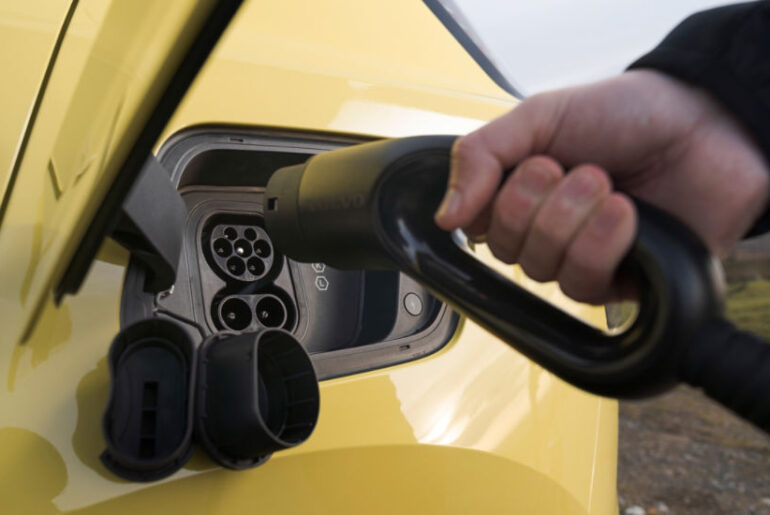
Plug-in hybrids (PHEVs) pair a gasoline engine with what’s typically a small battery to boost fuel economy and range by running on electric power some of the time. Usually, those batteries are larger than those found in regular hybrids, which requires them to be plugged in. They’re especially popular in Europe and China, but do require someone to put gas in a car and plug it in, using a wall outlet or a traditional home EV charger. Since PHEVs can typically cover between 30 and 50 miles using battery power only, they are often touted as a way to bridge the gap between gas cars and electric ones.
In 2024, InsideEVs’ contributor John Voelcker investigated the user behavior around PHEVs, specifically whether owners actually plug them in or not. He reached out to several automakers to ask whether they had, or could offer, recent data about plug habits for these cars; they either would not provide that data or could not say.
That may be because PHEVs have come under fire in recent years, as multiple studies reported that owners broadly do not plug them in. “We find that current PHEVs show electric drive shares much lower than assumed in EPA labeling,” the International Council on Clean Transportation said in 2022. “A consequence of this comparatively low electric drive share is that real-world fuel consumption is 42%–67% higher than EPA-label fuel consumption.”
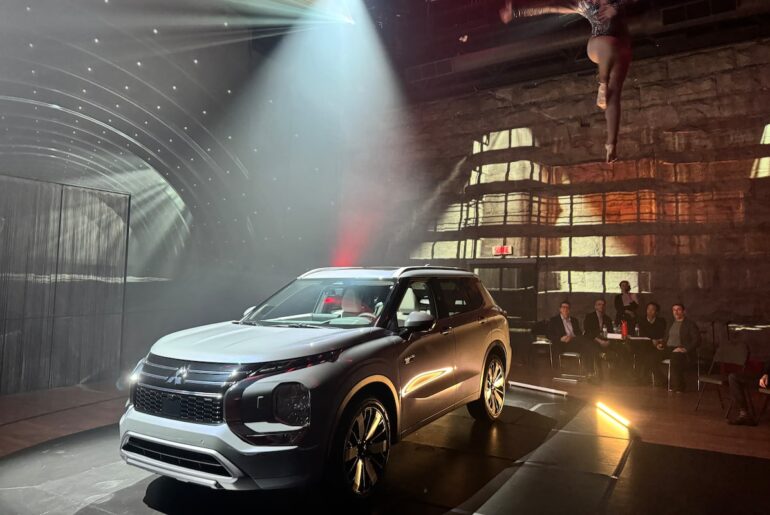
 2025 Mitsubishi Outlander PHEV
In other words, because drivers don’t plug the cars in, they’re not getting the fullest benefits from their powertrains—lugging around a near-dead battery and using much more fuel than they should. The problem has been worse in Europe, where PHEV models are even more pervasive. Studies show that the lack of plug use means emissions were far higher than expected.
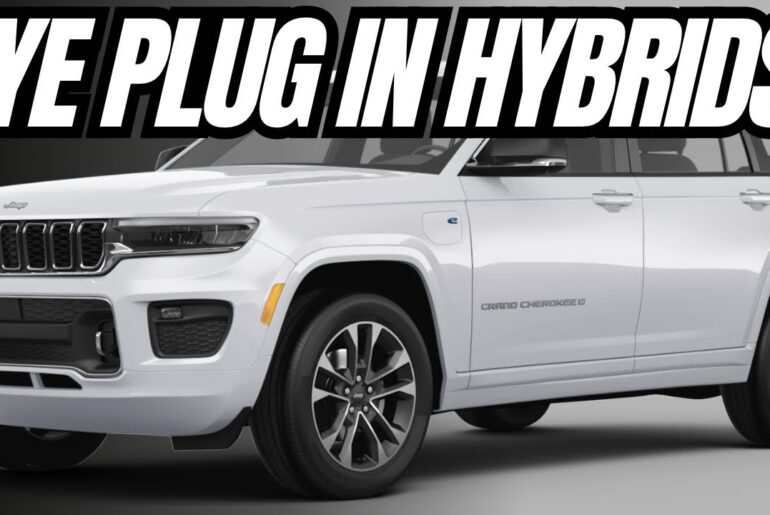
As EV sales slow down in America, some automakers have pointed to PHEVs as a better near-term solution for electrification. Hyundai, Toyota, Volvo and Mazda are all among those who offer several PHEV models right now. But cracks may be showing in the market as well. Without stricter fuel economy regulations or the EV tax credits, Jeep and Chrysler parent company Stellantis recently opted to axe its PHEV models entirely, despite being behind the best-selling PHEV model in the country.
More recently, automakers are hanging their hopes on extended-range electric vehicles, or EREVs. Those could be described as a kind of PHEV in reverse. They start with an EV-sized battery and platform, and add a gas engine to recharge that battery. Yet if EREVs too need to be plugged in and filled with gas, automakers may run into the exact same problem with users.
In GM’s case, its only hybrid is the Chevrolet Corvette E-Ray and its only PHEV models are sold in China. The automaker helped to popularize the field more than 15 years ago with the groundbreaking Chevrolet Volt. Now, amid the EV slowdown, GM is looking to bring more hybrid and PHEV models to the U.S., possibly in 2027. How it will educate users to plug them in remains to be seen.
Still, Barra said she does not regret GM’s original strategy to bypass hybrids and go straight to EVs, even though the automaker has received criticism for that move.
“With everything we knew at that point in time, we’d make that same decision,” Barra said. “We have to be very thoughtful with our capital and how we deploy it.”
Contact the author: patrick.george@insideevs.com
We want your opinion!
What would you like to see on Insideevs.com?
– The InsideEVs team