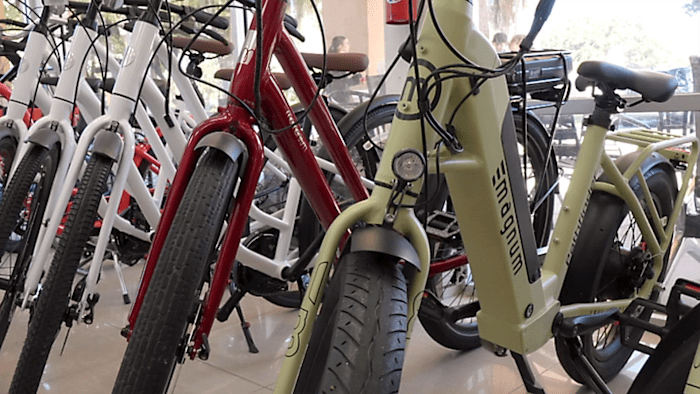
The burden of this new scheme will also fall most heavily on those who can least afford it. Think of the “deliveristas” who power our local economies, low-income residents who rely on e-bikes as their primary mode of transport, and undocumented neighbors for whom obtaining a driver’s license or navigating the registration process can be all but impossible. For many, an e-bike is a lifeline to a job or family or healthcare; instead of bolstering this incredible self-help tool, NJ is adding costly insurance and bureaucratic layers that will create even more barriers for those who need more mobility the most.
Finally, there are also significant practical and legal issues. The bill likely conflicts with federal law (15 USC 2085), which defines low-speed e-bikes as consumer products, rather than motor vehicles. It also raises practical questions about interstate travel – what happens when someone rides into New Jersey from New York or Pennsylvania, where these bikes are legal and unregistered?
New Jersey has ambitious climate goals and a dire need to reduce traffic fatalities. We should be encouraging the shift toward sustainable, lightweight electric transportation, not building barriers against it. Instead of creating new hurdles for the slowest e-bikes, the state should focus on enforcing existing laws for high-speed “e-motos” and similar vehicles, on improving street design, and on educating the public. As we saw in 2025, the number-one source of more than 500 fatalities and 3,000 serious injuries on New Jersey’s roadways were motor vehicles, not e-bikes.
As Governor Murphy considers signing S4834/A6235 into law, we strongly encourage him to recognize that mobility is a right. We shouldn’t be legislating people off their bikes in the name of safety when the real solution lies in better streets and smarter enforcement, not more red tape.