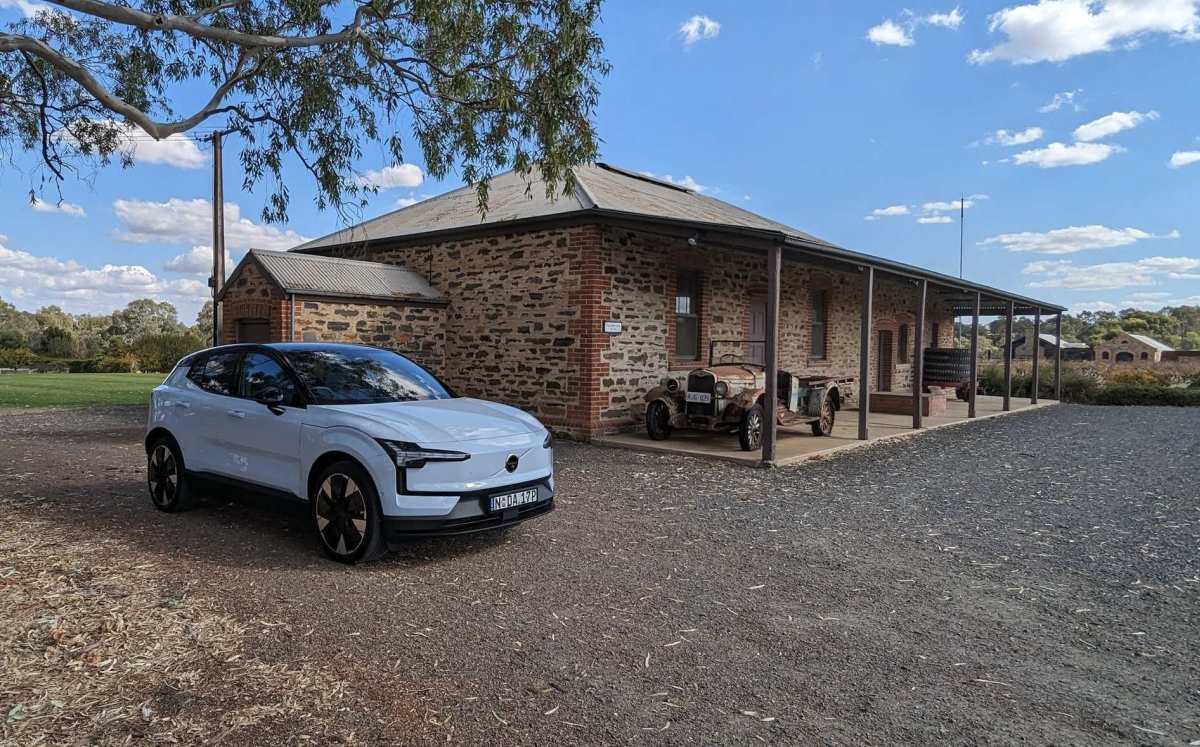
In a surprise notice this week, Volvo made a worldwide announcement to owners of certain EX30 versions that they must not charge their battery past 70%, lest the battery overheats and catches fire.
Great for creating eye-catching headlines, but what do we know of the reality – and exactly what cars are affected by the notice?
In Australia, the model has been officially listed on the Vehicle Recalls register, notice REC-006524. (https://www.vehiclerecalls.gov.au/recalls/rec-006524). That notice states that 2,815 2024 EX30 models sold here are affected, with a downloadable list of VINs (Vehicle Identification Numbers) to check your vehicle against.
After that, not a lot else is known. The listing states ‘Until a remedy is made available owners should keep the battery charge level below 70%. This can be set in the Charging setting menu in the vehicle display.
When a remedy is available, owners of affected vehicles will be contacted by Volvo requesting them to schedule an appointment to have the repair work carried out, free of charge.’
So what can we make of this? Volvo has stated it is a ‘manufacturing fault’ and, by the models affected both here and overseas, we can deduce that it is the higher energy density 64 kWh (useable) NMC battery affected, not the smaller 51 kWh LFP one. (The latter BTW is not sold in Australia).
After that – we know the Australian Volvo EX30 is built in China on the Geely SEA2 platform. (Geely is the parent company of Volvo). We also know that Volvo’s main battery sources are CATL (China) and LG Chem (South Korea). In addition, Geely this week started legal action with Chinese battery maker Sunwoda for $492 million over alleged ‘product defects’.
What we don’t know is the actual defect, and whether the Sunwoda batteries were used in the EX30, or if it is Volvo’s main battery suppliers (CATL or LG) at issue.
Other things we do know is the SEA2 platform is also used for the Smart #1 and #3, as well as the Zeekr X.
As a result, the recall notice ultimately creates more questions than it answers. Is it a specific EX30 issue, or are the other SEA2 platform cars to come under the spotlight?
How will Volvo ultimately fix the issue? As it is a manufacturing fault, it is likely to be a similar solution to the 2019 Hyundai Kona recall when around 70,000 Kona electrics worldwide had their battery replaced free of charge.
For EX30 owners, the temporary fix is to set the maximum battery charge level to 70% and wait till Volvo notify them of the steps they will take to fully remedy the issue. Other than that, affected owners should not worry unduly as Volvo are confident that charging to a maximum of 70% means the car remains safe to drive and charge.
In the longer term, owners of the EX30 will expect their range issue to be properly fixed – so it is to be hoped that Volvo will soon come up with the more permanent solution.
It is also hoped that Volvo will be more forthcoming in the causes of the problem and how the manufacturing process has been modified to remove the potential for a recurrence. It is only with full transparency of the issues that Volvo can minimize the potential for longer term brand damage.
As for the other EVs built on the SEA2 platform – we will have to wait for more information. Given the Zeekr and Smart EVs were all launched after 2024, it is unlikely they will be caught up in the recall, but without further information it may be better to set their batteries to 70% until things are clarified further.


Bryce Gaton is an expert on electric vehicles and contributor for The Driven and Renew Economy. He has been working in the EV sector since 2008 and is currently working as EV electrical safety trainer/supervisor for the University of Melbourne. He also provides support for the EV Transition to business, government and the public through his EV Transition consultancy EVchoice.