The United States Congress has introduced legislation targeting safety risks of electronic vehicle doors, including Tesla’s, after reports that the handles can fail in crashes, trapping passengers inside burning vehicles.
“At least 15 people have died in car crashes due to Tesla doors not opening,” Rep. Robin Kelly (D-IL) said in a release, citing a Bloomberg News investigation into the risks of electric door handles. “Profits and, least of all, style, should not come before people’s lives.”
Kelly’s bill would require the U.S. federal highway and traffic safety agency to issue a rule to establish performance and labelling requirements for electric doors. The SAFE Exit Act also calls for electric vehicles to have easy-to-find manual releases for each door.
The traffic safety agency also opened a direct investigation into Model Y door handles following Bloomberg’s investigation.
“When crashes or power loss leave drivers and passengers trapped inside their own cars, that is not innovation—it’s a safety failure,” Kelly said. “Just like requiring basic safety standards like seatbelts, my SAFE Exit Act will protect consumers.”
On top of the 15 deaths, Bloomberg News found multiple cases where Tesla owners sought assistance to open their doors in non-emergency situations where the mechanism failed, as well as instances where children or pets were trapped inside vehicles.
Tesla manufactures the electronic door handles with a futuristic, software-driven design, allowing drivers to open the doors with the touch of a button. The design was pushed by Tesla CEO and founder Elon Musk despite warnings about safety flaws, Bloomberg reports.
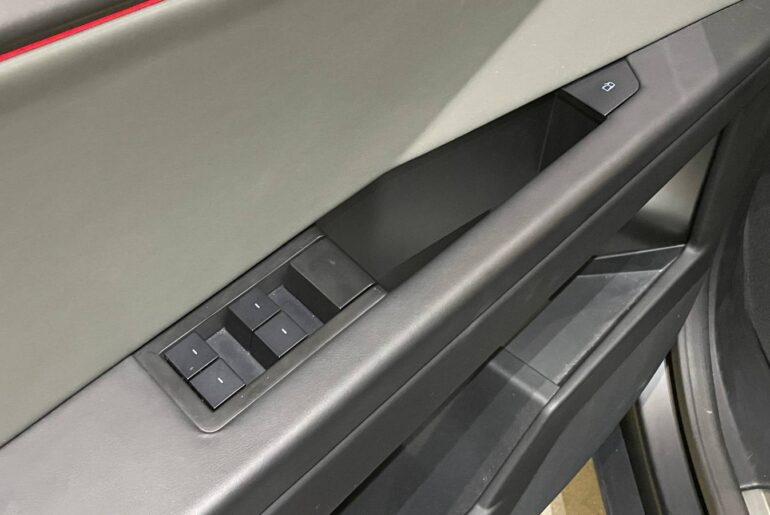
Tesla’s vehicle doors are powered by a 12-volt battery near the front of the car, and could be rendered inoperable if that battery is damaged in a crash. The doors do include manual overrides, but drivers apparently were unaware of them or could not find them, and critics say they aren’t apparent or intuitive enough to be useful after a crash. The front door overrides, for example, can be levers designed flush to the handle, and unlock the door when lifted. Back door overrides were installed as levers under a plastic lining in the side door pockets, or under floor mats at the foot of the seat. The override designs are not consistent across all models.
On occasions where the electronic handles failed and manual overrides could not be found, drivers who had survived crashes died from fire and fumes while trapped inside.
Following the Bloomberg investigation, Tesla’s chief designer announced the company was looking into redesigning the doors, but has not done so yet, nor has it recalled its vehicles over the issue. In 2023, the company did recall more than 120,000 Model S and Model X vehicles because of risk that doors could unlock and open during a crash, writes the Globe and Mail.
The Guardian reports that a lawsuit brought against Tesla by parents of a teenager who died inside a crashed Tesla vehicle claims that “Tesla had repeated and direct notice that its reliance on electronic door systems created a serious risk of entrapment. Owners, bystanders, and first responders documented instances where Tesla occupants survived crash forces but could not escape when electrical power failed and fire ensued.”
Tesla is not the only automaker to use this design. Several other EV models have similar door handles, like the Volkswagen ID4 and the Fisker Ocean.
Bloomberg says current crash tests are designed to ensure that drivers survive the impact in a collision, but not to address what happens after the crash. “Safety standards in the U.S. were written before the electric revolution really hit,” writes senior reporter Dana Hall. Now, “we are at a way faster speed than our regulatory system has managed to keep up.”
While new regulation and private lawsuits could push Tesla to address the problem, a plan in China—which hosts key automotive competitors to Teslas—to ban such door handles could be what really forces the company’s hand.