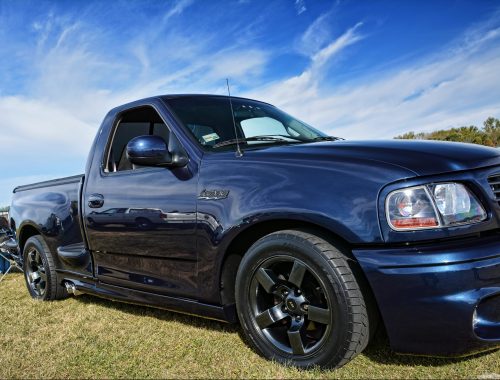
Ford will no longer produce its flagship all-electric F150 Lightning pickup, and instead is pivoting to hybrid vehicles and stationary batteries.
“The American consumer is speaking clearly and they want the benefits of electrification like instant torque and mobile power, but they also demand affordability,” Andrew Frick, president of Ford Blue and Ford Model e, the company’s commercial and electric divisions, told reporters in December. So “rather than spending billions more on large EVs that now have no path to profitability, we are allocating that money into higher-returning areas,”
The Lightning was announced in 2021 with a US$40,000 price tag, but Ford was never able to sell it for less than $55,000—and even then the company said it sold at a loss, NPR reports.
It was declared Truck of the Year in 2023, touted for its application as a mobile battery for tools at work sites and a power backup for entire houses during a blackout, but consumers were often underwhelmed by its performance as a truck. Motor Trend said that its towing capability was limited compared to regular F150s. Ford also struggled with dealerships jacking up the price—which is apparently common for new, popular vehicles—and sent letters urging them not to, writes the Detroit Free Press.
Following its struggling profitability, the Lightning suffered another blow when the Trump administration cancelled incentives meant to spur EV adoption across the economy, as well as emissions standards that made EV makers more competitive. Halting Lightning production is expected to cost Ford billions of dollars in losses, but the company says it’s worth it to replace a money-losing vehicle, NPR writes.
The Lightning will be replaced with a plug-in hybrid version that has a gas-powered engine. That will be marketed as an “EREV”, or an extended range electric vehicle, according to Kelley Blue Book. The automaker also says it’s still pursuing development of a more compact, $30,000 electric truck to be released in 2027, Inside EVs reports.
Ford has also recently cancelled an all-electric van planned for Europe. The company is shifting from an earlier commitment to have EVs account for 40% of global sales by 2040, instead focusing on a broader range of hybrids, writes Wired.
But the shift means Ford now has an excess of battery manufacturing capacity. So the company is venturing into stationary energy storage for utilities and data centres.