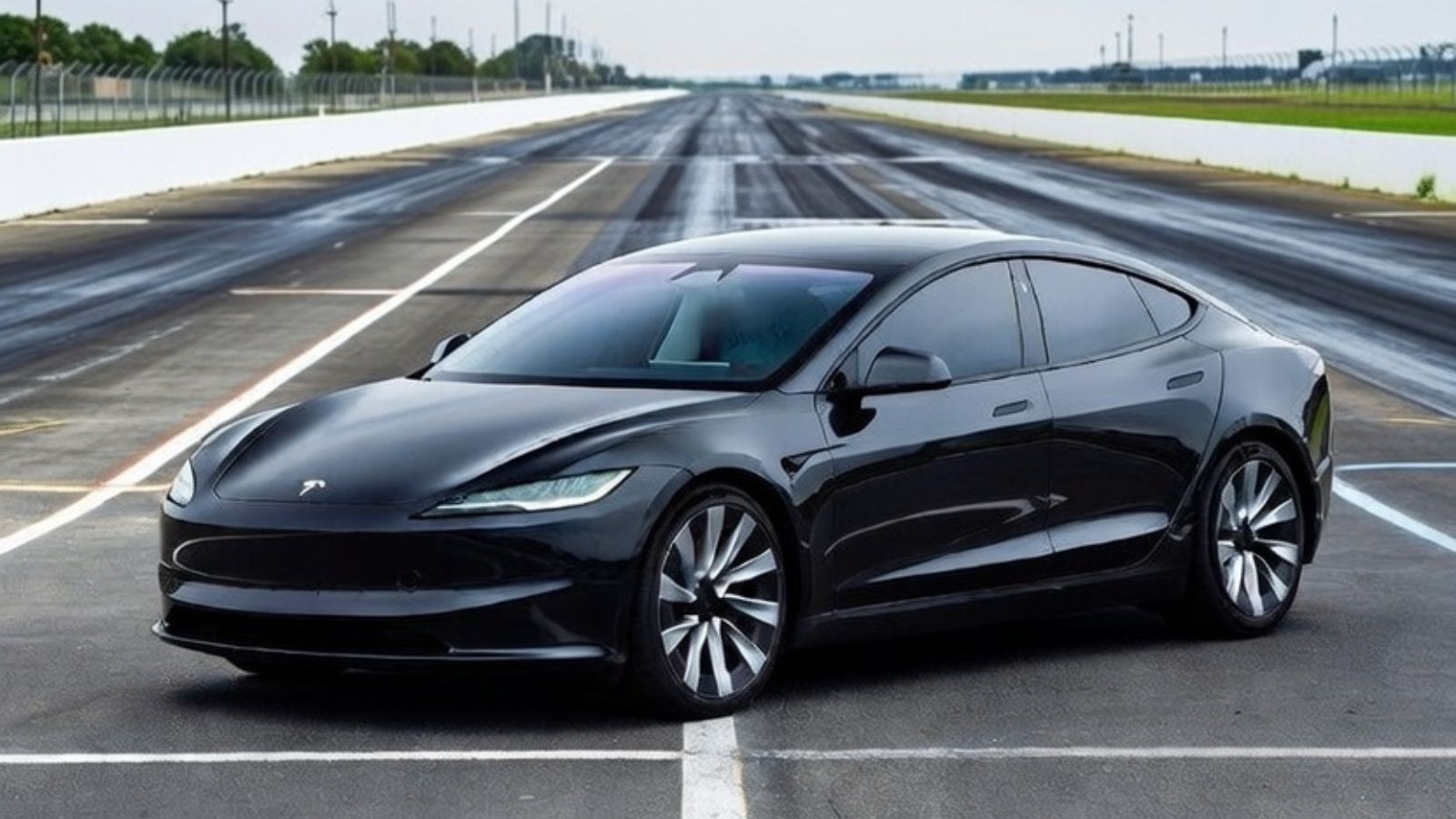
Orlando Speed World Dragway has ignited a new debate in the racing world by announcing a total ban on fully electric vehicles from its dragstrip – not just in competition, but also during test and tune days – effective immediately. The move, revealed in a January 8 press release from the Central Florida facility, cites safety concerns tied to battery technology and emergency response capabilities, and draws a stark line in the sand on how traditional motorsports venues are approaching the rise of electrified performance.
What the Track Is Saying
In its announcement, OSW outlined several risks that it says justify prohibiting fully electric cars:
Battery hazards: In a collision, high-voltage battery packs may release toxic and potentially flammable gases that traditional fire crews aren’t equipped to manage safely.
Responder uncertainty: First responders may struggle to be certain a vehicle’s electrical systems are fully “off,” increasing risk during rescue operations.
Entrapment issues: EVs sometimes have doors that won’t unlock after a crash without power – a real concern if a driver is unconscious.
Live chassis concerns: There’s a possibility, OSW said, that the chassis could remain “live” with electricity even after impact, posing electrocution risk during extraction.
Towing challenges: Because electric cars don’t roll easily with the power cut, existing track equipment allegedly can’t tow disabled EVs.
Specialized systems required: Handling EV battery fires often requires specific fire suppression systems – like water immersion baths – that the facility doesn’t currently have.
Importantly, the ban only applies to fully electric vehicles – hybrids are still welcome on the property.
A Local Move with Global Echoes
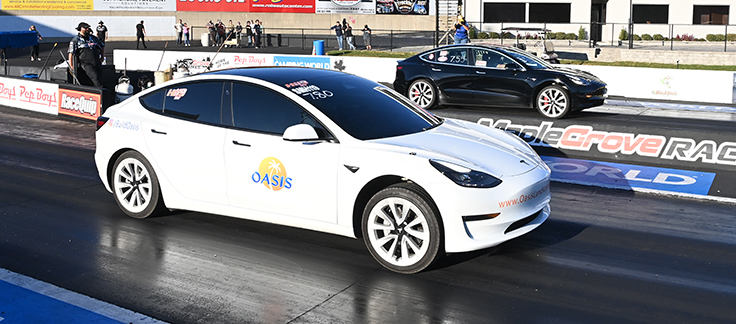 A pair of Tesla electric vehicles line up at Maple Grove Raceway in Pennsylvania, both dialed into the seven-second range in eighth-mile competition.
Orlando’s approach isn’t an isolated quirk. Drag strips in other countries have made similar decisions. Willowbank Raceway in Queensland, Australia, banned fully electric vehicles citing nearly identical safety rationales – toxic gases, emergency response unfamiliarity, and perceived hardware limitations – even while allowing hybrids to race.
That track’s statement referenced regulations from agencies such as Motorsport Australia and the National Electric Drag Racing Association as part of its risk review.
What these moves reveal is that many traditional motorsport venues haven’t yet found a way to comfortably incorporate electric propulsion into their safety and operations frameworks.
High-voltage batteries bring new failure modes that simply aren’t on the radar for facilities built around internal combustion engines – at least not yet.
Safety Versus Innovation – Are They Mutually Exclusive?
At one level, Orlando’s move is purely defensive: track management is saying they lack the resources and infrastructure to handle EV incidents in a way they feel comfortable with. From a risk management perspective, that’s understandable – especially for smaller facilities without dedicated fire trucks, specialized water suppression systems, or extensive training for high-voltage emergencies.
Advertisement. Scroll to continue reading.
But critics argue the ban is overly broad – even reactionary. Much of the concern centers on worst-case scenarios that have few documented precedents in real world EV racing. Yes, battery fires can be intense and lithium chemistry behaviors are different from gasoline, but first responders can and do train for them, and many modern race venues already handle them on the street and road racing side.
There’s also the question of fairness. As one enthusiast forum pointed out, hybrid cars – which contain sizable battery packs of their own – are still allowed, despite sharing some of the same risks Orlando listed for EVs. To some, that inconsistency suggests the issue may be less about ability to manage safety and more about readiness to adapt tradition to new technology.
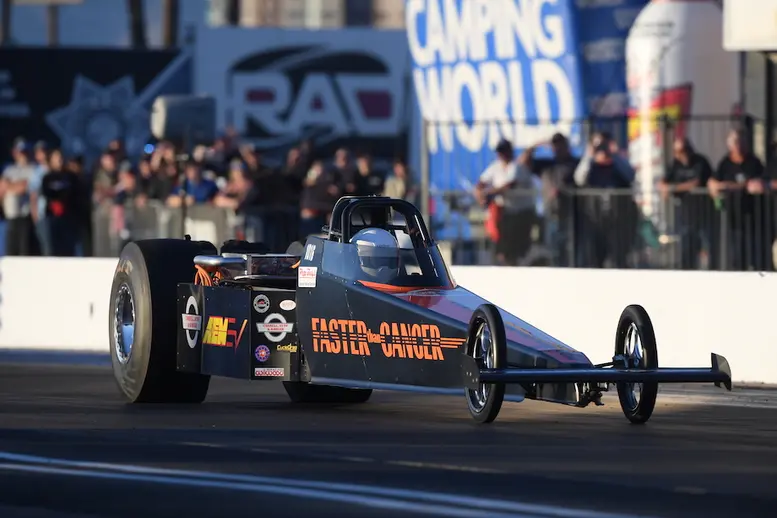 Steve Huff’s electric dragster makes an exhibition pass at the Flav-R-Pac NHRA Northwest Nationals, showcasing 2,400 horsepower and 200-mph electric performance as part of a Pep Boys Electric Vehicle Service display.
What This Means for Drag Racing’s Future
Here’s the rub: electric vehicles aren’t a fringe curiosity anymore. They’re already punching into performance territory that rivals – and sometimes eclipses – internal combustion – especially in showroom stock configuration. Legendary racer Don Garlits himself pushed an electric dragster north of 180 mph in the quarter mile with his Swamp Rat dragsters, showing what electric propulsion can do on the strip when it’s allowed.
And in grassroots circles – such as the National Electric Drag Racing Association, which has been advocating EV drag racing since the late ’90s – electric competition is treated not as a threat but as a burgeoning category that deserves structure and rules, not exclusion.
From a broader industry perspective, other forms of motorsport have already forged paths for electrified competition. Formula E, for example, is a global spec series that deals with safety, logistics, and competition entirely around electric power, proving there are established ways to race EVs safely at high levels.
The divide now being drawn at places like Orlando Speed World is less about can EVs race safely and more about who bears the cost and responsibility of adapting the venue to meet that future. At a time when electrification is accelerating in road cars – and performance tuning is part of that shift – the drag racing world is being forced to ask: will it adapt, or will it simply say “no thanks”.
Looking Forward
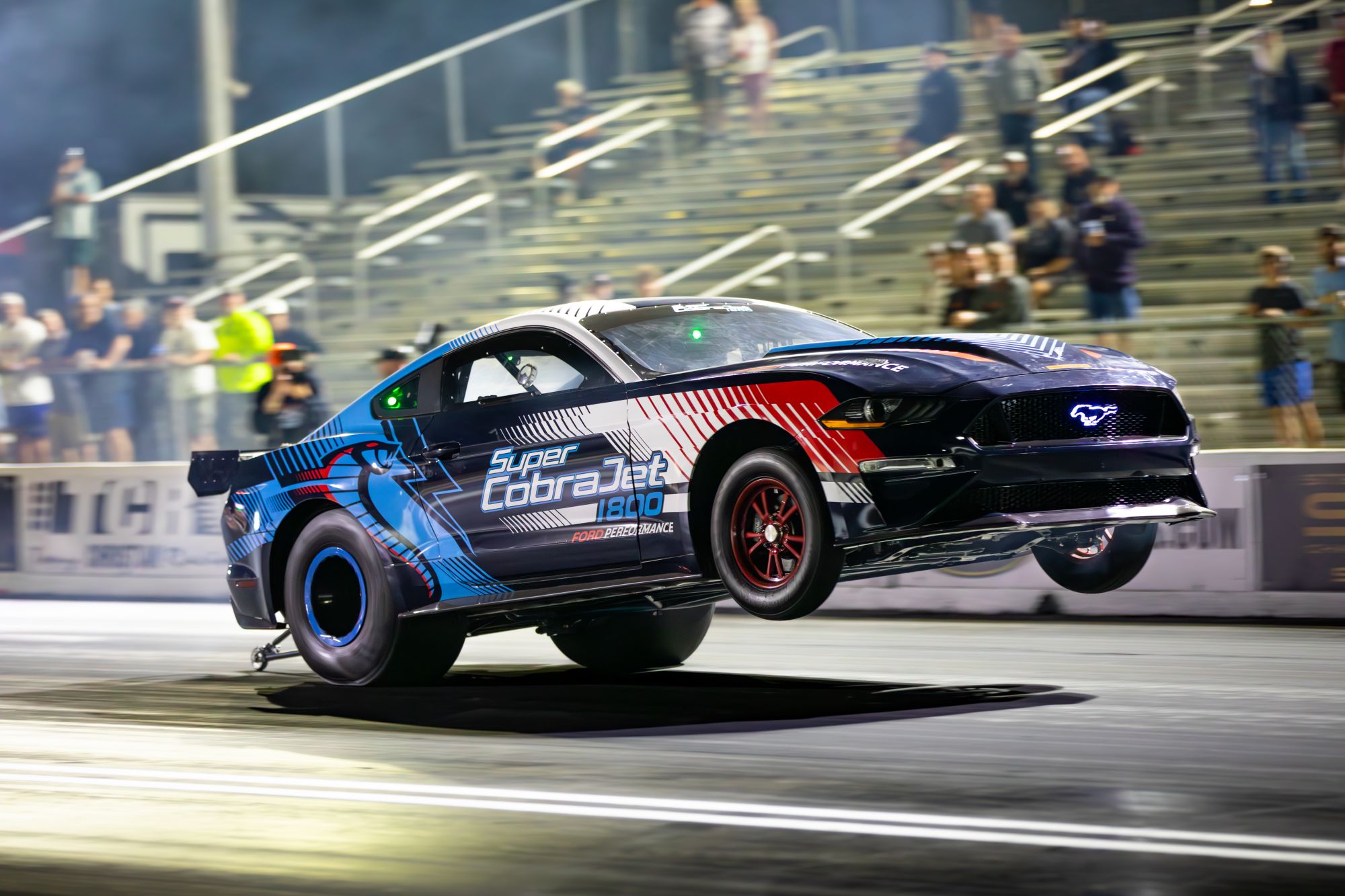 Ford’s Mustang Super Cobra Jet 1800 EV demonstrator lifts the front wheels during an exhibition pass at the PRO Superstar Shootout at Bradenton Motorsports Park, showcasing the all-electric machine that recently reset the NHRA record as the quickest electric vehicle in history.
Orlando Speed World’s decision has not only put its own policy under the microscope, it’s opened a larger conversation: how should drag racing – one of motorsport’s most visceral and electric forms – reconcile the rise of silent, torque-rich technology with the traditions that built it?
For now, the ban is in force. The reactions are loud. And the debate is only just getting started.
This story was originally published on January 12, 2026. 
Advertisement. Scroll to continue reading.