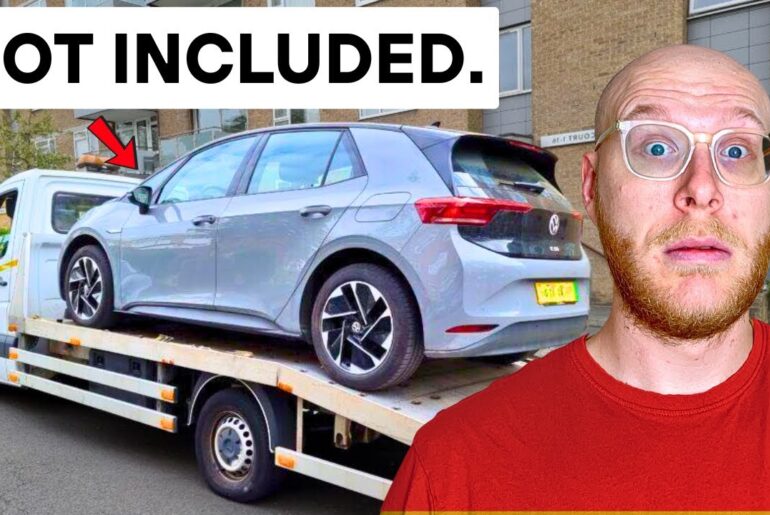
A driver has been found not guilty of causing the death of his five-year-old neighbour in south London after he claimed his electric car moved on its own.
Ashenafei Demissie, 53, was behind the wheel of a Volkswagen ID.4 when it suddenly accelerated forward, killing Fareed Amir and seriously injuring his own 12-year-old son, in November 2022.
The Old Bailey heard an expert for the prosecution put the crash down to Demissie inadvertently pressing the accelerator pedal himself.
However, the defendant said the car had moved forward by itself, possibly because of a software malfunction.
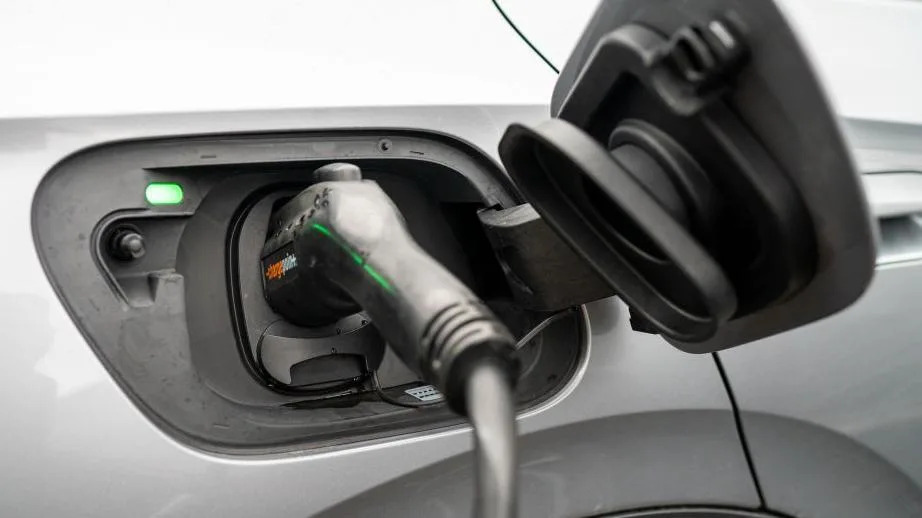
Demissie was driving a leased Volkswagen ID.4 electric car (library image) [Getty Images]
Metropolitan Police traffic collision investigator Mark Still told jurors he was “unable to find any defect that contributed to the collision and unable to make the car accelerate without the driver driving”.
But under cross-examination, he said that he was not a computer expert nor a software engineer.
Jurors were not told that as a result of publicity, a dozen EV drivers got in touch with case lawyers to report concerns about their cars, including some with the same model that Demissie had.
They deliberated for five hours before finding Demissie not guilty of causing death and serious injury by careless driving.
After leaving the dock, the tearful defendant dropped to his knees and prayed before leaving court.
Volkswagen has been contacted for comment about issues raised in the case [Getty Images]
Demissie, a minicab driver had picked up his younger son from school on the afternoon of 25 November and stopped his leased car outside his flat in Borough, south London, while he waited for a parking space to become free.
The boys had been playing nearby when the vehicle suddenly moved forward, hitting them and crashing into five parked cars.
Fareed died from his injuries and the defendant’s son suffered several fractures to his lower limbs in the crash, which was witnessed by the boys’ mothers.
In a police interview, the defendant said: “Suddenly the car jumped. I believe the car jumped because Fareed triggered the sensor. I had never had any mechanical problems with the car before.
“Just like a moment of madness. I don’t know what happened exactly. I tried to brake. It was like too late. It was just like a moment, second, whoosh and jump.”
Volkswagen has been contacted for comment about issues raised in the case.
Analysis
Sudden unintended acceleration, where a vehicle appears to lurch forward of its own accord are certainly not unknown.
Usually, they are blamed on the driver of an automatic car accidentally hitting the accelerator pedal rather than the brake.
Prosecutors claimed this was precisely what had happened in the crash in Borough.
A Metropolitan Police accident investigator said he had been unable to find any fault with the vehicle, although he admitted he was not a computer expert or a software engineer.
However, Demissie insisted the car had moved by itself, possibly due to a problem with the car’s controls or sensors.
The car involved was a VW ID4. It is an electric model, launched in 2020 – and like most modern vehicles, it contains sophisticated computer software which operates an array of different systems.
Last year, owners in the United States brought a class action lawsuit against VW, claiming that overly-sensitive touch controls on the ID4’s steering wheel could lead to the cruise control being triggered inadvertently, leading to sudden acceleration.
It is not clear, however, what actually caused the accident that led to the death of Fareed Amir.
The jury clearly wasn’t convinced Demissie was at fault.
That will inevitably put VW under the spotlight – and may raise questions about the safety of one of its best-selling electric vehicles.
Listen to the best of BBC Radio London on Sounds and follow BBC London on Facebook, X and Instagram. Send your story ideas to hello.bbclondon@bbc.co.uk