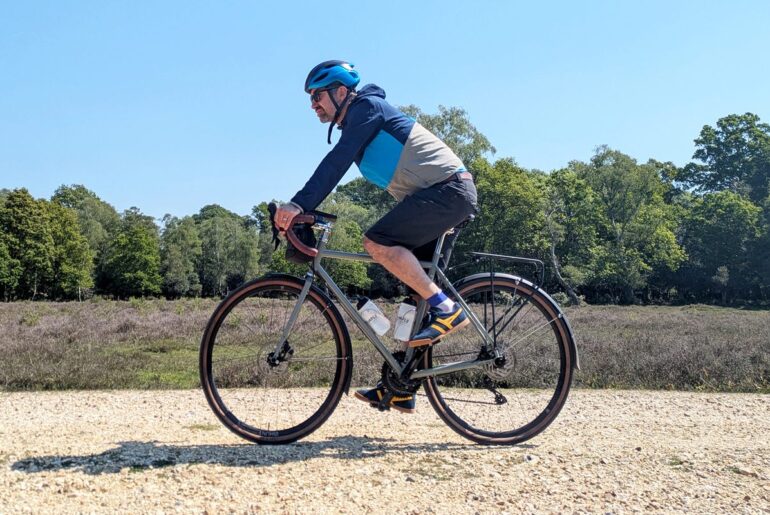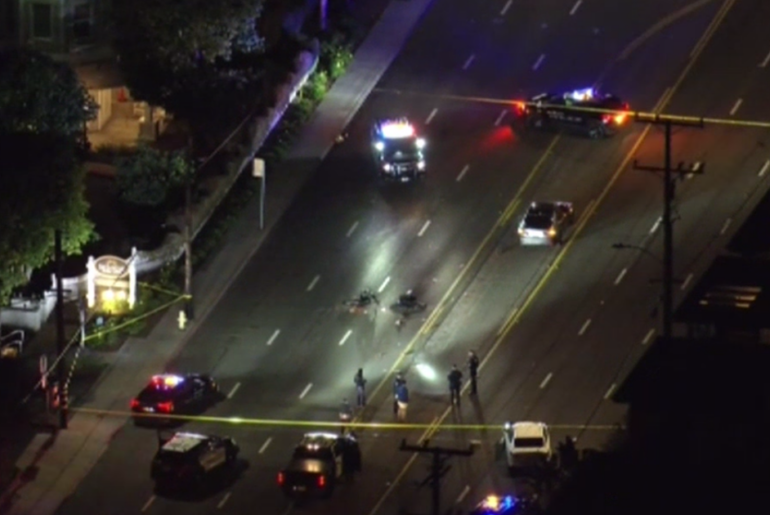
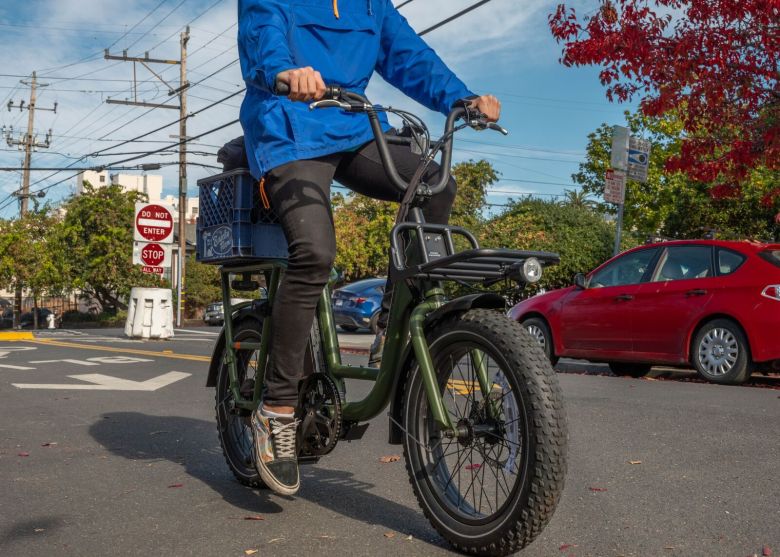
 Electric bikes, scooters and skateboards have exploded in popularity, but fire officials warn improper charging can lead to battery fires.
An e-bike rebate program run by a local energy agency had a massive impact in its first six months, with nearly 2,750 new e-bikes subsidized in its first six months.
Ava Community Energy, formerly East Bay Community Energy, partnered with the Alameda County Transportation Commission, the county transit funder, to launch a $10 million fund in July to offer significant rebates to adult customers for the purchase of new electric bikes.
The program provides $1,000 toward the cost of a standard e-bike or $1,500 toward the cost of a cargo or adaptive e-bike for people who qualify as low-income, with $400 and $900 rebates, respectively, for other county residents.
According to a spokesperson for Ava Community Energy, a quarter of the program funds were set aside for low-income folks.
So far, 61% of the rebates have been used to purchase cargo e-bikes, and 32% have been used toward standard e-bikes. Four percent of the rebates have been used on adaptive e-bikes, which work for people with mobility issues.
READ MORE
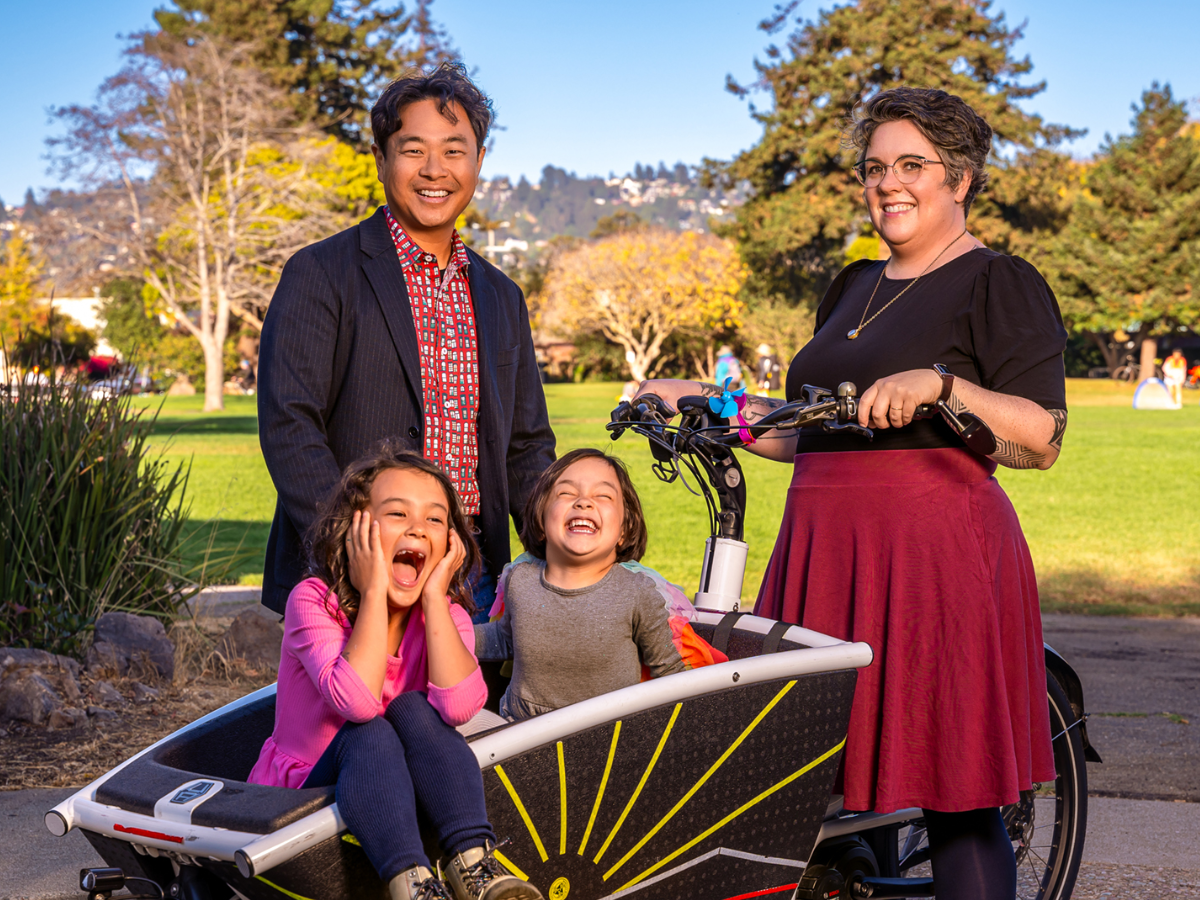
Why electric bikes are everywhere in Berkeley
They’re fun, they’re green, they’re cheaper than ever. From 1 to 81, Berkeley residents of all ages and abilities are taking to e-bikes — used for commutes, school drop-offs, grocery trips and joy rides.
New e-bikes range in price from around $500 to $4,000 or higher.
The energy company said that since the program launched, it has received 14,931 applicants from across the East Bay and has already sent rebate vouchers to 9,400 people who won their monthly lottery. Of those 9,400 recipients, 2,746 purchased bikes, 2,406 are still “shopping around” with eligible vouchers, and the rest let their rebate option expire without purchasing. Nearly a third of the applications, 4,343, were from Oakland residents.
Ava said that “income-qualified participants” are redeeming their rebates at nearly double the rate of other participants, with about 42% of income-qualified voucher holders purchasing bikes.
Several East Bay residents who’ve bought a bike in the last year said the rebate made a difference in their purchasing decision.
“I’d say we probably would not have pulled the trigger on buying one if we had not gotten the rebate,” Tovin Lapan, the editor of Berkeleyside’s partner food website Nosh, told us. Lapan said his kid now wants regular rides on it.
A boost for bike shops
The rebate has also helped out the local bike shops. Ava reports that 29 East Bay bike shops are participating in the program.
Jason Wallach, the owner of Laurel Cyclery, an Oakland bike repair shop, told us he was initially skeptical of the program because an earlier state rebate program had only produced one new bike sale for them. But he said the country program has been very successful so far — so much so that the shop has sold out its rebate-eligible e-bike inventory from October, when sales started in earnest for them, through the end of February.
“The last two and a half months of the year, we sold about $90,000 worth of e-bikes,” he said. “And by the way, we are Luddites and don’t hang too much with the e-bike craze, but there were so many requests that if we didn’t act on this, we would be giving up business.”
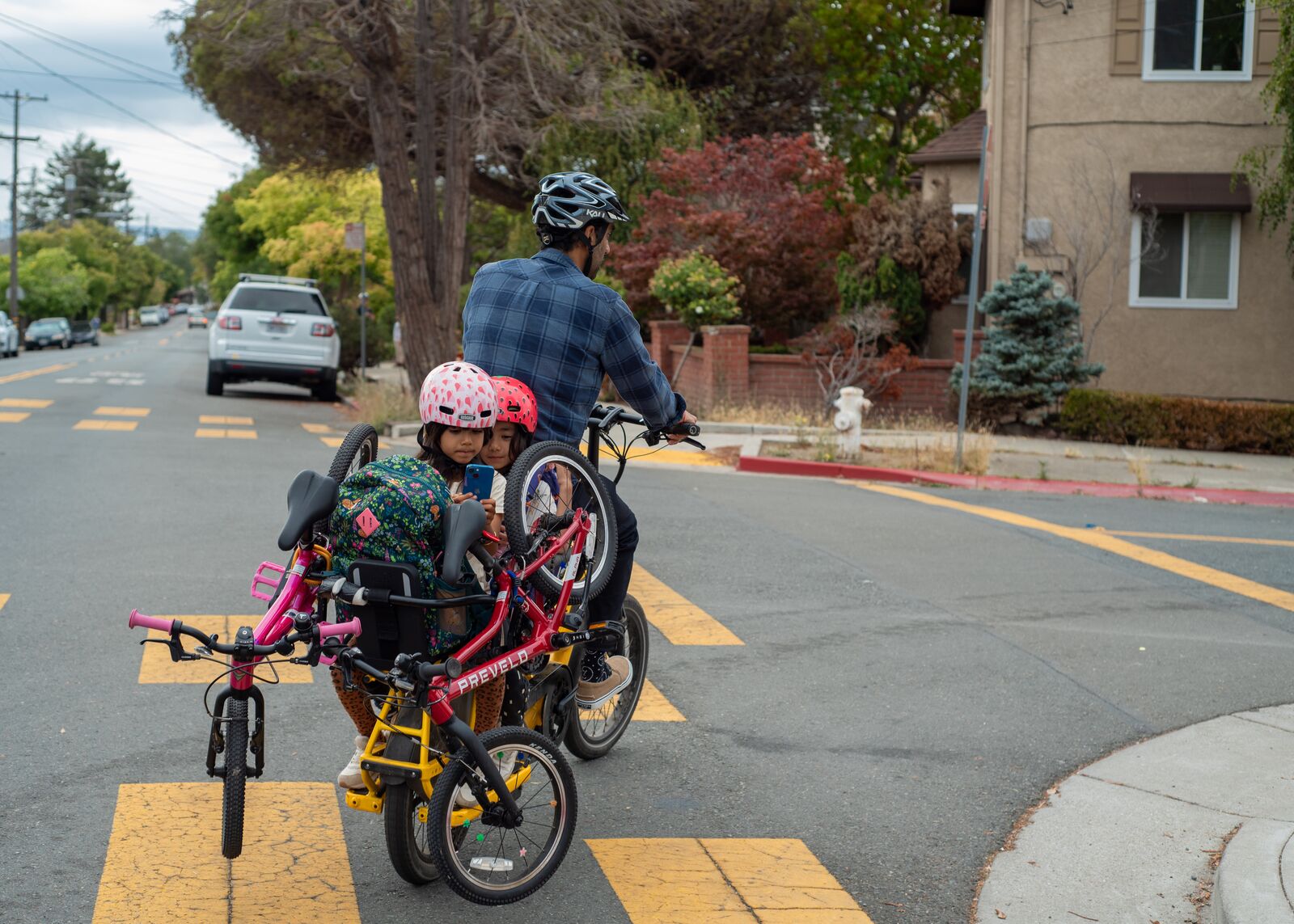
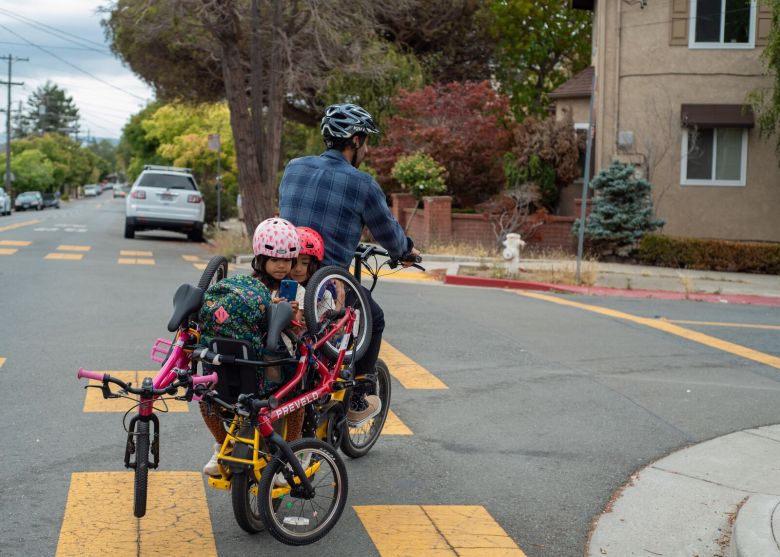 Naveen Gattu can carry his 6-year-old twins — and their pedal bikes — on his cargo e-bike, a Tern GSD. Credit: Ximena Natera for Berkeleyside
Wallach also said that the interest in the rebate gave his shop the opportunity to meet new people who might not have otherwise come into the shop and turn them into regular customers. Meanwhile, he said, some of the shop’s traditional bicyclists have been incentivized to upgrade to electric.
“A cargo e-bike for $1,300 with a $900 rebate — you’re getting out of the shop with that type of value,” he said.
Wallach said that processing the rebates has doubled their paperwork, but that Ava has done a good job sending the payments back quickly. The boost to sales has been critical during a year when bike sales declined industry-wide due to new Trump tariffs.
Kansas Waugh, the operations manager at New Wheel, near Park Boulevard in Oakland, said his shop has also seen increased sales thanks to the rebate, which is expected to last through September of this year.
Waugh told us it’s been especially fulfilling to hear families talk about replacing their cars or pausing a second car purchase because of the utility of e-bikes.
“ It is a very positive thing,” he said. “The replacement of a car, a single-person occupancy vehicle for short trips in urban areas, with bicycles, is a key measure of combating a number of issues like climate change and health.”
A new study highlights e-bike safety risks
Meanwhile, as e-bike use rises, a new study found that many state and local bike safety laws haven’t kept pace.
The report, titled “Exploring Electric Bicycle Safety Performance Data and Policy Options for California,” was authored by San Jose State University’s Asha Agrawal and Kevin Fang. The team found that there is a significant need for public education around what e-bikes can do, how they differ from regular bikes, how e-bike classes differ, and what cities can do to regulate them for improved safety — without stifling their environmental and recreational benefits.
The researchers spoke with 44 experts for the project, partnered with local cities, and analyzed e-bike growth at the local, regional, and state levels.
One study they examined was led by E-Bike Access, a Marin County advocacy organization. That study examined e-bike use among teenagers in wealthy San Mateo County, finding that 28% of the teens who used bipedals to travel around used very high-powered e-bike models that are even more powerful than the top-level Class-III bikes, which go up to 28 miles per hour. This has led to faster, potentially more dangerous e-bike speeds among this young group, the study found, resulting in community complaints and some injuries.
The researchers found that California’s rules don’t clearly answer whether e-bikes can be ridden on sidewalks — meaning they’re effectively allowed unless cities specifically ban them.
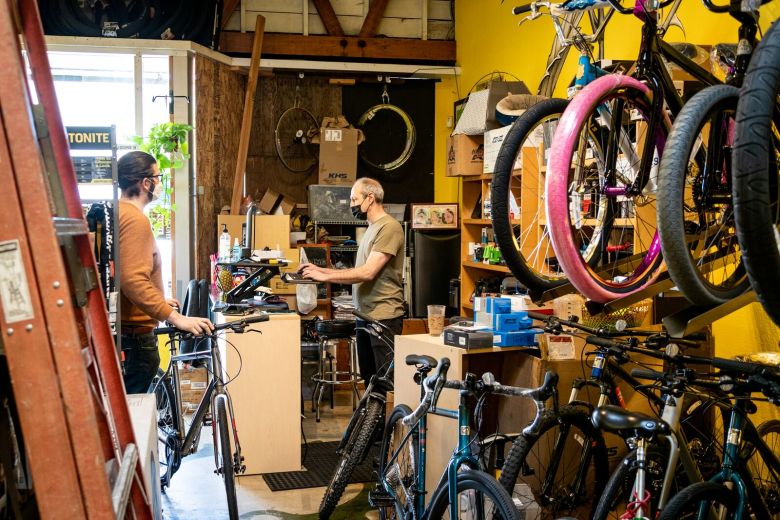 Oakland bikeshop owner Jason Wallach (right) inside of Laurel Cyclery, which he said has sold many e-bikes in the last few months. Credit: Amir Aziz
“The state defines electric bicycle riders as having the rights and responsibilities of bicyclists, and bicyclists are permitted to ride on the sidewalk unless prohibited by local authority,” the authors write.
The report goes on to suggest several kinds of laws that should be considered to regulate e-bike use. For example, they recommend that the most powerful e-bikes should probably be regulated the way mopeds or motorcycles are, while less powerful ones should be regulated more like traditional bikes.
The team also found that rules guiding e-bike use are scattered in different parts of city and state code. “Rules that apply to electric bicycles may not appear in any section of the [state vehicle] code specifically applicable to electric bicycles, showing up instead in rules for bicycle operators or even vehicle operators,” they write.
Among their many recommendations, the researchers say there should be specific rules for each e-bike class in state vehicle laws. Specifically, they say e-bikes should be split into “low-power devices regulated like conventional bicycles and high-power devices regulated like mopeds.”
“*” indicates required fields