The New Jersey Department of Environmental Protection has awarded nearly US$32 million in grants to accelerate the state’s transition to zero-emission school buses and expand public EV charging infrastructure across 16 counties.
The funding package includes more than US$18 million through the Electric School Bus Grant Program, which will support 53 electric school buses and 41 fast chargers, distributed among 14 recipients across northern, central and southern New Jersey.
An additional US$13.6 million from the EV Charging Grant Program will support 26 projects installing publicly accessible charging stations near town centres, retail areas, multi-unit housing, and transit hubs.
“The transportation sector is the largest source of greenhouse gas emissions in New Jersey,” said environmental protection commissioner Shawn LaTourette.
“These grant programmes are advancing New Jersey’s long-term EV emission reduction goals by replacing diesel school buses that emit harmful pollutants with clean electric buses and by expanding public and private charging infrastructure in our communities.”
The electric school bus awards target districts and contractors serving New Jersey students, with 11 grants directed to overburdened communities. Nine grants go directly to school districts, while five support school bus contractors.
Recipients include East Orange School District, which received US$1.7 million for five electric buses and three charging stations, and West Windsor-Plainsboro Regional School District, awarded up to US$2.1 million for six buses and six fast-charging stations.
The New Jersey initiative reflects broader momentum in electric school bus deployment across the United States.
Massachusetts recently saw Zenobe deploy 35 new electric school buses through partnerships with local districts, while the global electric bus fleet continues expanding as municipalities prioritise emission reductions and air quality improvements around schools.
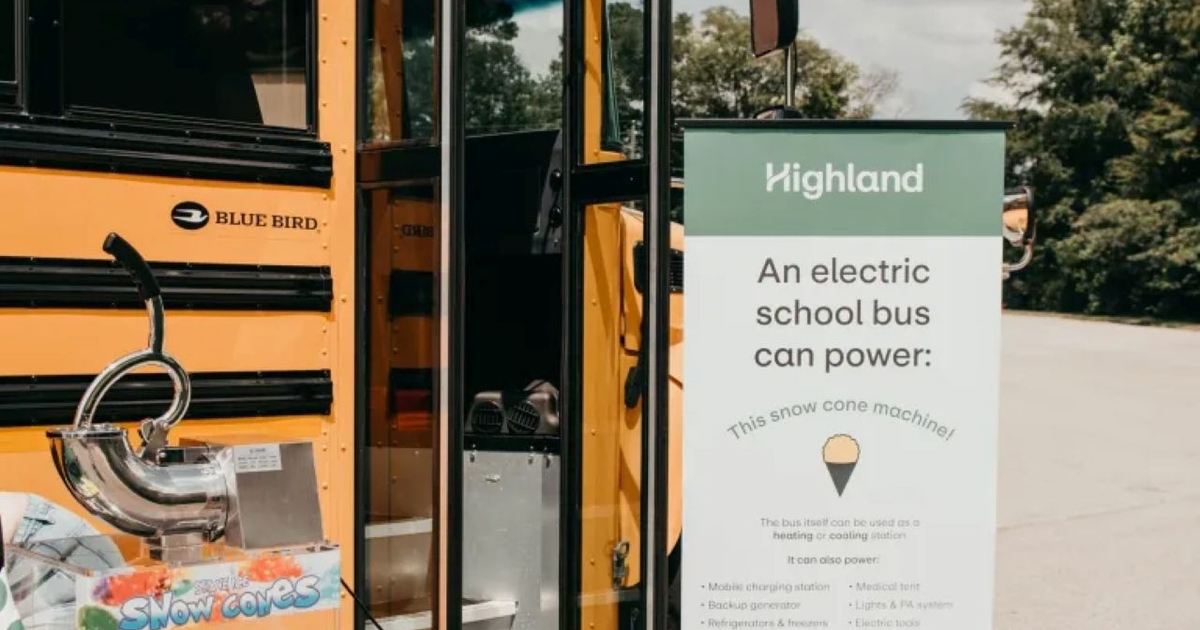
Financing mechanisms for electric fleet transitions have evolved to support these deployments. Companies like Highland Electric Fleets have raised US$150 million to expand electrification-as-a-service offerings, providing school districts with comprehensive solutions that include vehicles, charging infrastructure, and maintenance services.
Several New Jersey grant recipients will work with Highland Electric Fleets as their contractor.
The EV Charging Grant Program component addresses infrastructure gaps by funding 82 charging stations with 136 fast-charging ports. Fifteen private and governmental entities received awards ranging from US$400,000 to US$600,000, depending on the number of charging ports installed.
Recipients include Chargeflex LLC, DVM Industries, EV Edison, and Universal Electric Vehicle LLC, as well as municipal governments across the state.
New Jersey’s charging infrastructure expansion occurs as states explore innovative deployment methods. Florida recently announced plans to trial wireless EV charging technology on highways.
The Electric School Bus Grant Program operates under 2022 legislation signed by Governor Phil Murphy, providing up to US$45 million over three years through the New Jersey Board of Public Utilities’ Clean Energy Fund.
The initiative offers up to US$350,000 per school bus and charging station for applicants serving overburdened districts, and up to US$320,000 for other applicants.
Grant recipients receive technical assistance through the New Jersey Fleet Advisor programme, including customised fleet electrification roadmaps, vehicle recommendations, cost analyses, and infrastructure assessments.
This support structure addresses common barriers to electric fleet adoption, particularly for smaller districts with limited technical resources.
The awards represent the second round of the Electric School Bus Grant Program, following a 2024 distribution of US$15 million for 48 electric school buses. Combined with this latest round, New Jersey has now committed more than US$55 million toward purchasing 169 electric school buses across the state.
New Jersey currently operates more than 1,900 fast-charging ports and over 3,100 Level 2 charging ports, positioning the state among leaders in East Coast charging infrastructure density. The latest grants will further expand this network while supporting the state’s broader Zero-Emission Vehicle Roadmap objectives.