By Zhang Shiyao
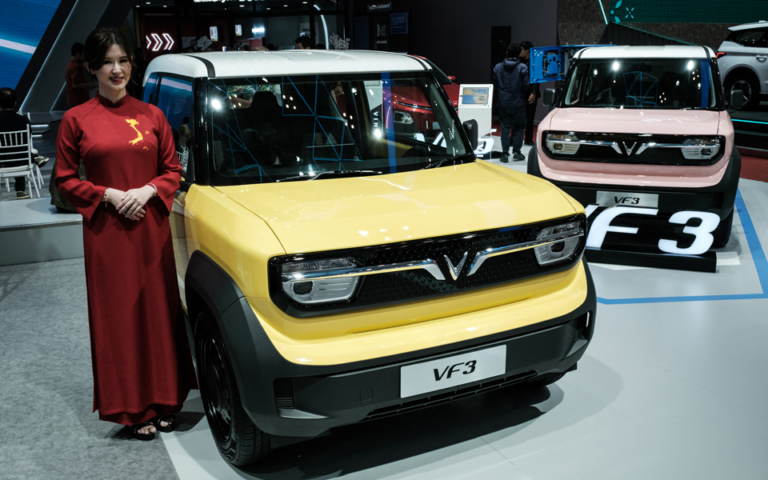
VinFast, Vietnam’s largest electric vehicle (EV) manufacturer, wrapped up 2025 with strong momentum: its domestic deliveries more than doubled in 2025, reaching 170,000 units – roughly one third of the country’s total car sales. With new factories opening in India and Indonesia, VinFast appears poised to take its “made in Vietnam” brand global.
However, competition in EV manufacturing has always been fierce, and 2026 opened with unsettling news for VinFast: China’s auto maker Chery, a major player in the global EV market, announced plans to open ASEAN’s largest factory in Vietnam by mid-2026, with the ambition of becoming Vietnam’s third biggest auto brand in the next 5 years.
This sets up a paradox worth unpacking. The same global trend that helped VinFast to rise and grow is not bringing its fiercest competition to its doorstep.
Riding the “China Plus One” Wave
VinFast Chairwoman Lê Thị Thu Thủy said at a forum in Hong Kong in 2024 that the company benefits from the “China Plus One” strategy, as global firms shifted production to locations outside China to reduce geopolitical risk.
The “China Plus One” (C+1) trend emerged in the early 2020s, driven by rising, less competitive labor costs in China, the U.S.-China trade war, and later COVID-19-related import and export disruptions. While China continues to play the role of the world’s factory, companies increasingly begun spreading risks by placing their bets across multiple locations.
Among the “+1” destinations, Vietnam quickly emerged as the top choice with its proximity to China, competitive labor costs, robust free-trade networks, and strong growth prospects.
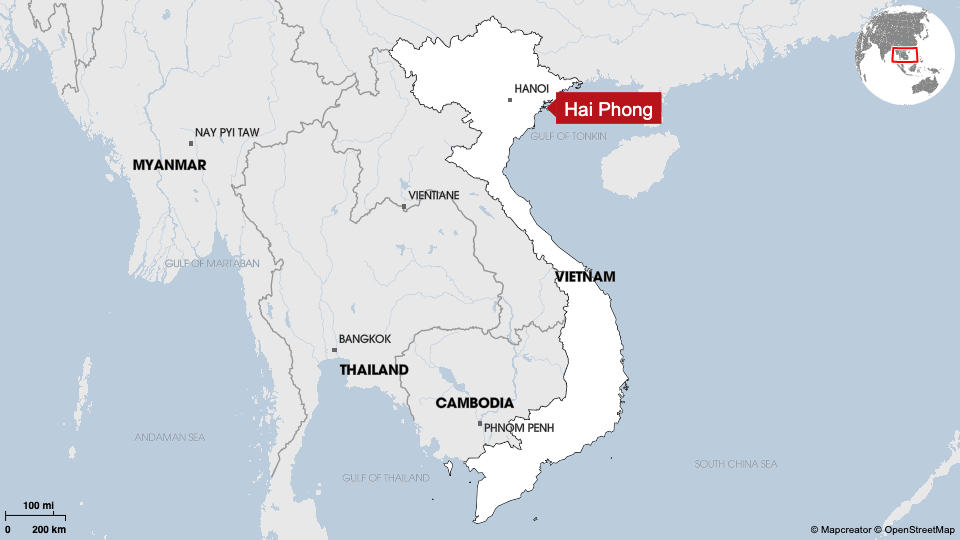
This shift emerged well before VinFast’s EV manufacturing took off. Hai Phong, the northern Vietnamese industrial hub where VinFast chose to locate its factory, benefited from this trend, attracting global players such as Japanese manufacturer Bridgestone and South Korea’s LG, supported by a growing network of industrial parks with mature supply chains.
By strategically locating its factory in Hai Phong, VinFast was able to ride this “C+1” wave, leveraging existing infrastructure, supply chains, and policy support to kick-start its growth.
VinFast: A Global Hybrid Success
Since 2021, VinFast has expanded its portfolio to include electric vehicles and has since become the undisputed leader of Vietnam’s EV market and a major player in Asia’s EV manufacturing, competing with Chinese EV makers.
Its rise is, at its core, a global hybrid story. “VinFast’s strategy is focused on cooperating with global technology companies to pair their latest advancements with our products,” said CEO Thái Thị Thanh Hải.
This strategy has been implemented through partnerships with multiple players around the world, spanning sectors from semiconductors to interior design. Among all the EV components, the battery and electric motors remain the most critical, and these are largely sourced from Chinese partners, including CATL and Gotion.
Despite global partnerships, VinFast achieved 60% of its local production target in 2025 and aims to reach 80% this year.
 File image of workers assembling an electric car at the VinFast electric automobile plant in Hai Phong. Photo by NHAC NGUYEN / AFP
Local production was achieved by manufacturing key components, such as car frames, in Vietnam. While the battery cells are being imported from Chinese producers, the assembly largely takes place domestically.
VinFast sources its batteries through VinES, a subsidiary of Vingroup, which obtains battery components from a number of third-party suppliers, including Gotion and Samsung SDI. VinES constructed its first lithium-ion cell facility in Ha Tinh in 2022, followed by a second plant in 2024 in partnership with Gotion, with a design capacity of 5 GWh (enough to power 100,000 EVs) per year.
As localization deepens, VinFast is moving from assembled in Vietnam to made in Vietnam.
The Paradox: The Tide Flows Back
However, the same “C+1” tide that lifted VinFast is accelerating as Chinese automakers, together with other industries, are following global firms into Vietnam and reshaping the competitive landscape again.
By October 2025, China had become Vietnam’s second-largest source of foreign direct investment after Singapore. The solar panel industry offers a clear precedent: Vietnam is now the world’s second-largest solar panel producer, primarily because Chinese large solar firms relocated their factories there to avoid U.S. tariffs.
That same “C+1” dynamic is now reaching the EV sector, with Chery’s decision to build a major manufacturing base in Vietnam.
For now, VinFast retains a strong advantage, particularly through its control of domestic charging infrastructure. But as Chinese manufacturers bring battery technology, scale, and capital directly into Vietnam, that lead may narrow quickly. In this next phase, localization is no longer a policy ambition; it is a competitive necessity.
Zhang Shiyao is the Asia Communications Officer at Ember, a global energy think tank focused on clean energy transition.