Support CleanTechnica’s work through a Substack subscription or on Stripe.
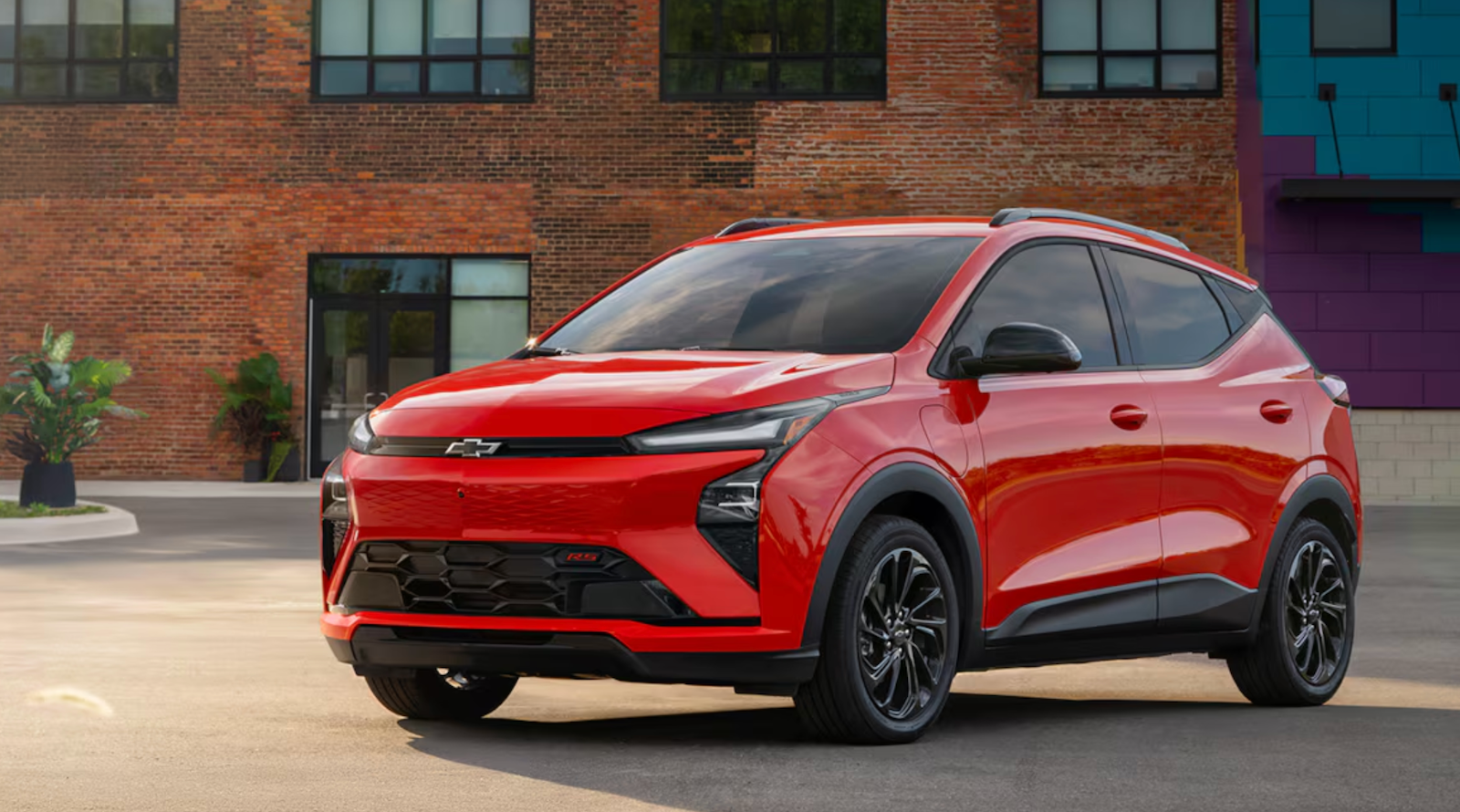
The Chevy Bolt 2.0 is on its way to dealer showrooms as we speak. In fact, some dealers may already have them in stock. The headline news about the new Bolt is that it comes with a 65 kWh LFP battery pack supplied by CATL and has an EPA estimated range of 262 miles — 7 more than GM said it would have when it was officially revealed last fall.
Where the extra miles came from is a bit of a mystery, and readers should be aware that the range of the new car has not yet been rated officially by what’s left of the EPA. Apparently, there is great marketing potential in that range estimate, as it exceeds some models of the Nissan LEAF by a few miles.
The other good news is that the base price of the new Bolt LT is $28,995, including delivery — making it the lowest priced new electric car you can buy today in America. The Bolt RS starts at $32,995.
Chevy Bolt 2.0 Specs
Underneath the skin, the powertrain for the new version of the Chevy Bolt is virtually identical to the one in the Chevy Equinox EV. That means a front-mounted 210 horsepower motor — 10 more ponies than the original car. It is being manufactured at the GM Fairfax assembly plant in Kansas City.
The original car was limited to 50 kW of charging power, which made recharging on trips arduous. The new car triples that number to 150 kW, which means drivers can charge from 10 to 80 percent in 26 minutes — a big improvement. Almost everyone loved their original Bolts, but nobody loved their slow charging performance.
The switch to an LFP battery pack also means owners can charge to 100 percent on a regular basis if they wish. Conventional wisdom holds that cars with NMC battery packs should not normally be charged beyond 80 percent in order to prolong battery life, but LFP batteries don’t have that limitation. In addition, the new Bolt comes standard with a NACS charging port, which means drivers can charge their cars at Tesla Supercharger locations.
One last bit of information about charging: The new Bolt, when paired with a GM vehicle-to-home charging product, can discharge up to 9.6 kW to help power a home if there is an interruption in the utility grid. That’s a feature many people may find attractive.
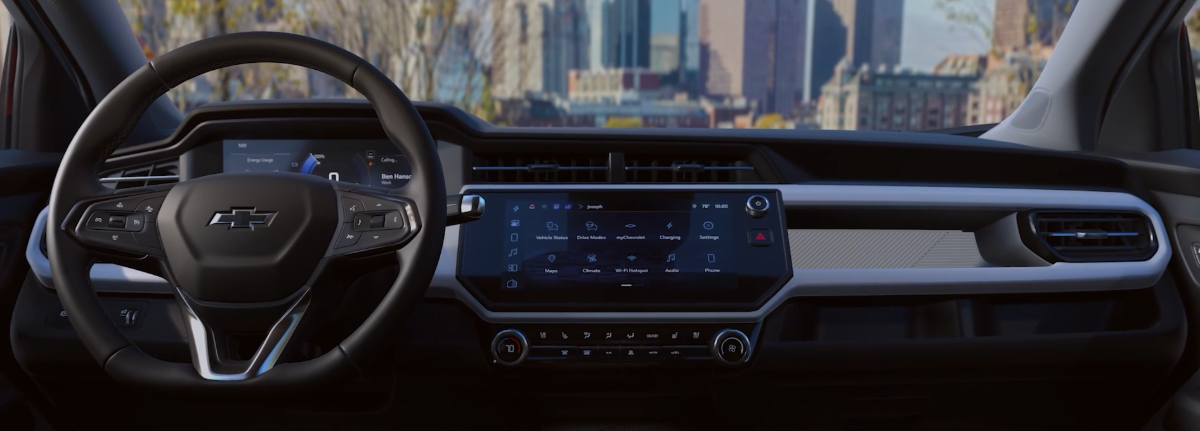
The new Bolt looks a lot like the old Bolt, which is no surprise, since it is basically an update of the former Bolt EUV. The interior has been substantially updated. The original car in 2017 had a dashboard that was a bit of a mishmash, as GM was still figuring out how to build cars with screens.
 Credit: Chevrolet
The new version features upgraded materials and comes standard with an 11-inch digital instrument cluster, an 11.3-inch touchscreen with Google built in, plus adaptive cruise control and automatic climate control. The new car does not offer either Apple CarPlay or Android Auto, which may distress some people, but that decision seems to be part of a new GM policy for many of its latest models.
According to GM Authority, customers will have several options to upgrade the technology features of their Bolt. They can add GM’s Super Cruise Package (RPO code WK7) that adds hands-free driving capability on selected highways for $3,255.
The Technology Package (RPO code CWM) is available for $1,695 on LT and $1,195 on RS models and adds enhanced driver-assist features such as HD Surround Vision, a wireless phone charger, and a rear pedestrian alert system and upgraded connectivity. An illuminated charging port is also an option (RPO code 62G) for $450.
That is the kind of nickel and dime stuff that manufacturers love to use to add a few bucks to the bottom line. Putting a light inside the charging port might cost $1.97 at the factory level, but if you have ever tried to plug your car in on a moonless night, you will wish you had it. You can pay Chevrolet $450 or you can keep a $2 flashlight handy. Your choice.
We also think the rear pedestrian alert should be standard on all new cars. Once you have experienced it, you quickly learn how often things are going on behind you while backing up that you may not be aware of.
 Credit: Chevrolet
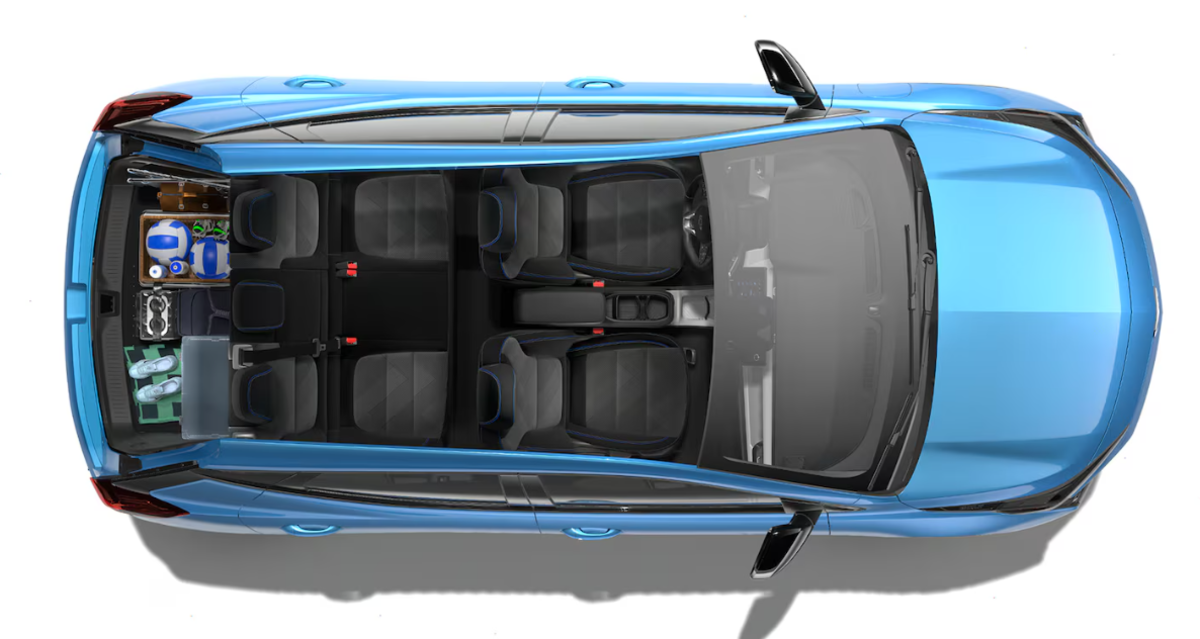
Also on the option list is a Dual Panel Sunroof Package, which adds a power tilt and sliding front sunroof glass and a power sunshade for $1665. Charging solutions include the GM PowerShift Charging Package (RPO code PED) for $2,371 and the GM PowerUp 2 NACS charger (RPO code 5CH) for $899.
All six paint colors are available at no extra charge, including Relic Green Metallic, which will be available at a later date. RS customers will also be able to select the extra-cost Atomic Yellow paint package that includes red stitching on the interior upholstery.
How Long Will The Bolt Be Offered?
General Motors is a bit of a schizophrenic when it comes to policy. It lobbied hard for the OBBB last year that ended the existing EV tax credits early. Had that not happened, the new Bolt would have had a net cost to customers of around $22,000 — a very attractive number. So, while it was developing the second-generation Bolt, GM was also working behind the scenes to make it less affordable — which hardly seems to be a recipe for getting more people to buy one.
GM is also banging the drum for rolling back exhaust emissions standards so it can sell more gargantuan trucks and SUVs, even though the effluent flowing out of their tailpipes is a direct threat to human health thanks to all the fine particulates released into the atmosphere as a result. And don’t ever get us started on how those emissions promote higher global temperatures.
My wife and I drive a first-generation Chevy Bolt with a new battery pack, and there are some things about it that I like better than our Tesla. For one, I really appreciate the little yellow warning indicators that pop up in the sideview mirrors when there is a car in my blind spot. That system is accurate and intuitive, whereas taking my eyes off the road to look at the touchscreen in the Tesla is not.
Second, I like the size of the Bolt, which has virtually the same passenger space as the Tesla but in a smaller footprint. I have always been a fan of small, nimble cars like the MGs and the Miatas I drove for more than 30 years. To me, the Bolt is right-sized while the Tesla is about half a size too big for my tastes.
Whether the new Bolt will be a sales success remains to be seen. When it comes to the EV revolution, the US seems to be in a form of nuclear winter, thanks to government policies more in tune with the days of the Ford LTD than the best electric cars available today.
It would surprise no one if Chevrolet cancelled the Bolt again because sales do not reach expectations, just as it has done so often in the past. If the Bolt 2.0 is the car for you (no car ticks all the boxes for every driver), you may not want to tarry too long before placing your order.
Sign up for CleanTechnica’s Weekly Substack for Zach and Scott’s in-depth analyses and high level summaries, sign up for our daily newsletter, and follow us on Google News!
Advertisement
Have a tip for CleanTechnica? Want to advertise? Want to suggest a guest for our CleanTech Talk podcast? Contact us here.
Sign up for our daily newsletter for 15 new cleantech stories a day. Or sign up for our weekly one on top stories of the week if daily is too frequent.
CleanTechnica uses affiliate links. See our policy here.
CleanTechnica’s Comment Policy