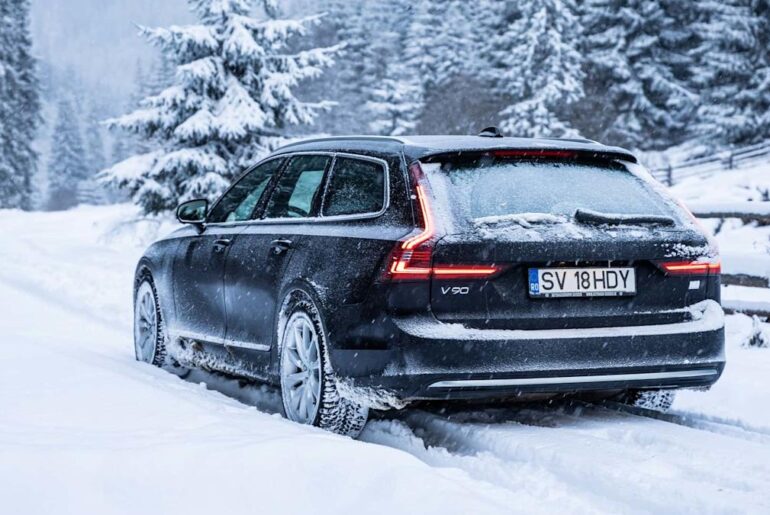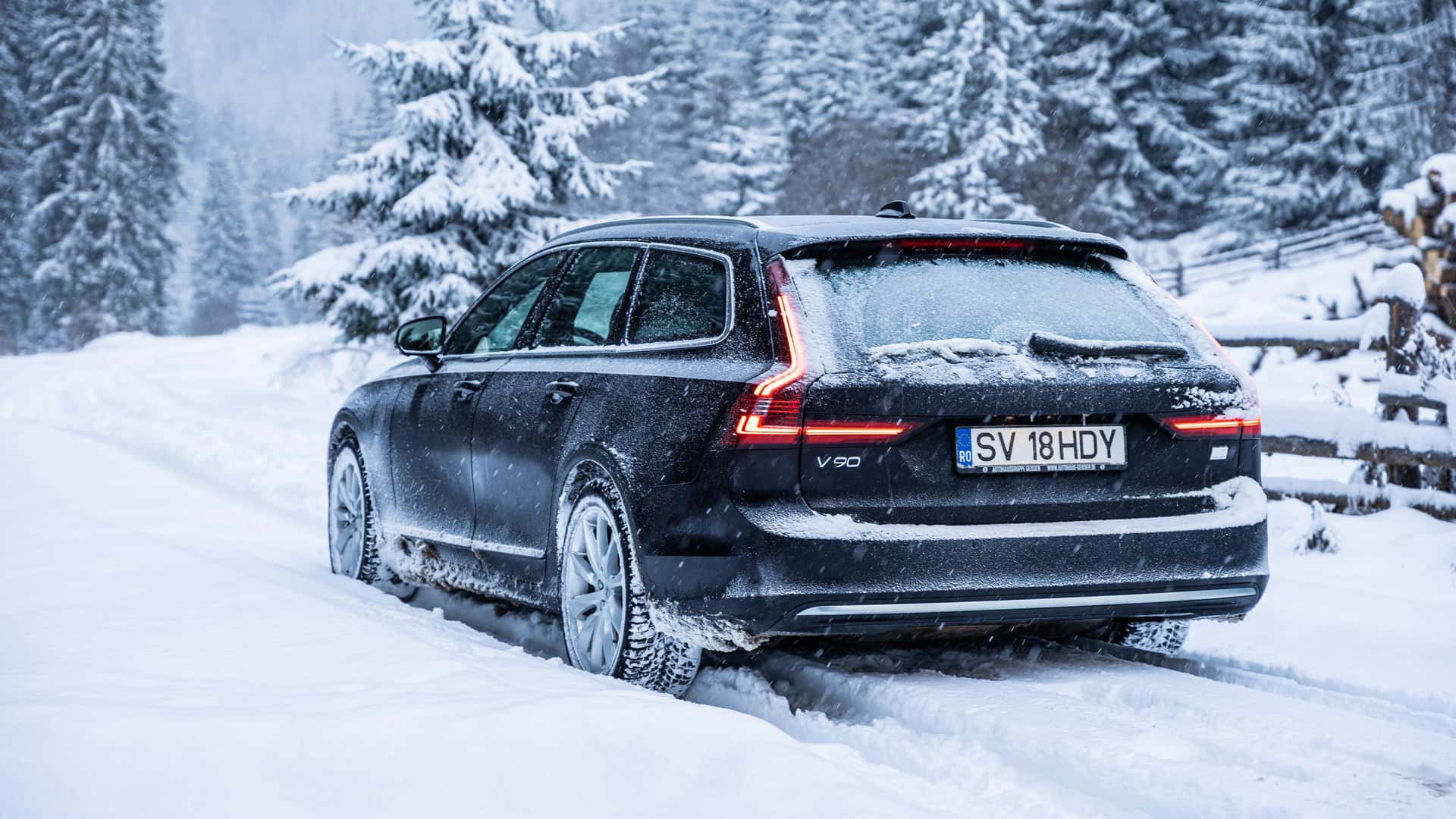
Battery degradation is inevitable. But as technology advances and carmakers come up with better ways to improve battery life, it’s slowly becoming a non-issue. That’s what the statistics say, and that’s what I discovered after doing a battery capacity test on my own 2023 Volvo V90 plug-in hybrid wagon, which I’ve owned for almost a year.
My car is rare, and that’s one of the reasons why I bought it in the first place. But the results should apply to any four-cylinder Volvo PHEV built after 2022—that’s when the Swedish automaker upgraded the battery packs and rear electric motors in its SPA-based plug-in hybrids. In other words, 2022.5 and newer S60s, V60s, S90s, V90s, XC60s and XC90s that came from the factory with an Android Automotive OS-based infotainment system.

Photo by: Iulian Dnistran / InsideEVs
How I Tested
Volvo doesn’t offer an easy way to check the battery health of its plug-in hybrids—not in the infotainment screen, and not in the data that can be checked with an OBD dongle. So I had to do it the old-fashioned way, by completely draining the battery and then charging it to 100%.
By doing so, I discovered some interesting information that quickly explains why Volvo hasn’t integrated a charging limit feature in its PHEVs. In all EVs, owners can limit charging at whatever level they wish—typically 80%—to protect the battery in the long term, but Volvo PHEV owners don’t have this functionality.
You have to manually unplug if you want to stop charging at anything but 100%. But you don’t need to, as I discovered.
I used an OBD diagnostics tool and a free smartphone app to keep an eye on the battery pack’s state of charge and voltage, as reported by the car’s battery management system (BMS). This is important because, as you’ll see, what the driver sees in the instrument cluster isn’t the same thing as what the BMS sees.
The Data
Volvo’s official figures say that my car (and all the other PHEVs that use the same setup) has a gross battery capacity of 18.8 kilowatt-hours, while the usable capacity is 14.9 kWh.
I drove my car until the range estimate in the instrument cluster went down to zero and the engine kicked in to keep the wheels moving. But here’s where the interesting part begins. In Hybrid mode, which is the default mode in which the car boots up, the battery’s actual state of charge, as indicated by the BMS, was 21%, while the voltage was 361 volts.
In Pure mode, which can add one or two miles to the total electric range by accessing more of the battery’s capacity, the reported state of charge was 17% when the engine kicked in, with a voltage of 357V. So even if the gauge cluster says zero miles, it doesn’t mean that the battery doesn’t have anything more to give.
When the electric range is depleted, the engine kicks in to keep the wheels moving. In Hybrid mode, the actual state of charge is 21%, as reported by the car’s brain.
Photo by: Iulian Dnistran / InsideEVs
In Pure mode, the engine kicks in when the BMS-reported state of charge reaches 17%.
Photo by: Iulian Dnistran / InsideEVs
Photos by: Iulian Dnistran / InsideEVs
The same goes for a full charge. After plugging into a 240-volt, 16-amp home charger and charging the battery to an indicated 100%, the BMS reported an actual state of charge of 94% and a voltage of 418V. This is the key that keeps the battery healthy for a long time.
By artificially limiting the real charge level and creating a buffer, battery degradation will be minimal, as I found out on my own. Even though it’s counterintuitive to omit a manual charging limit feature, the car does a great job of keeping things in check automatically.
After a full charge, the car’s digital gauge cluster reported 100%. The BMS, however, read 94%.
Photo by: Iulian Dnistran / InsideEVs
Degradation
After doing all of the above, my home charger said that it had delivered 16.77 kWh of energy for a full charge. After subtracting 10% for losses, I get 15 kWh of usable energy that went into the battery. Volvo’s official figure says 14.9 kWh of usable energy, so the logical conclusion is that my car’s battery hasn’t degraded at all after nearly four years and 42,000 miles.
That’s fantastic news, especially considering that I’ve tried to drive on electric power as much as possible during my ownership, and I’ve fully charged the car almost every day for the past nine months and 11,500 miles.
Digging deeper into the numbers, the BMS keeps roughly 23% of the battery’s total capacity out of reach, which seems like a lot, but it works out extremely well in the real world.
14
Source: Iulian Dnistran / InsideEVs
Looking Toward The Future
Just because my car’s battery hasn’t degraded so far doesn’t mean that it won’t be affected in one way or another in the future. A recent statistic from Germany’s ADAC, the country’s largest car club, showed that the average Volvo PHEV still had 85% of its original battery capacity after about 125,000 miles (200,000 kilometers), so I expect my car to go down the same path.
What’s more, not all PHEVs are created equal. According to the same study, Mercedes-Benz plug-in hybrids see the least degradation, while Mitsubishi PHEVs experience the most degradation.
As for the actual electric range figures, I’ve been getting approximately 37 miles (60 km) in the winter and roughly 55 miles (90 km) in the summer from a full charge. That said, I did max out at 68 miles (110 km) at one point, but that hasn’t happened a second time yet.
I like my car. It’s a luxurious family hauler that has halved my fuel costs, while also being the fastest and most powerful car I’ve ever owned. And judging by this battery test, I won’t need to get rid of it anytime soon.
We want your opinion!
What would you like to see on Insideevs.com?
– The InsideEVs team