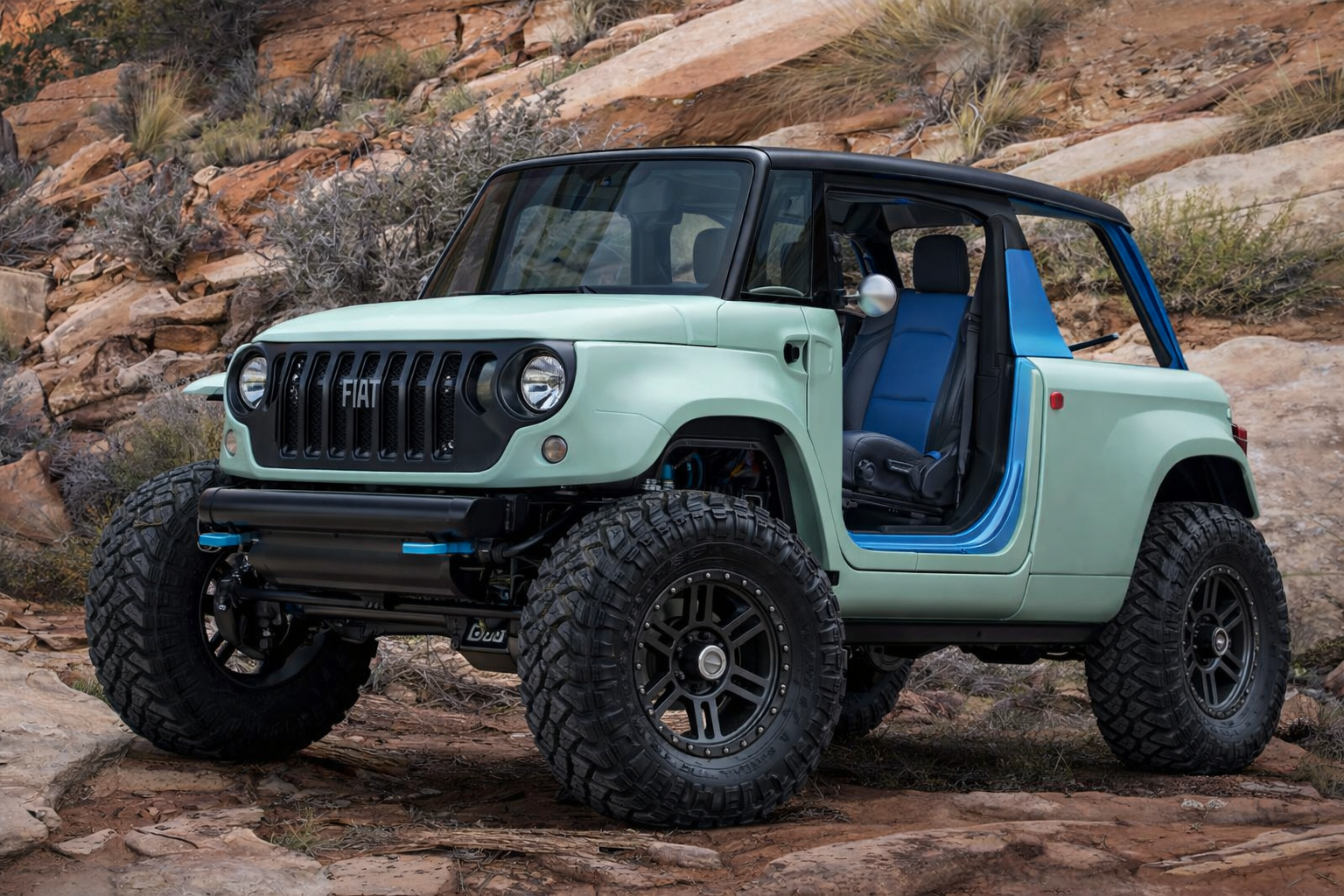
 No – Stellantis killing off PHEVs will not spawn a future Fiat 4×4 with solid axles and an extended range battery setup…. or WILL it? (Image: ND Adlen and AI) In this week’s Ask Nathan: The death of Stellantis’ PHEVs is a good thing? Excitement about a new Montero?
The first question comes from a fan who is concerned with Stellantis’ decision to kill off their PHEVs.
 Q: (Via: Nathan Adlen Journalist Facebook) What happens after the PHEVs are killed off by Stellantis?
I get it. I totally get it. It makes sense that the Aslanidis is getting rid of their PHEV. The reliability has been questionable from day one. It’s sort of like a mixed bag. Sometimes they hold together for a long time, other times I hear about people complaining about going to their dealership 10 times to have something simple fixed. That inconsistency is a huge problem. I also think their technology is really behind and needs to be replaced. Does that mean that they’re going to subcontract to another company and get better equipment? Is that why they’re discontinuing the Jeep 4XE set up and also the Chrysler Pacifica PHEV? Is this going to destroy the company? I think it might.
— DelCinco5
A: I think it’s a smart move.
Given the circumstances, and the very real reliability issues, throttling back makes sense. A large part of the problem is that some automakers are still leaning on aging technology that simply isn’t competitive anymore. Older systems bring more weight, more complexity, and fewer long-term benefits.
Newer tech changes that equation. Lighter batteries, better thermal management, and more efficient chemistry all pay dividends in longevity and reliability; two things manufacturers are clearly prioritizing right now. That’s especially true here, and I believe Stellantis is serious when they say the focus is shifting toward different technologies moving forward.
They’re not alone. Ford and GM are clearly heading in the same direction. This doesn’t signal the end of plug-in hybrids – it signals a reset. What we’re seeing is the groundwork for a new generation of plug-in technology that’s better engineered, more durable, and ultimately more competitive.
Frankly, that’s encouraging. It’s far better than the old Stellantis playbook of kicking the can down the road for as long as possible. This feels like progress, not retreat.
— N
The last question comes from a friend who wants to know my reaction about Mitsubishi bringing back the Montero.
Q:(Abstract: Fellow journalist who dislikes Mitsubishi) Excited about the new Montero?
“Don’t try to frighten us with your sorcerer’s ways… (Nathan). Your sad devotion to that ancient…. (Montero/Pajero) has not helped you conjure up the… (past awesomeness) or given you clairvoyance enough to find (a modern replacement rom Mitsubishi).”
(Not word-per-word, but that’s how it went down; from my perspective)
Yes – this was a lemon, but my other four Monteros were great! A: I find your lack of faith disturbing..
The Mitsubishi Pajero – known as the Montero in the Americas, is a true Dakar Rally legend. Between 1985 and 2007, it secured an astounding 12 overall victories, including a dominant run of seven consecutive wins from 2001 to 2007. That record makes it the most successful vehicle ever in the rally’s car category by a single manufacturer. Every generation (which I have owned) are badass off-road, and are a hoot to drive.
True: I had a bad experience with the third generation model, but it was used and abused before I got it, and I didn’t have the wherewithal to fix it on my own. New/rebuilt engines are expensive, but I digress. This could be the vehicle to take the fight to the large SUV builders that currently lead the market. I hope that Mitsubishi innovates with modernized off-road tech, like they once did. It looks like it will be based on the Nissan Armada platform, which is a a logical move given shared interest with Nissan, and the Armada’s proven full-size SUV underpinnings. It’s also possible that it could use a lengthened Nissan Frontier platform, which would also make sense. Rumor has it that a shortened Frontier platform will underpin the resurrected Nissan XTerra.
Check out the story about the test mule (here).
It makes sense that the new Montero will have a twin-turbocharged V6, right from the Armada, and there’s a chance that a plug-in hybrid option could blend efficiency with trail-ready torque. Given Nissan and Mitsubishi’s recent upgrades with interior design, expect premium interior materials, and three rows of spacious seating.
While Mitsubishi hasn’t confirmed an official on-sale date, the revived Montero concept could debut within the next several months, with a production version potentially arriving as a 2028 model. If it delivers on its heritage while undercutting the competition’s pricing, this could be one of the most meaningful SUV comebacks in recent memory.
– N