Elon Musk’s Boring Co. is on the cusp of opening new tunnels that will link new stations and destinations in its yearslong project to build an underground Vegas Loop transportation system.
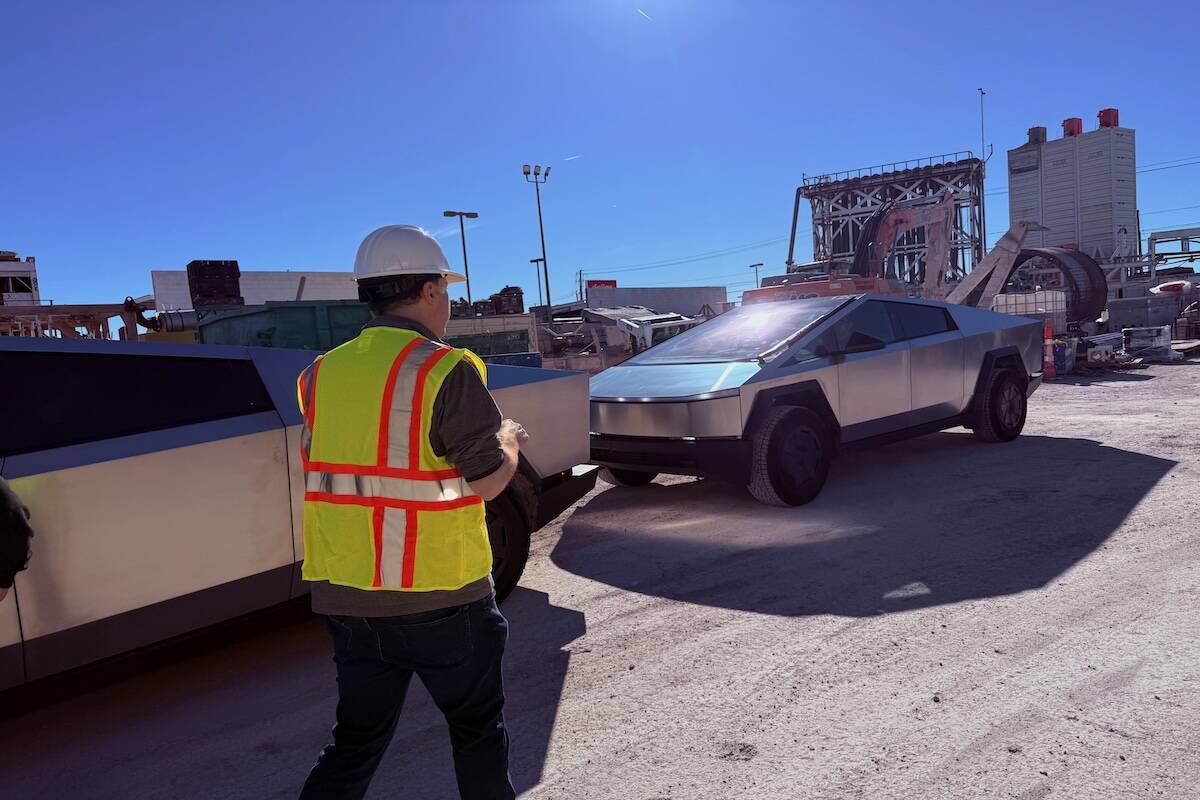
Boring Co. president Steve Davis took the Las Vegas Review-Journal on an exclusive, extensive tour of the Vegas Loop project, from open and under-construction tunnels and stations to a site where dirt and ground water are collected and processed and its Las Vegas headquarters, showing the magnitude of the operation.
Here are four takeaways from the tour:
Airport rides
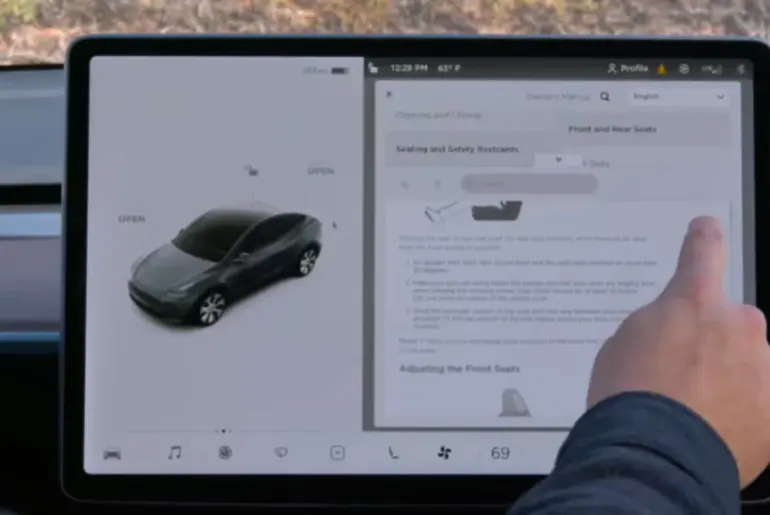
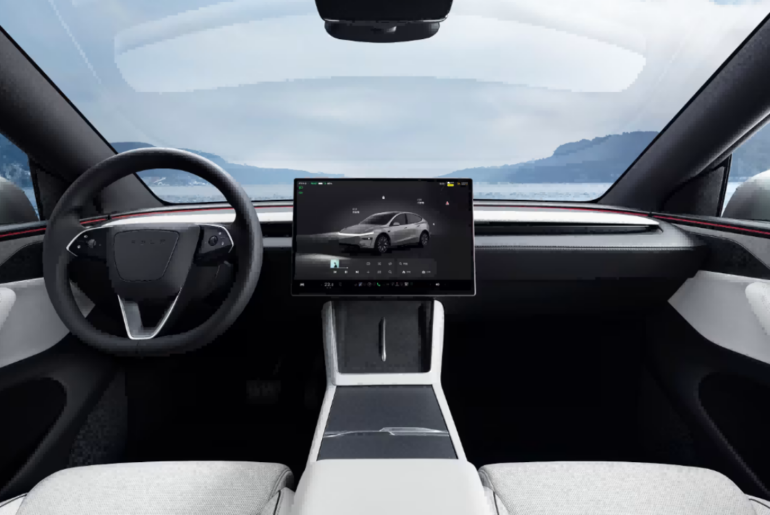
Phase 1 of a four-phase Harry Reid International Airport ride service kicked off last month, with the option to be driven to the airport from stations that are already open in the point-to-point transportation system. Those include Resorts World, Encore, Westgate and the Las Vegas Convention Center. This week, Boring Co. began picking up airport passengers after 100 of its 130-car fleet of Teslas were outfitted with transponders the airport requires of transportation companies, Davis said.
“It’s just us testing the system,” Davis told the Review-Journal. “We do 50 rides a day.
Phase 2 involves the under-construction 2.2-mile dual direction tunnel system from Westgate to a station planned for 4744 Paradise Road. From there, Vegas Loop Teslas will travel above ground to the airport via Paradise and University Center Drive, removing 2 miles of above-ground travel needed now. Davis expects this portion to be in operation in the next couple of months.
The speed limit of the University Center Loop portion will be 60 mph, up from the 35 mph in the loop portion at the convention center and Encore, Resorts World and Westgate, Davis said. Boring Co.’s fleet will also grow to 160 vehicles when the new tunnels open.
Phase 3 will extend the tunnel from 4744 Paradise to a planned station at 5032 Palo Verde Road just south of Tropicana Avenue between Paradise and University Center and just south of the airport’s Terminal 1. It will eliminate waiting for the stoplight at the intersection of Tropicana and University Center.
There are multiple stations planned along the University Center loop, including Virgin Hotels Las Vegas, a planned Boring Co.-owned apartment complex, the former sites of the Gordon Biersch Brewery Restaurant, and Firefly on Paradise. The Vegas Loop’s fleet will jump to between 250-300 Teslas.
Phase 4, which Davis coined the “Holy Grail” of an actual airport station, will take some time to come to fruition, he said.
Permitting process
The Vegas Loop project requires a bevy of building permits, with over 600 needed for the entire project of 68 miles of tunnels and 104 stations on the Strip, in downtown Las Vegas and at other sites of interest including on Paradise Road, Allegiant Stadium and near Harry Reid International Airport.
Davis said it takes about six months for permit approval from Clark County and that Boring Co. obtains a new one every one to two weeks. He said the company could have built the entire Vegas Loop system by now if there had been a quicker way to obtain permits.
Davis, a veteran of Musk’s Space X venture, said the space transport services company was able to obtain an operator license from the Federal Aviation Administration that allowed it to launch rockets more frequently. Instead of having to obtain individual licenses for each launch, which also used to take about six months, Space X was able to launch 150 times in 2025.
Davis said the Boring Co. is working with Clark County to potentially create a similar agreement that would allow them to build out the tunnels as needed with a quicker permitting process. Since the tunnels Boring Co. builds are exactly the same every time, Davis said the company hopes to streamline the process.
If Boring Co. can come to an agreement with the county on something similar to Space X’s operator’s license, Davis would like the ability to proceed with new tunnels after they receive the green light from utility companies after they review the infrastructure in a given area.
Davis said working with Clark County has been great. He said it is one of the reasons why Boring Co. chose Southern Nevada to build their first full-scale loop system.
Davis is hopeful that the first permit approval from the city of Las Vegas will occur next week, which will allow Boring Co. to begin the first tunnel north of Sahara Avenue to the Strat. From there, the loop would extend to Fremont Street and Circa’s Garage Mahal.
Full build out
Based on the current rate of permit approval, Davis estimated that the core of the project — the Strip and the several resorts along Las Vegas Boulevard — will see work kick off in the fall, with completion occurring sometime in 2027.
The extension of the project into downtown, Chinatown, Allegiant Stadium and sites south of the Strip won’t be completed until 2028 or 2029 under current operations, Davis said.
With limited availability at resorts’ covered main entrances, most stations on the Strip will pick up and drop off passengers in parking garage areas, Davis said. He said the goal is always to have a station that is located within 100 feet of doors that leads into a property.
Boring Co. owns multiple pieces of land around the Las Vegas Valley for future stations and other aspects of the Vegas Loop’s operation.
Robovan
Once the Strip and downtown tunnels are completed and the system is completed, Vegas Loop’s Tesla fleet will grow to as high as 1,200 vehicles, Davis said. At that point, the larger capacity Tesla Robovan will be introduced to the loop system, mainly to be used during large events where several passengers are going to the same destination, such as game and event days at Allegiant Stadium, Davis said.
“The second you have four (passengers) and you have to start stopping, the best thing you can do is put your smallest vehicle in, which is a car,” Davis said. “But if you know people are going to the stadium because of a game, you’ll know an hour before, two hours before, that a lot of people are going to a game or a Sphere show, if you are smart about it, that’s when you put a high occupancy vehicle in, that’s when you put the Robovan in.”
Contact Mick Akers at makers@reviewjournal.com or 702-387-2920. Follow @mickakers on X.