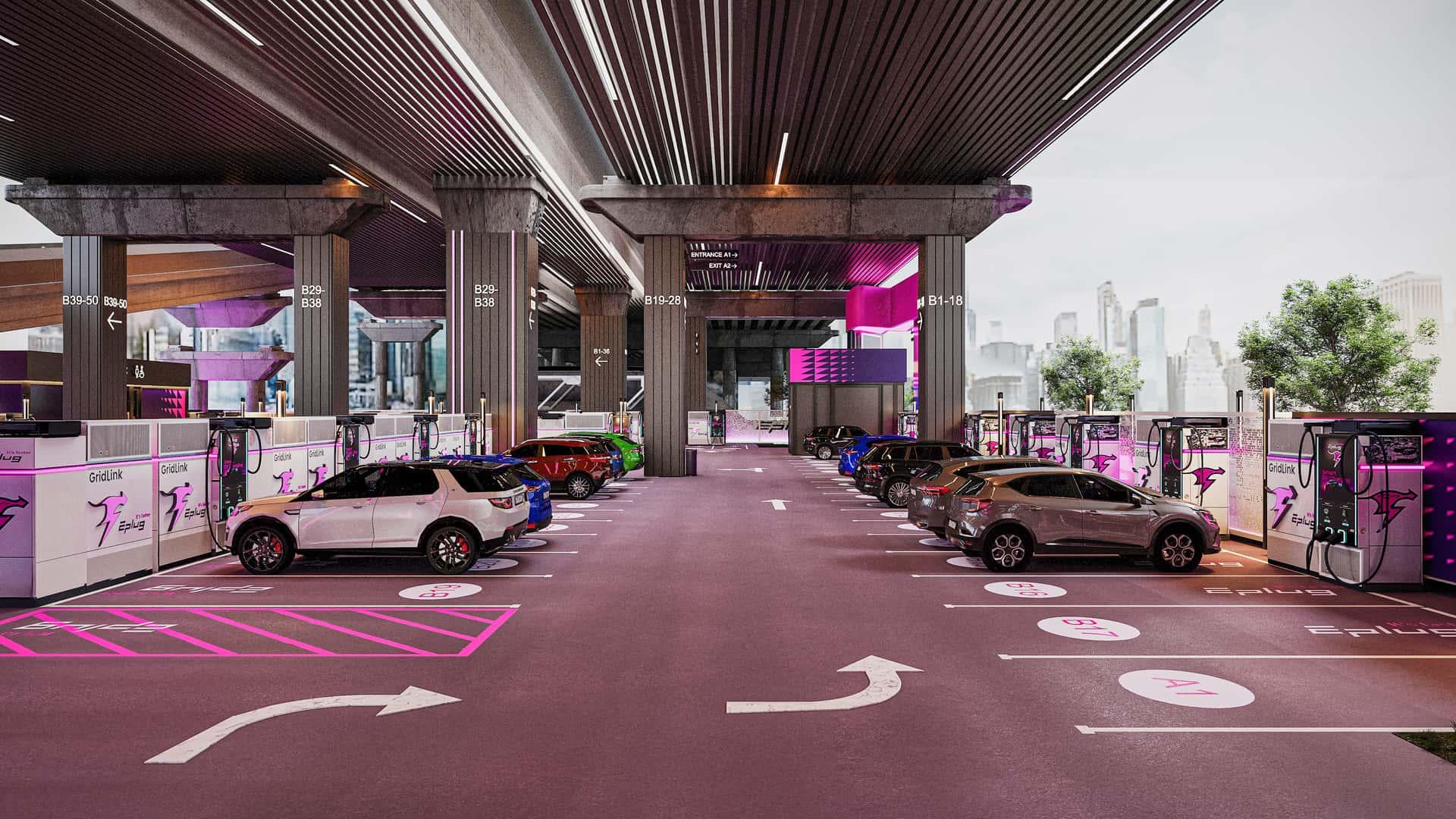
Another article about battery-backed EV chargers as grid-constraint-solving wizardry. This one's a 44-stall XCharge station in Brooklyn with 9.46 MWh of total storage.
The pitch: charge batteries overnight when power is cheap, dispense during peak hours, everybody wins. But think about it for two seconds.
The whole reason you need batteries is because you can't (at least easily) get 13 MW of grid capacity in dense Brooklyn – it's either impossible, takes years, or costs millions. So your actual grid connection is probably 1-2 MW.
Which means when the batteries deplete during a busy afternoon, you can either:
- Serve cars at ~23 kW per stall (Level 2 speeds, not DCFC)
- Shut down most chargers while batteries recover
The stored energy isn't a buffer – it's the entire inventory for peak hours. And on expensive urban real estate targeting rideshare drivers, they will need high utilization to make money. High utilization = inventory depletes fast.
Batteries solve a power problem (demand charges, interconnection limits), not an energy problem. That's genuinely useful! But it's not "reducing strain on the grid" in any meaningful sense. You're just smoothing your draw rate while hitting the same constraints everyone else does.
Am I missing something?
EDIT: thanks for the responses. I get the upsides of having battery storage. What I didn't express well in my original post is this point: if you need DCFC speeds only some of the time, then this is a great solution. The battery tops up when not used and can provide full power when needed.
But if you need DCFC speeds essentially all the time, it's going to run out of battery power pretty quickly. What happens then? After all, to justify the costs of a large charging station complex – with a lot of expensive Lithium Ion battery storage in addition – on expensive Brooklyn real estate, they will likely need very high utilization unless the kWh costs are very high.
by axxeler