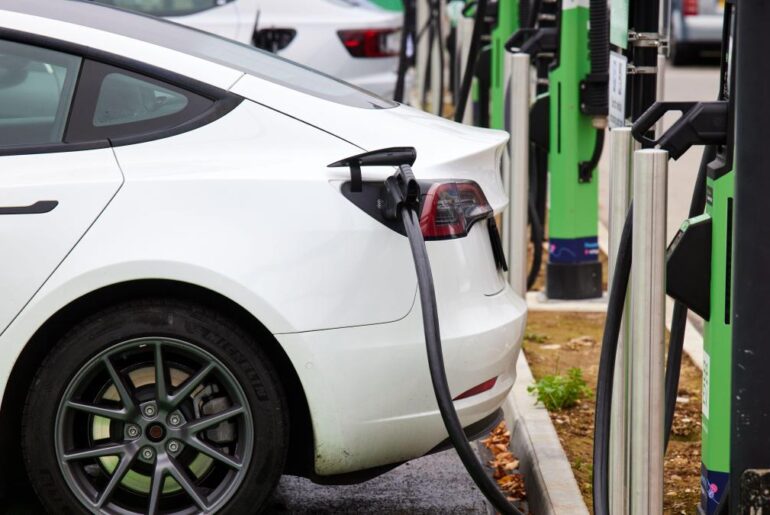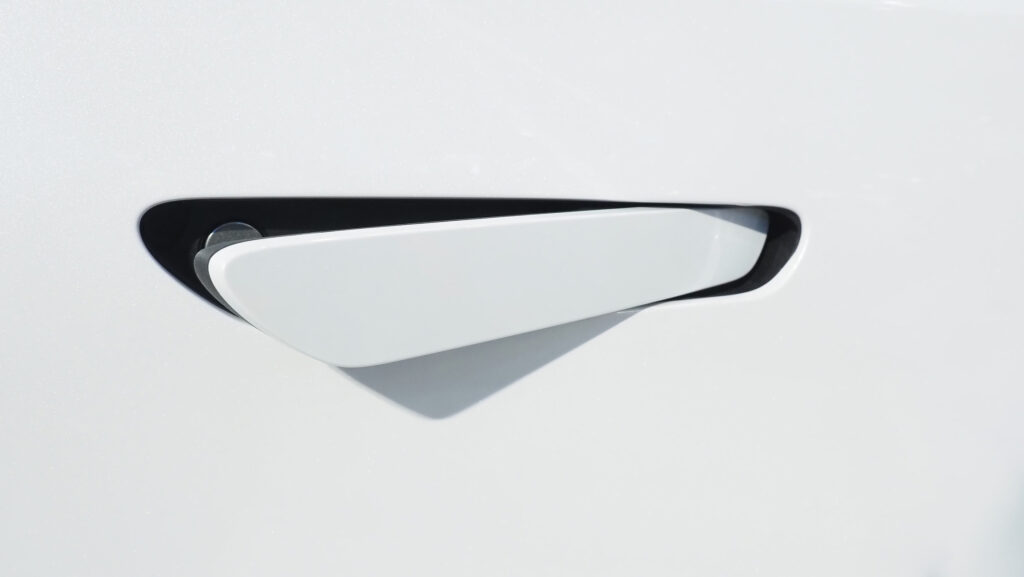
A U.S. Congressional bill would require the National Highway and Traffic Safety Administration (NHTSA) to issue a final rule that would require electric vehicles, such as Tesla, to have an easy-to-find manual release.
The Securing Accessible Functional Emergency (SAFE) Exit Act was introduced by U.S. Rep. Robin Kelly (IL-02) just weeks after Bloomberg printed an investigation that found 15 people have died in crashes where Tesla doors wouldn’t open.
The act would also require NHTSA to establish performance and labeling requirements for electric doors, a press release says.
“Profits and, least of all, style, should not come before people’s lives. Elon Musk and his Tesla designs are not safe, nor efficient, and it has cost people their lives,” said Rep. Kelly in the release. “When crashes or power loss leave drivers and passengers trapped inside their own cars, that is not innovation — it’s a safety failure. Just like requiring basic safety standards like seatbelts, my SAFE Exit Act will protect consumers. As the auto industry continues to innovate, we must ensure people’s safety.”
Cooper Lohr, Consumer Reports’ senior policy analyst of transportation and safety, endorsed the bill in the press release.
“It’s critical for people to be able to immediately get out of the car during a vehicle fire or similar emergency. Yet electronic door handles can fail and become unusable if a car loses electrical power, making it impossible to exit the vehicle when seconds matter most,” said Lohr. “Fortunately, this problem has a solution: every car should be required to have intuitive, accessible, and easy-to-find manual releases that work even when power fails. We thank Congresswoman Kelly for introducing the SAFE Exit Act, which is a smart, timely response to a very real and growing safety risk.”
Last week, China’s Ministry of Industry and Information Technology released draft rules banning Tesla-style retractable door handles starting in 2027, according to Autoblog.
NHTSA also recently opened an investigation into Tesla Model 3 emergency egress controls, according to NHTSA documents.
NHTSA states it received a petition in November requesting a defect investigation into the mechanical door release on the model year 2022 Tesla Model 3. The petition alleges that the mechanical door release is hidden, unlabeled, and not intuitive to locate during an emergency.
An investigation into the petition was opened on Dec. 23.
While not the only OEM that uses flush doors, Tesla has faced the majority of the scrutiny, with the heat rising in recent weeks.
Days before Bloomberg’s investigation was released, Tesla launched a new safety website featuring doors that will automatically unlock after a collision.
The website outlines all of Tesla’s safety features, such as forward collision warning, automatic emergency braking, and dynamic brake lights. It details how the chassis and frame are designed to absorb the energy of the crash, and advanced airbags deploy according to crash type and different-sized occupants.
New information is provided in a section titled “Safer Aftermath.” It notes that when a serious collision is detected, hazard lights will turn on to increase visibility, and doors will automatically unlock for emergency access.
“At the same time, your Tesla will automatically contact emergency services to get help to you as quickly as possible,” the website says.
Bloomberg’s article explains that Teslas have two batteries, one for propelling the vehicle (high-voltage) and one that powers windows and doors (low-voltage).
“If the low-voltage pack dies or is disabled, the doors may not unlock from the exterior,” the article says.
Buttons that open the doors stop working if the battery dies, the article says. Manual release handles aren’t always marked.
“For passengers in the back seat, releases are located under rugs, behind speaker grilles, or under pieces of plastic, depending on the model,” the article says. “Certain versions of the Model 3 and Model Y aren’t equipped with manual releases for rear doors.”
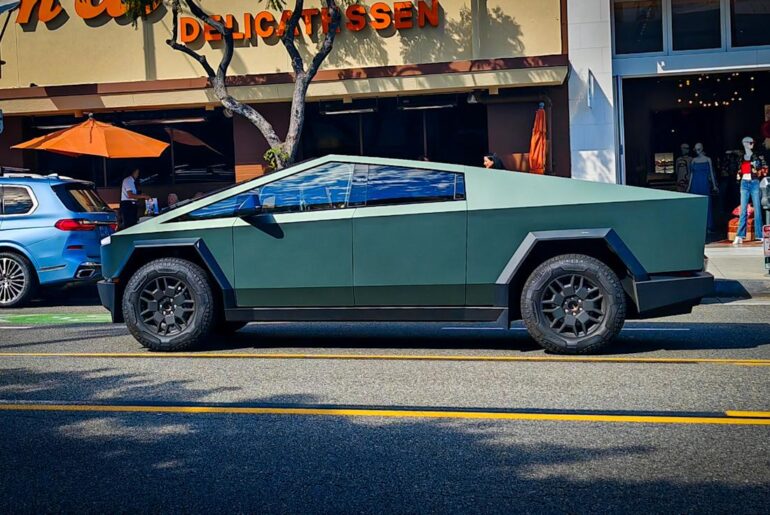
A Texas lawsuit filed against Tesla in July claims defective designs in the Cybertruck caused a fire that trapped its owner in the vehicle, ultimately causing his death.
The suit, filed by Michael Sheehan’s family in Harris County, claims that he purchased the 2024 Cybertruck on April 25 of last year. In August, Sheehan’s Cybertruck left the road, struck a culvert, and caught fire, trapping him inside.
CBS also reports that in 2023, a Tacoma, Washington, couple, Wendy and Jeff Dennis, were in a crash after a Model 3 allegedly accelerated out of control. It adds that, allegedly, the door handle also prevented bystanders from helping rescue the couple. Wendy Dennis was killed, and Jeff Dennis was severely injured.
NHTSA also launched an investigation in September into Tesla’s Model Y electronic door handles being inoperable due to low battery voltage.
Image
Photo courtesy of nisara Tangtrakul/iStock
Share This:
Related