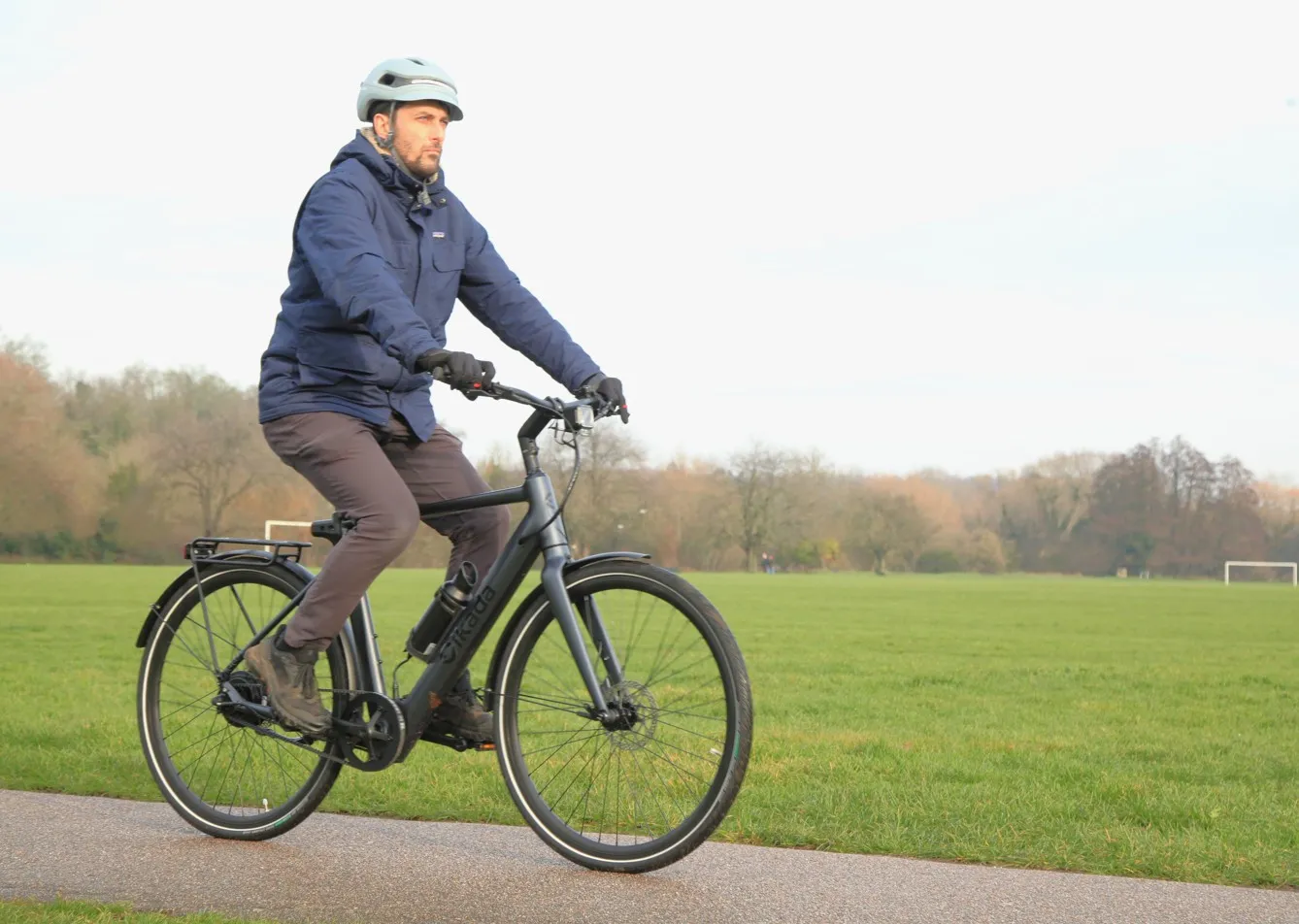
Firming up our early introduction of the Cikada electric bike brand, today we have a review of the Urban Cruise, the Taiwanese brand’s £2,000 commuter build.
It was only yesterday that we gave you our impressions of the Cikada Touring, a more burly build that can handle both urban and off road exploration, all the while carrying a decent luggage load. Today it’s the turn of the tarmac-suited Urban Cruise, a bike punctuated by its automatic lighting, clean design aesthetic and ‘Dutch bike-esque’ riding position. If you are looking for something that’s affordable, has the option to add a range extender for greater mileage, glides on the tarmac and offers a stable and comfortable riding position, then this is an electric bike worth your consideration.
We’re no stranger to testing urban e-bikes at all price points, in 2025 we tested a record number, so if you’re still browsing by the time you’ve finished our Cikada Urban Cruise review, then head to our guide to the best electric commuter bikes.

£1,999 | View offer
Cikada Urban Cruise review: The highlights
Pros
A capable, well built and simple singlespeed
Comfortable riding position
Automatic and 360-degree view lighting
Cons
Motor was a bit unsure what to do at 15.5mph limit
Presently sold directly only, though shops may follow
Singlespeed option may not suit all, geared available
Specifications
Stated weight: 21kg (46lbs)
Stated range: Up to 90km
Frame material: 6061 Aluminium
Motor: DynaForce 40Nm rear hub motor
Battery: Samsung 353Wh internal, range extender add-on available (add 40% range)
Drivetrain: Singlespeed, belt drive (geared model available)
Brakes: Shimano hydraulic disc brakes
Saddle: Ergonomic saddle
Tyres: Schwalbe Road Cruiser KGuard
Suspension: No, aluminium 6061 T6, rigid
Included accessories: Kickstand, metal mudguards, automatic front and rear lighting, Racktime rear carrier
Cikada: Taiwanese experience and soon local backup
As was outlined in our Cikada Touring review just posted earlier this week, this is a brand with a backstory, rather than one of those that picks a product from a catalogue and hits the market. The brand’s parent, Dyaco, hails from the same manufacturing region as the likes of Giant and Merida and has a wealth of tech manufacturing experience and engineering talent to lean on.
Of the five e-bike models set for the UK in the near term, this one is the strictly urban build targeting the red hot £2,000 price point. To stand out here you need to put in a good show and have some standout features, be they hardware or software.
Before we get going, I noticed that there’s a two year standard warranty on the basic electronics and frame, which is just about industry standard, though sometimes frame warranties are longer.
At the time of writing, Cikada is so new that they are still recruiting bike shop partners to become showrooms for its bikes. That means that sales will likely go direct to your doorstep with some minimal assembly and mobile phone app linking to take place once you receive the bike.
In extremely welcome new, Cikada are among the brands we are able to confirm for Cycling Electric’s Demo Day series for 2026, so that gives you a chance to try these bikes on a closed circuit test track before you buy them in locations like London, Leeds and Bath.
Cikada Urban Cruise review: First impressions
Upon pressing the ‘on’ button atop the controller the Cikada springs to life, with the lighting coming on immediately, which is quite a useful touch, especially in winter. This means you display visibility to others at all times, day or night.
The front light has a quite a boxy design, which isn’t the sleekest from an integration perspective, but the front light does have a nice 360-degree style visibility to it with two side panels on the edge of the square projecting light. This makes for excellent visibility at junctions, plus if you look inside the square unit you’ll notice mirroring which helps to even out and spread the light beam, so it feels premium and eliminates the need for further bolt on front lights. Some e-bikes at this price do not have a strong enough front light, so overall this is a win despite the lack of integration. Of course, you can manually turn the lights on and off too, and the display will show an icon top right to reflect the current status.
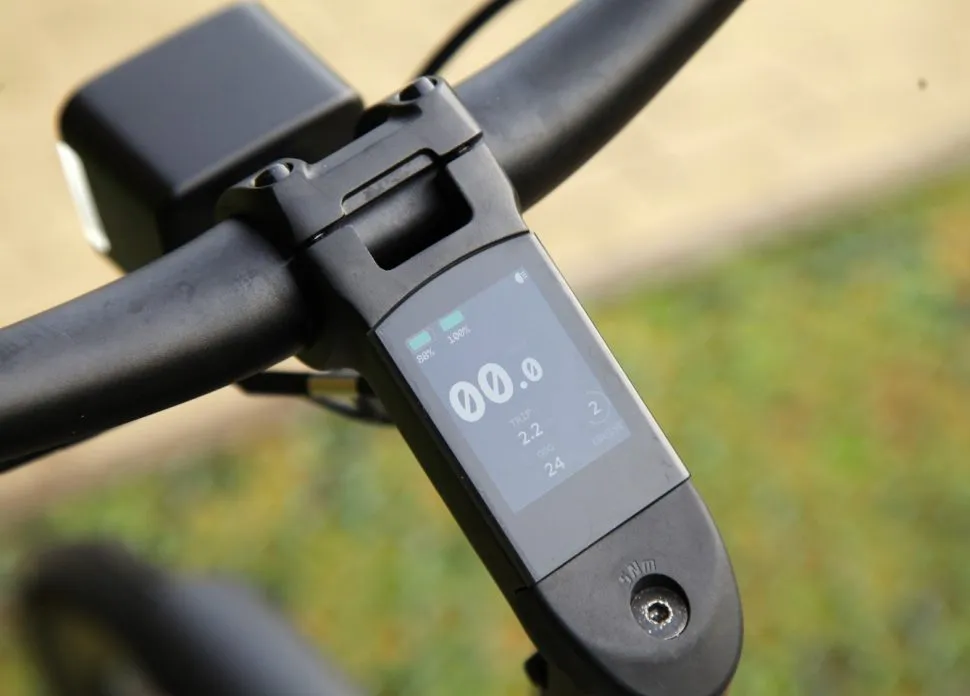
Another immediate first impression is the neat integration of the display, which tucks into the stem’s boundary. This display is bright and has enough detail to mean you needn’t mount your phone, however, you may wish to if you want to take advantage of the software, which integrates things like navigation and ride tracking, as well as remote control over locking and unlocking your bike.

At this price point its pleasing to see the software is punching above its weight, though there are no standout unique features, rather just a lot of smart basics. Within the settings you can tune things like the bike’s automatic ‘off’, as well as changing the security passcode to suit your own preferences.
Related Articles
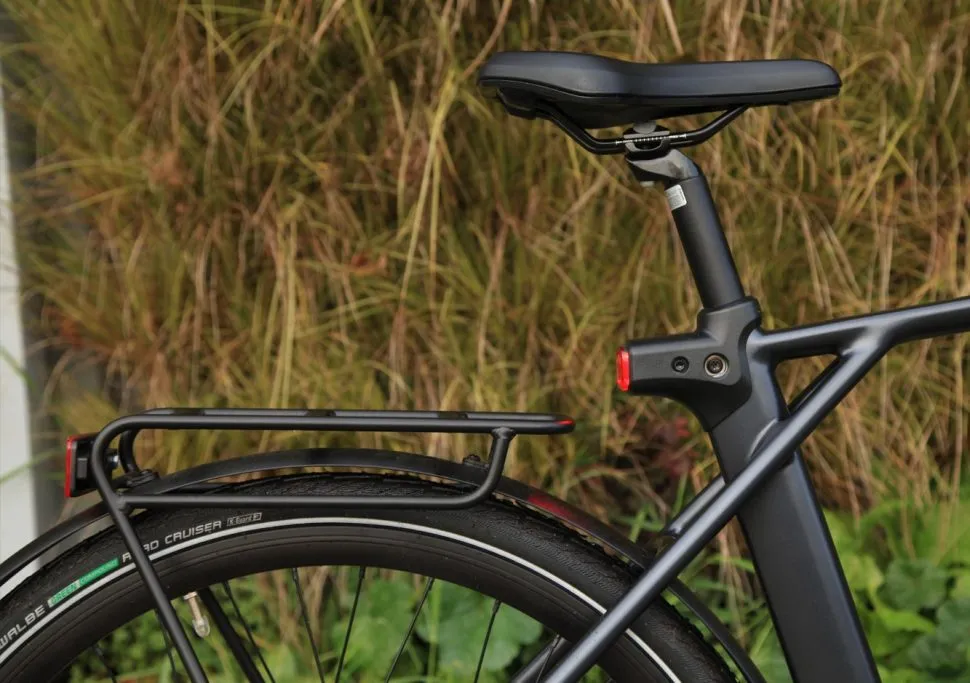
As for the rack at the rear of the bike, it’s of a traditional Racktime design, rather than the MIK standard that seems to be taking over lately, so this is good news if you already have pannier bags from an old bike. If instead you have bags that have the MIK mounting system then adapters are available to convert from one standard to the other. These tend to come from suppliers like Basil and can be found online for only around £15.
Of the general build quality, I couldn’t spot anything that looked obviously poorly designed or weak, arguably apart from the exposed square taper bottom bracket, which may end up getting mucky over time. Otherwise, accounting for the price point, the bike’s build looked and felt robust.
Moving with the motor and a singlespeed belt

It should be said that you have two options when it comes to the urban bike with Cikada, the singlespeed, low-maintenance belt drive you see here, plus a nine-speed Shimano gearing build, also sold at £1,999.99. I deliberately chose the singlespeed because for my general about town riding and desire to do maintenance this option suits the lifestyle, but there are pros and cons to this that should be advised upon. While the maintenance needs and chances of an oily trouser leg are vastly reduced, with a singlespeed hub driven e-bike you are leaning on the motor far more than if you instead had gearing and that will affect battery life over the course of rides as you’ll put more strain on the motor by only having one gear to assist.
I’ll be honest, I ended up regretting not grabbing the geared version, because the hub motor on the Urban Cruise only has a trio of assist settings and has a bit of a habit of not knowing exactly what to do with itself once you hit the pedal-assist legal limit of 15.5mph. What I mean by that is that once you hit this threshold, which most fit cyclists will on an open long flat section of road, the motor cuts its assistance in a bit of a jumpy manner, redeploying it at 15mph, then cutting it again half a mph later. It’s a touch jumpy and not as sophisticated in its delivery than some higher priced e-bike systems.
I’m not overly bothered by this, personally, because on the flat sections of smooth road you can go just as fast on pedal power alone, so deploying the assistance isn’t really essential. This trains you to only deploy the pedal-assist when you actually need it, in the hills. This is great from a fitness perspective and also from a battery management standpoint too. Not being overly reliant on the assist when you don’t really need it is something that naturally happens the more you ride e-bikes. However, I do expect that if you are a heavy assistance user on flat sections that this bug would be annoying if you have powerful thighs and a tendency to pedal a little beyond 15mph.
Where the hub motor’s assistance really matters, in the hills, the singlespeed Cikada Urban Cruise reviews up about as well as any other singlespeed I have tried, such as those from Tenways. It obviously requires that you are on the pedals mor than if you could park in a low gear, but so long as you apply steady pedal pressure hills of up to 5% gradient are handled well. I live at the top of a 500 metre 5% climb, so to get home have to face down the prospect of a climb and the Cikada motor feels a lot more even in its power distribution when climbing, probably on account of not hitting the assist limit.

Naturally, when really strained you can expect to see a few percentage points in battery drop, because once again, the motor is doing most of the work. On this climb I shaved about 2% off the battery, though it has to be said I don’t think the battery level readings are the most accurate, especially when it is cold. In fact, riding during winter, I have noticed getting the bike out of the shed with a subtle drop in battery level (which is normal in cold weather where the cells are less fluid), though once moving and warming up, you may gain a few percentage points back. This is also something I noticed happening over the course of rides after long spells using the assist – once lowered you may get a fraction back, so the display must be somewhat predictive, or lagging the real status while strained.
These marginal fluctuations don’t affect the overall experience all that much and I found the battery life of the Samsung cells to be ample for a week’s commute – that is to say I managed five or six round trip commute length rides on a charge. Plus, you can add on a range extender battery equivalent to another 40% in range, slotted into a bottle cage style mount on the frame’s downtube. That’s extra cash, of course, but I’d wager that in most cases you could live without it so long as you charge the bike semi regularly.
Cikada Urban Cruise review: Conclusions
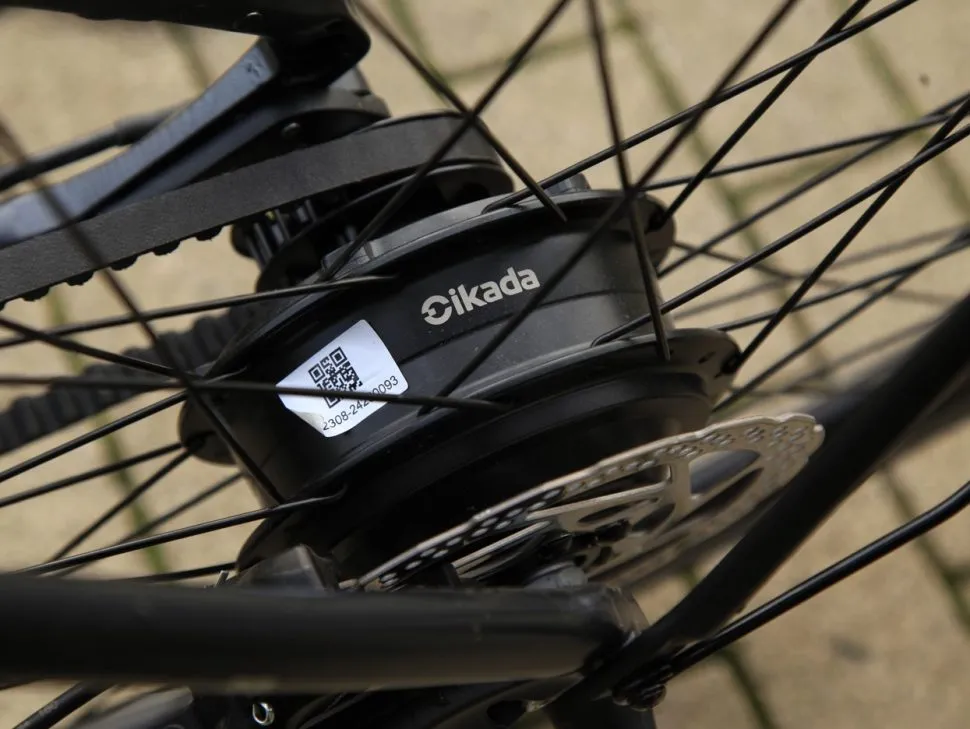
On the whole this is up there with the best of the rest targeting the £2,000 price point, and as a consumer you have a distinct advantage here in that there’s really no shortage of brands producing bikes exactly like this, for this cost.
The Cikada does well on general build quality and doesn’t cut corners. An example of this is the metal mudguards, which are just that bit more premium than the cheaper plastic option.
The balance of robust hardware and all-bases-covered software is pleasing. There’s no obvious shortfalls, other than perhaps that this is a young brand in the UK and that it has as yet not got an established shop network. That said, the parent company isn’t a minnow and the wheels are in motion to better the UK service and backup network.
One thing that I think most people will enjoy about the Cikada Urban Cruise is the riding position, which is comfortably upright, easy on the back and puts your eyes nice and high above traffic. This is helped a lot by a swept back handlebar with ergonomic grips that support your palm.
Being picky, I think the brand may still have some work to do on its motor, just to refine its power delivery, but where it really matters – the hills – the performance is ultimately fine for the price point. There are too quick release wheels, which sometimes thieves like to get their hands on, but you can always upgrade some fairly cheap security skewers often available for as little as 20 pounds. You may, however, prefer the convenience of being able to take the wheels off quickly.
How about the competition?
Read our Cikada Urban Cruise review? Here’s some of the hand picked competition that we believe are also worth a look if you’re shopping.
Estarli e28.9

£1,850 | View offer
Estarli’s revamp of its bike catalogue in 2025 was very impressive and set the brand on a course for delivering a lot more performance at its lower price points, as well as making giant leaps on the bike’s aesthetics too. The E28.9 is a sublime all rounder with a competitive price that can handle everything from commuting to light gravel path exploration, plus you can easily fit a rack and mudguards on the brand’s site.
Tenways CGO600
£999 | View offer
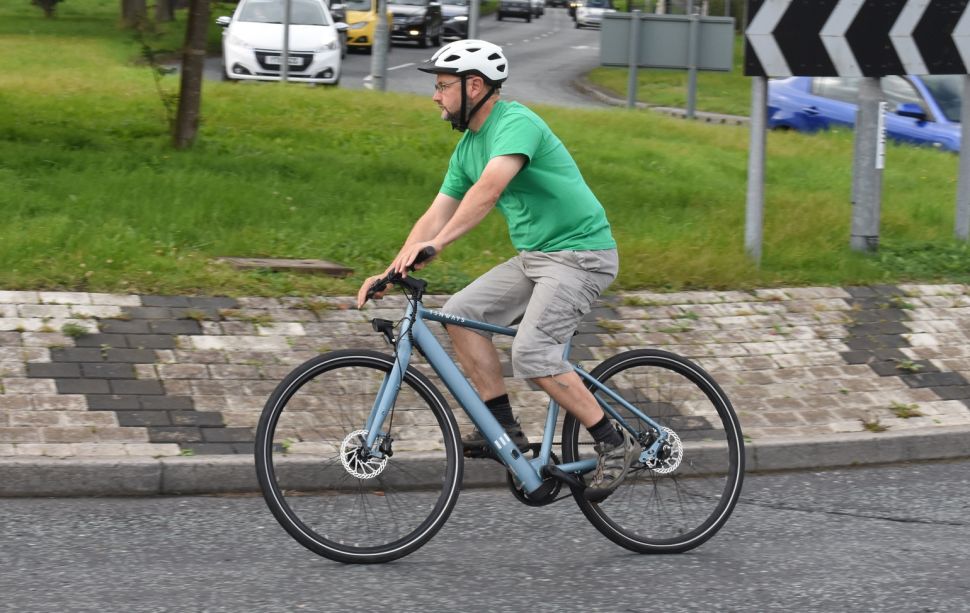
Tenways continues to be one of the best brands on the market for a balance of low cost and value, so the CGO600, now sold at only £999, has to get a mention for those on a budget. That doesn’t mean this brand scrimps however and it actually has some impressive software, as well as very capable e-bikes.
Catch our full Tenways CGO600 review here.
ADO Air Ultra 30
£1,999 | View offer
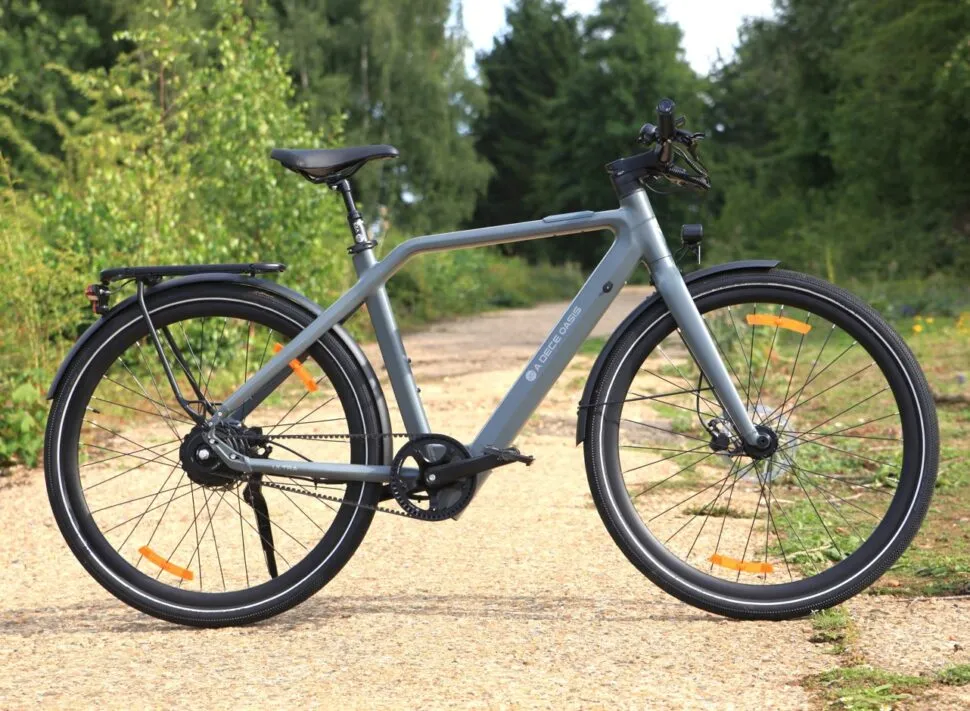
ADO is another brand to storm the UK market with competitive products, that come well built and well equipped from the word go. In the case of the ADO Air Ultra 30, you even gain things like a suspension seatpost to bolster your comfort, as well as a luggage rack, mudguards, lighting and a kickstand.
Read our full ADO Air Ultra review.