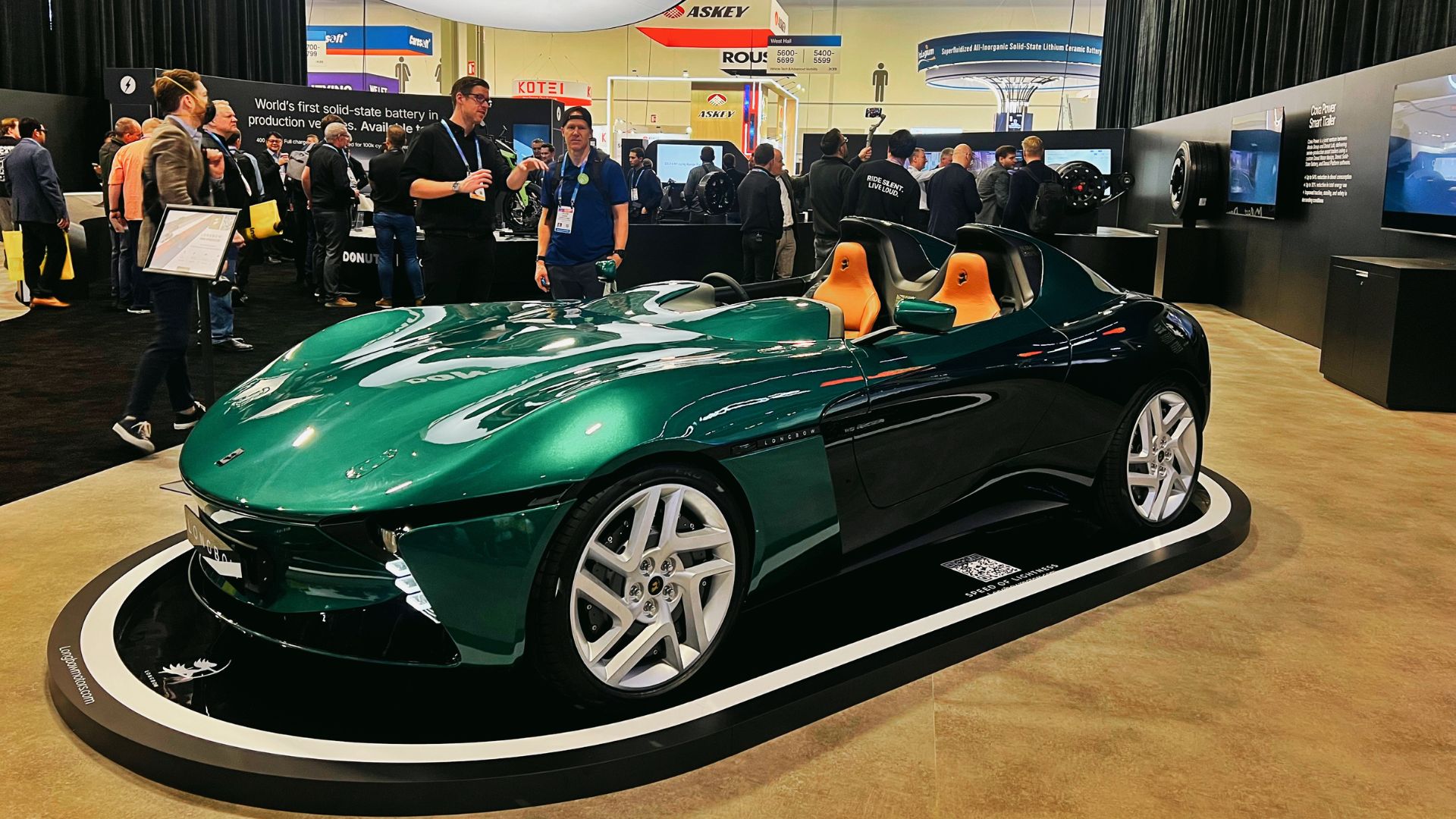
At CES 2026, Longbow introduced a bold statement on where electric sports cars could be heading next.
The company revealed an extreme Speedster prototype built on its Featherweight Electric Vehicle, or FEV, platform.
Rather than chasing luxury or range, Longbow focused on mass reduction and driving engagement.
The open-top Speedster weighs under 900 kilograms, or just below 2,000 pounds.
Engineers fitted it with four 17-inch in-wheel motors supplied by Donut Lab. The setup produces a combined 900 horsepower.
That gives the car a one-to-one power-to-weight ratio, a figure usually reserved for modern hypercars.
“This car weighs under 1,973 pounds, under 2,000 pounds,” said Longbow co-founder Mark Tapascott.
He described the CES prototype as a proof point rather than a production target.
Tapascott positioned Longbow as a reaction to an industry obsessed with size and features.
He said the company wants to rethink what makes a sports car desirable in the first place.
Longbow believes weight has become the defining problem across the car industry.
“The whole industry has become overweight,” Tapascott said.
He compared modern small cars to much larger vehicles from decades ago and argued that unnecessary features now dominate vehicle design.
Instead of adding complexity, Longbow removes it. The company strips out nonessential systems and designs each component around mass reduction.
Tapascott said everything improves when weight drops, from acceleration to braking and efficiency.
Lighter cars also require fewer raw materials and smaller batteries, which reduces environmental impact.
Performance without compromise
The CES Speedster represents the most extreme expression of the FEV platform. Longbow designed the architecture to support multiple layouts.
Engineers can place a single motor behind the driver to power the rear wheels.
They can also remove it and install a motor in each wheel.
“This version we are showing at CES has a motor in each wheel,” Tapascott said. He explained that the configuration delivers 900 horsepower purely to demonstrate the platform’s upper limits.
In production form, Longbow expects far lower outputs.
Tapascott said the company is targeting around 300 horsepower for customer cars. Even at that level, performance remains strong.
The company estimates a zero-to-60 time of about 3.5 seconds.
Bringing back engagement
Longbow also wants to challenge how electric cars feel from behind the wheel. Tapascott said speed alone no longer excites drivers.
The company believes engagement matters more than headline numbers.
“It is all about the driving experience,” he said. Longbow designed the cabin to keep drivers involved rather than isolated.
Inside the Speedster, drivers will find elements rarely seen in EVs, including a stick-style shifter.
Tapascott described this as intentional theatre, meant to make driving feel active and rewarding.
Longbow wants drivers to feel as connected as they would in a combustion sports car, if not more.
Tapascott said the timing finally feels right. He noted that the last serious electric sports car, the Tesla Roadster from Tesla, debuted more than a decade ago.
Since then, motor and battery technology have improved dramatically.
Longbow plans to deliver its first customer vehicles by the end of this year.
CES 2026 marks the company’s first appearance in the United States and its first time exhibiting at the show.
For Longbow, the Speedster offers a glimpse of a lighter, more focused electric future.
For ongoing news, in-depth reporting, and key developments from CES 2026, read the IE team’s coverage here.