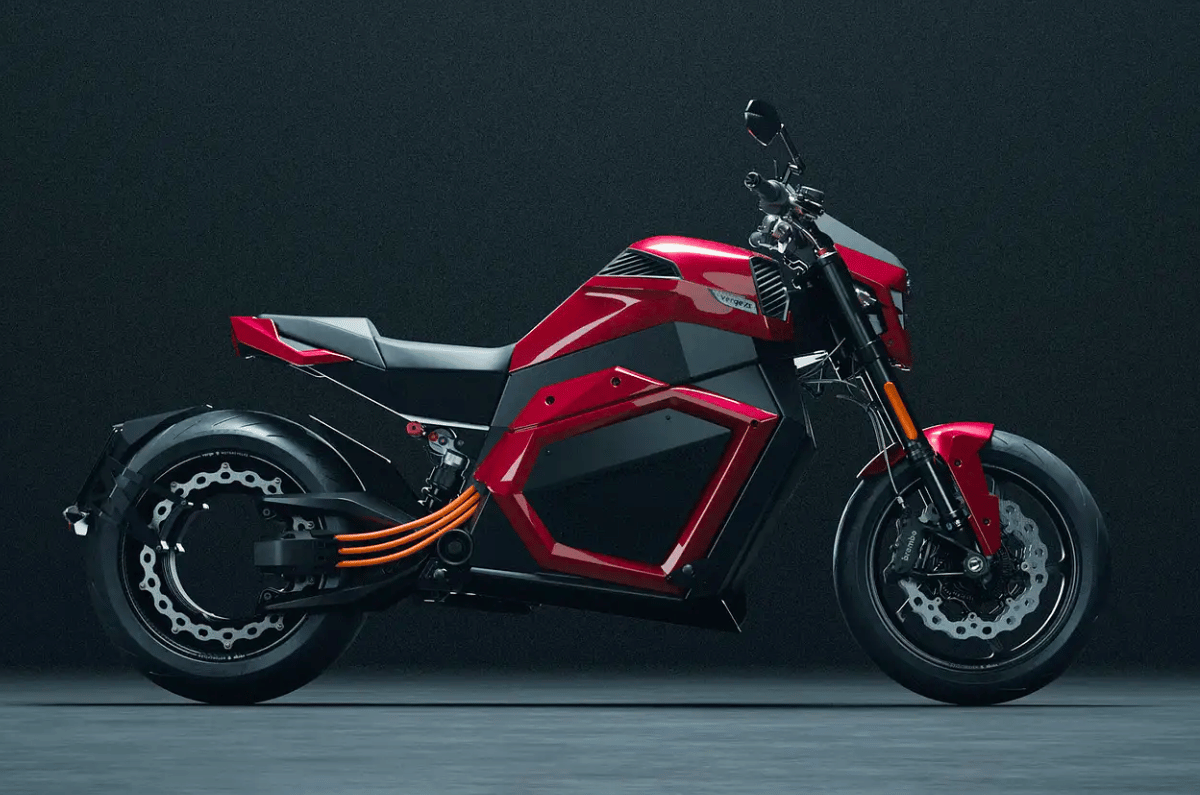
You may not have heard of small Finnish electric bike maker Verge Motorcycles, but the company has debuted a radical new battery technology, marking a big step forward for electric motorcycles. Recently, Verge debuted the world’s first production motorcycle fitted with a solid-state battery, the TS Pro supernaked. Among many of its noteworthy features is the ability to support CCS2 fast-charging at up to 200kW, which can give it up to an 80 percent recharge in a claimed 10 minutes.
Hubless motor makes 138hp, 1,000Nm of torque; 0-100kph in 3.5s Two battery packs offered, claimed range of up to 600kmPriced similarly to Ducati Streetfighter V4 in overseas marketsVerge TS Pro electric bike: Here’s why you should be excited about itPromises long range and short charging times with explosive performance
Before we get into the TS Pro itself, let’s first address its solid-state battery pack. Unlike lithium-ion or lithium ferrous phosphate (LFP) batteries that contain liquid or gel-based electrolytes – seen on most electric bikes on sale today – this design uses a solid-state electrolyte, said to reduce the risk of fire in an incident. Solid-state batteries have been under development for years and are now getting to the stage where they are becoming ready for automotive use, although no mainstream manufacturer has adopted this technology yet.

And since Verge has incorporated CCS2 fast-charging capabilities into its TS Pro, you can get a lightning-quick recharge – provided you find a charger with the requisite output – with an 80 percent top-up taking just a scant 10 minutes (claimed).
The TS Pro is offered with a choice of two battery pack options: 20.2kWh and 33.3kWh, which are rated for a claimed range of up to 350km and 600km, respectively. While the battery technology is certainly a game-changer, what also stands out is Verge’s novel hubless motor, which has been available for some time now, but this model debuts a new version of it.

It works via a set of electromagnets located in the inner part of the wheel; the electromagnets repel permanent magnets situated on the wheel’s outer part, thereby causing the wheel to spin. Verge claims this motor is capable of delivering a respectable 102kW (138.6hp), but it’s the torque output that’s truly staggering – a colossal 1,000Nm. These numbers mean that the TS Pro goes from 0-100kph in a supernaked-rivalling 3.5 seconds (claimed). On the other hand, this is a heavy motorcycle, weighing 235kg.
Helping you harness that massive output are adjustable regenerative braking levels, dual-channel ABS, traction control and four riding modes: Range, Zen, Beast and Custom. The first three are preset and progressively increase power, while the last one is fully customisable. You also have heated grips and cruise control, which will help out on longer journeys. There’s also the option of choosing between a neutral, mid-set footpeg position and a more forward-set, cruiser-like position.

While this bike’s software is undoubtedly the highlight, it also packs some pretty respectable hardware. You’ve got fully adjustable Ohlins/Wilbers suspension, tried-and-tested Brembo M4.32 monobloc radial calipers and grippy Pirelli rubber as standard. Under the rider’s seat, there’s even a small storage compartment, which opens on a hinge, just like the Yamaha RD350, and is capable of holding small knick-knacks such as gloves, charging cables, and a wallet, to name a few, although this compartment’s exact capacity isn’t specified. Some key specifications of the TS Pro worth mentioning are its rather accessible 780mm seat height and an adequate ground clearance of 140mm.
Coming to pricing, the TS Pro costs 29,900 euros excluding taxes, delivery charges and registration fees, which prices it more or less on par with the Ducati Streetfighter V4 in overseas markets. However, Verge’s TS Pro is sure to provide a very unique riding experience, and more importantly, this breakthrough in battery technology and charging times means good things for the future of electric motorcycles, which so far have struggled to establish themselves as credible alternatives to petrol-powered bikes.