When the founder of a Chinese battery company that nobody had heard of confidently declared nearly 20 years ago that it would be the world’s biggest car manufacturer by 2025, many scoffed at the idea.
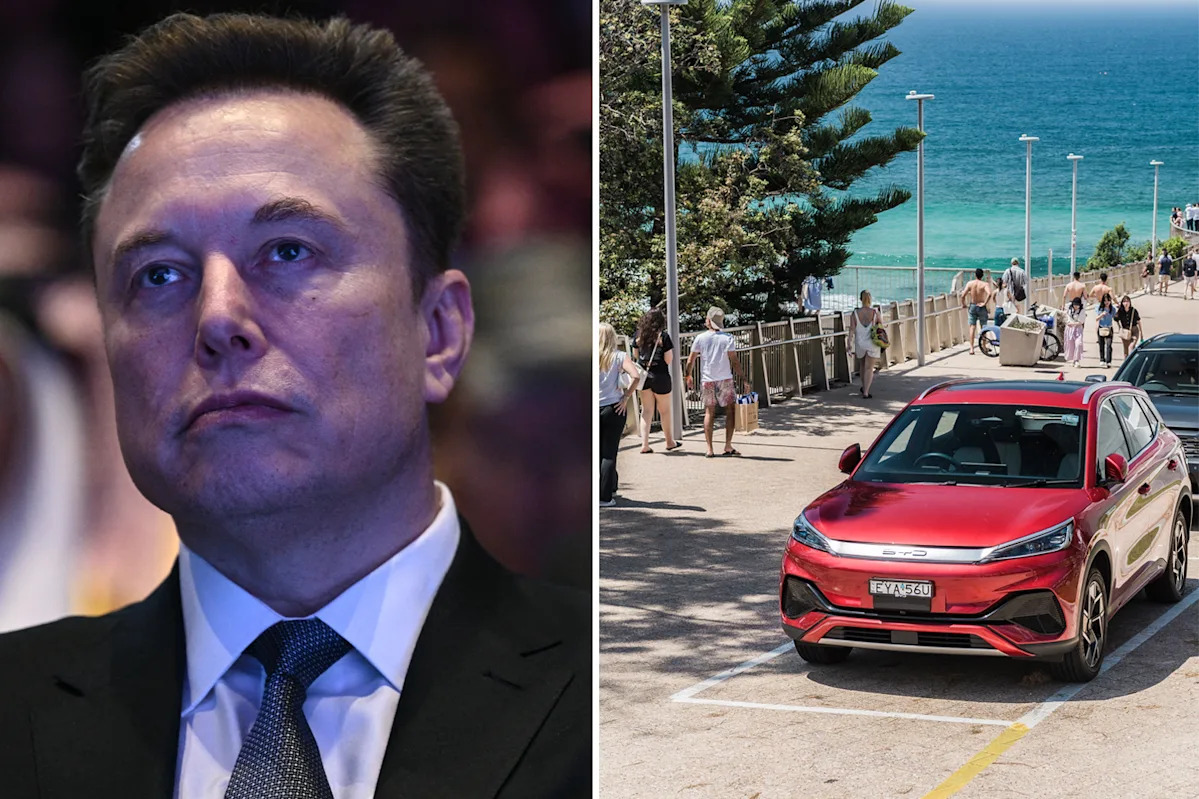
But this week, Wang Chuanfu’s BYD overtook Tesla as the world’s largest seller of electric cars, a major upset that many Tesla loyalists wouldn’t have seen coming.
It signals a major shift as the car market enters a new phase, according to a leading voice in Australia’s automotive industry. And it’s a major win for cash-strapped Aussies looking for a new car.
Hussein Dia, Professor of Future Urban Mobility at Swinburne University, told Yahoo News Australia he believes the latest announcement is a sign that new car buyers are moving away from “personality-driven” brands like Elon Musk’s Tesla as the electric market enters a new stage.
“Early on, EVs were driven by innovation and brand leadership,” he told Yahoo News Australia. Tesla took advantage of those who bought into Musk’s vision. But now that electric car uptake has become more mainstream, cost, reliability, and value are higher priorities.
“Musk’s public profile may have turned some buyers off, but competition and pricing pressure are far bigger factors in Tesla’s recent challenges,” Dia said.
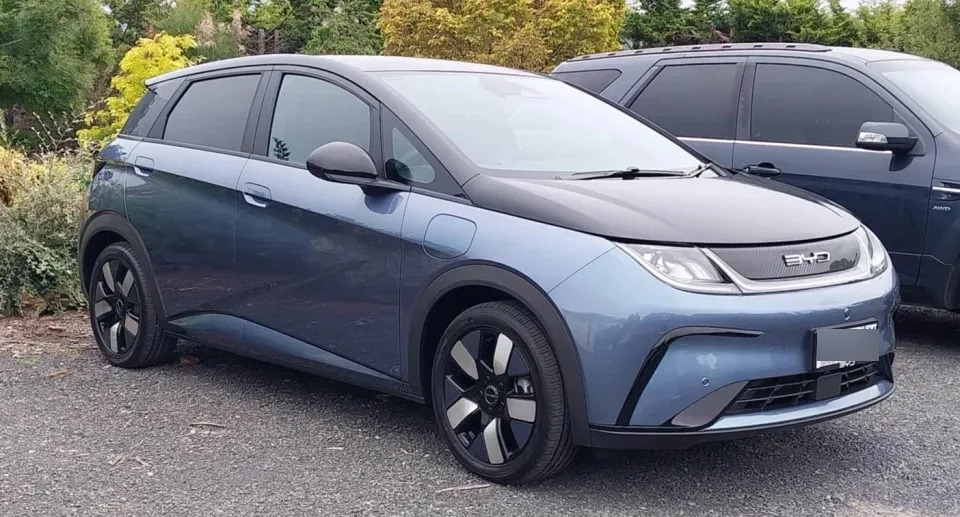
EV drivers have previously raved to Yahoo News about their BYDs. Source: Supplied.
Last week, BYD reported sales of its battery-powered cars increased nearly 28 per cent to 2.26 million units in 2025.
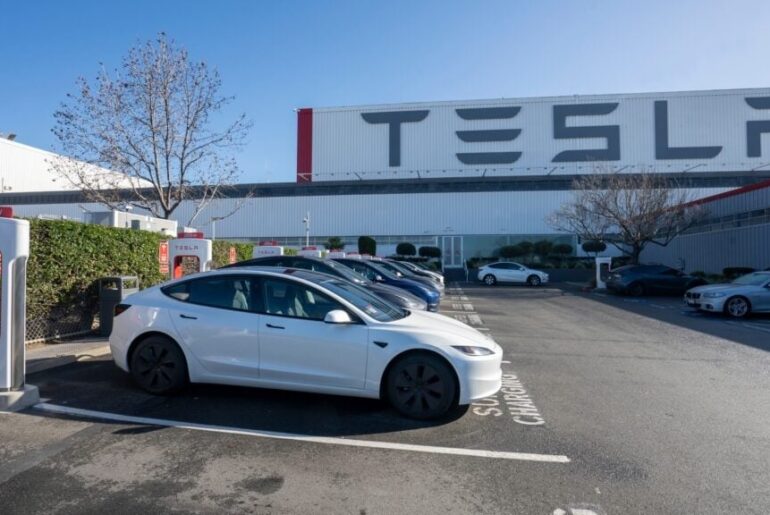
By contrast, Tesla announced that it delivered 1.64 million vehicles during the same period, representing an 8% decline from 2024 and marking the company’s second consecutive annual drop.
“This doesn’t mean Tesla is failing,” Dia explained.
“It means the EV market is starting to mature, and dominance is shifting from a single standout brand to companies that can deliver large volumes at lower prices.”
That’s exactly what BYD has set out to do.
In 2026, the BYD Atto 1, a compact electric hatchback, starts from $23,990 plus on-road costs for the base Essential model.
Meanwhile, the cheapest new Tesla in Australia is the Tesla Model 3 Rear-Wheel Drive (RWD), which starts at around $54,900 plus on-road costs.
BYD’s super-sized car carriers for world dominance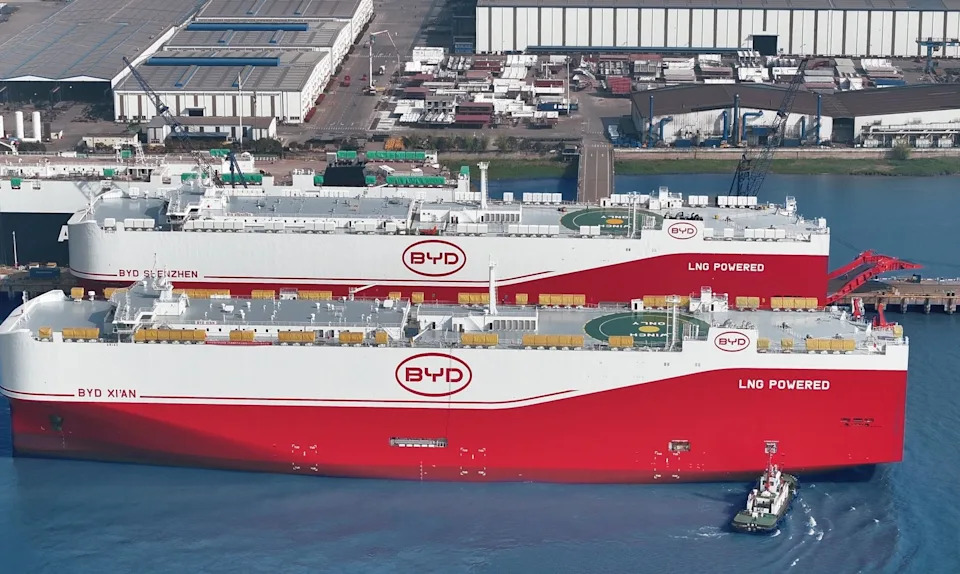
The Chinese EV giant is rolling out the world’s largest roll-on/roll-off (ro-ro) carriers to send BYD cars around the world. Source: BYD
Last year, the business stunned the world with the rollout of its super-sized car carriers. The massive ships are the largest of their kind in the world, measuring some 220 metres long.
Seven months on, the attempt to expand its international footprint and move with “unprecedented speed” has hit its mark.
Dia believes that in most Australian households, conversations about buying new cars is more about petrol versus EV, not BYD versus Tesla.
“That shift favours manufacturers like BYD, who are building EVs the way Toyota once built petrol cars: at scale, with tight cost control,” he said, explaining affordability is a “big part” of BYD’s success.
“Tesla helped normalise EVs, but BYD is helping normalise EV prices,” he said.
“For many households, the decision isn’t Tesla versus BYD, it’s EV versus petrol. Cheaper EVs make that decision much easier.”
Will Tesla compete again with BYD?
For Dia, Tesla’s engineering track record and loyal customer base indicate a strong likelihood of the business rebounding in the near future.
“But it now faces serious competition across every price point,” he said.
“I expect Tesla to focus more on cost reductions, new lower-priced models and expanding energy and in-vehicle software services.
“The era of Tesla being the only obvious EV choice is over, but that doesn’t mean it’s irrelevant.”
Do you have a story tip? Email: newsroomau@yahoonews.com.
You can also follow us on Facebook, Instagram, TikTok, Twitter and YouTube.