
Listen to this article
Estimated 2 minutes
The audio version of this article is generated by AI-based technology. Mispronunciations can occur. We are working with our partners to continually review and improve the results.
Ford on Tuesday reported higher auto sales in the U.S. in 2025, as strong consumer appetite for its hybrid models and affordable pickup truck helped it offset slowing electric vehicle sales, the company said.
The Detroit automaker’s annual sales rose six per cent in 2025 to 2,204,124 vehicles, from 2,078,832 a year ago. The company’s fourth quarter sales were also up 2.7 per cent, the automaker reported.
“It was Ford’s best annual sales and Q4 performance since 2019,” the company said in a statement.
The announcement comes a day after automakers such as Toyota, Hyundai and General Motors also reported higher annual sales despite a turbulent year for the industry, marked by tariffs and the removal of a $7,500 U.S. electric-vehicle tax credit by the American government.
Ford said its buyers leaned on affordable base models of vehicles to deal with the industry’s high prices.
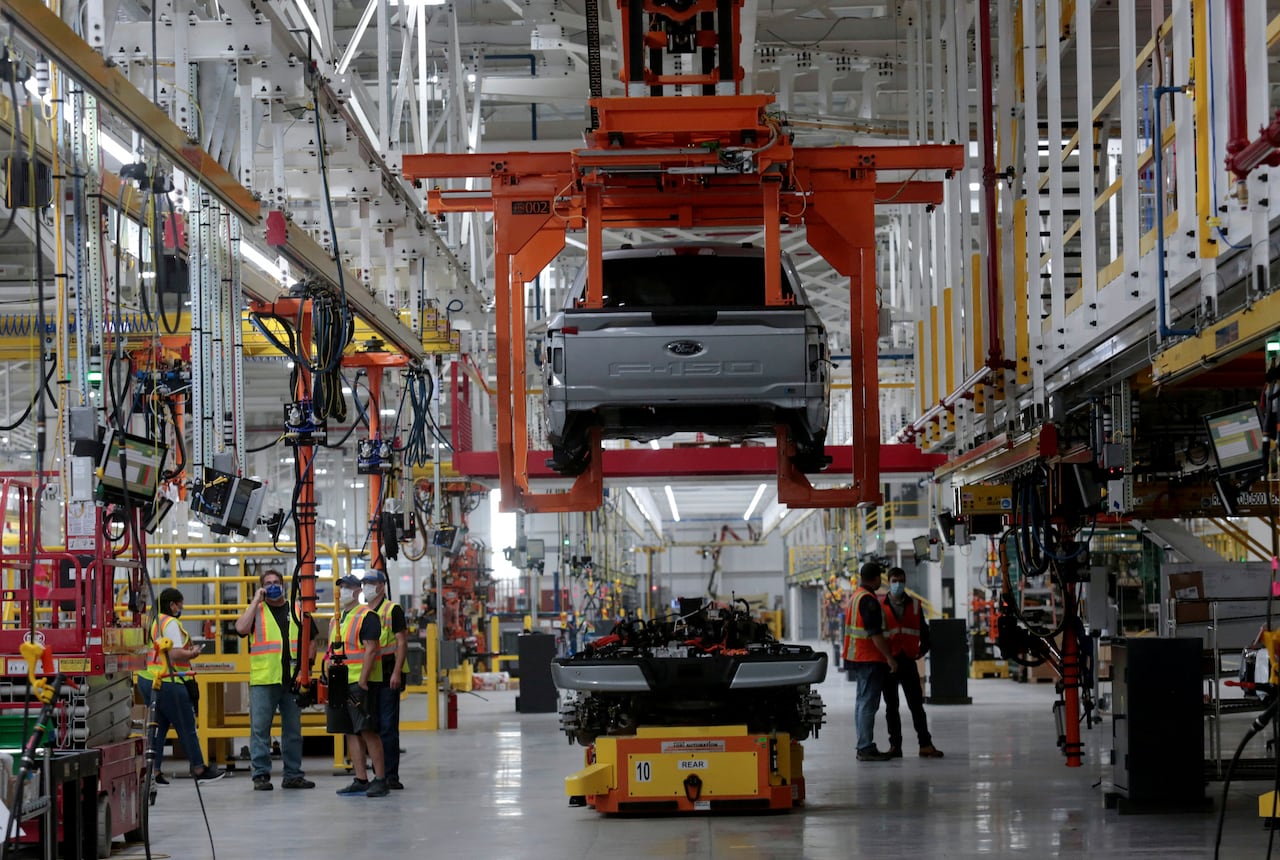 The body and chassis of a Ford pre-production all-electric F-150 Lightning truck prototype are seen at the Rouge Electric Vehicle Center in Dearborn, Mich., in Sept. 2021. The company said today its 2025 sales increased six per cent. (Rebecca Cook/Reuters)
In Ford’s best year ever for hybrid vehicles, sales rose nearly 22 per cent to 228,072 units, from 187,426 units a year ago.
Demand for its affordable, compact Maverick truck also stayed strong; sales of the vehicle rose about 18 per cent to 155,051, from 131,142 a year ago.
Maverick sales “really had a big impact on how we addressed affordability in the market,” said Andrew Frick, head of Ford’s gas and electric-vehicle operations, on a Monday evening call.
A number of regularly high-performing models also had a good year. Ford says their F-series truck saw 828,832 sales for an increase of 8.3 per cent, while the Ford Pro Transit van set an annual record for its sales as well.
In December, the Detroit automaker said that it would take a $19.5 billion writedown and scrap several electric vehicle models, a dramatic example of the auto industry’s retreat from battery-powered models in response to U.S. President Donald Trump’s administration’s policies and weakening EV demand.
The company plans to replace the fully electric F-150 Lightning with a model that uses a gas engine to restore the battery, and will scrap the next-generation electric truck known as the T3, as well as planned electric commercial vans.