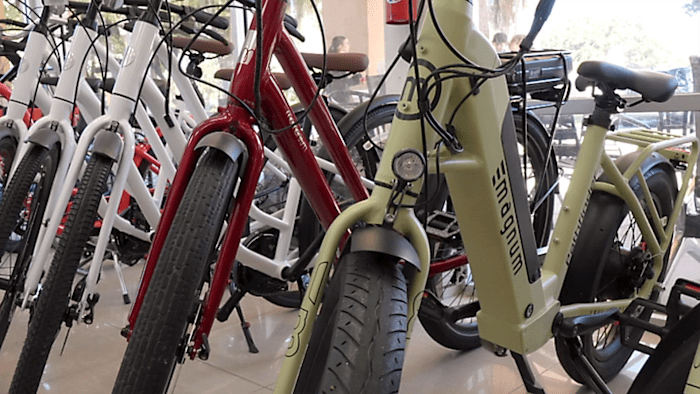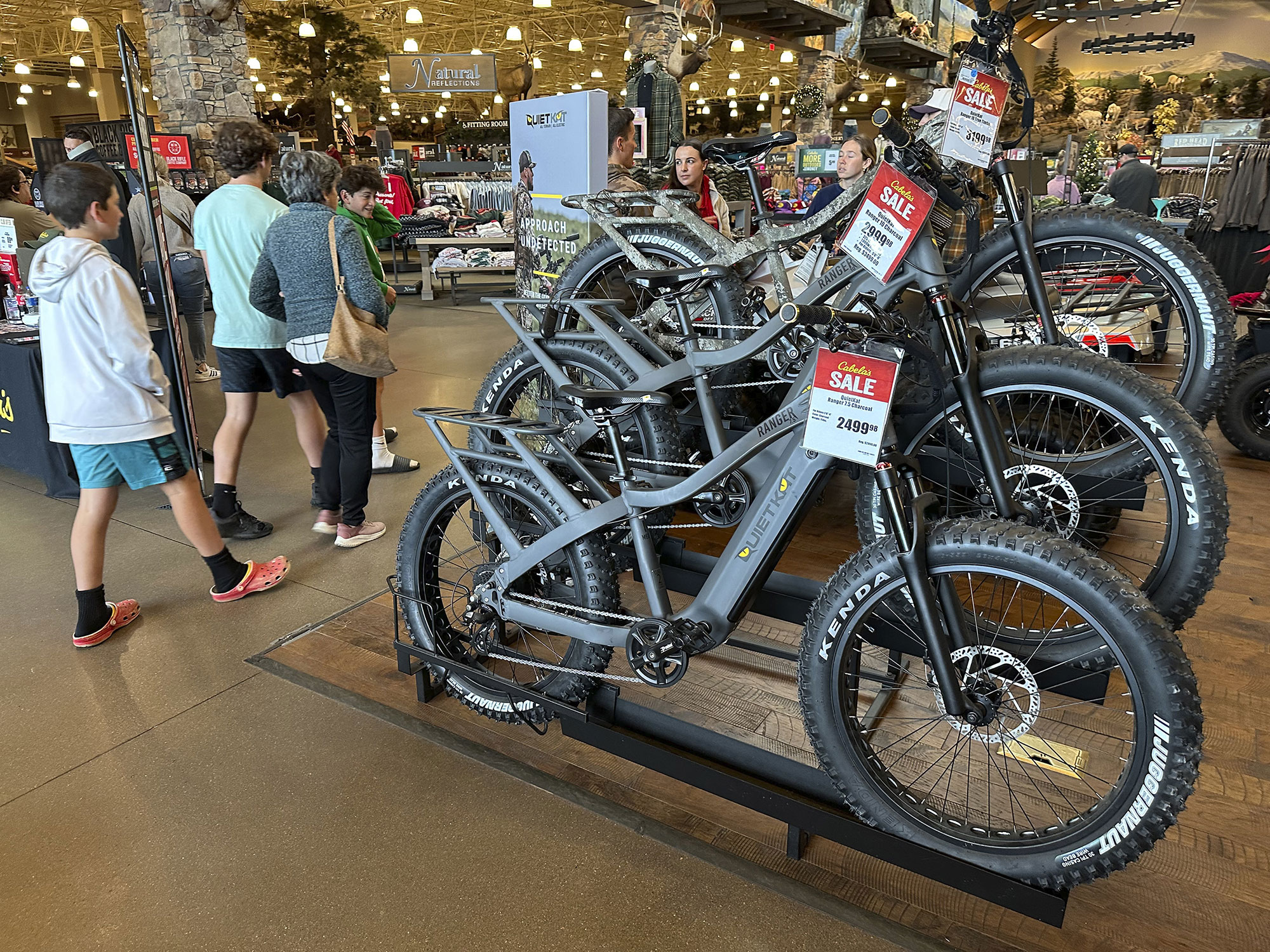
ELECTRIC BIKES AND SCOOTERS have become popular alternatives for many teens without a license.
 Jennifer Alas Molina a sophomore at Northgate High School in Concord and a member of Contra Costa Youth Journalism. (Ishita Khanna/Bay City News)
And why not? They are user-friendly bicycles equipped with battery-powered assistance — via pedaling — and in some cases, use a throttle, reports Bicycling magazine. They provide pre-teens and teenagers a sense of freedom that allows them to go beyond their home, school and community with ease. And although they are meant to be used in a safe way, there are young people — and even some adults — who don’t know how to use them properly.
Meheryn Fazih, 16, of Brentwood, has been using her e-bike for about a month. She said she’s noticed kids being unsafe when using the bikes, especially on trails where pedestrians are walking. The student at California High School in San Ramon added that if she was a car driver, she would “feel more anxiety because the kids on e-bikes are more unpredictable than a car or a normal bike.”
Fazih said she’s been lucky to never have gotten in an accident, but is still aware of the possible dangers and is always careful when using her e-bike.
Civic programs target safety
Officials from several Contra Costa County cities have also noticed an increase in improper use and accidents with the motorized vehicles.
In Walnut Creek, the City Council is working on an e-bike safety plan. The Walnut Creek Youth Leadership Commission already launched part of the plan, which lists safety concerns of e-bikes and what parents can do to keep their children safer on the streets. It also lists rules children should follow while on the street and shares that “kids age 10 to 15 are five times more likely than other age groups to need an ambulance after an e-bike crash.”
In nearby Danville, the town recently launched its e-bike program, “Not My Kid.” The campaign aims to teach families about the pros and cons of e-bikes, and it provides a place for them to ask questions and create a safer environment for parents who want to give their kids e-bikes. The campaign is expanding and has incorporated the San Ramon Valley Unified School District, as well as the Danville Police Department, according to Town Council reports.
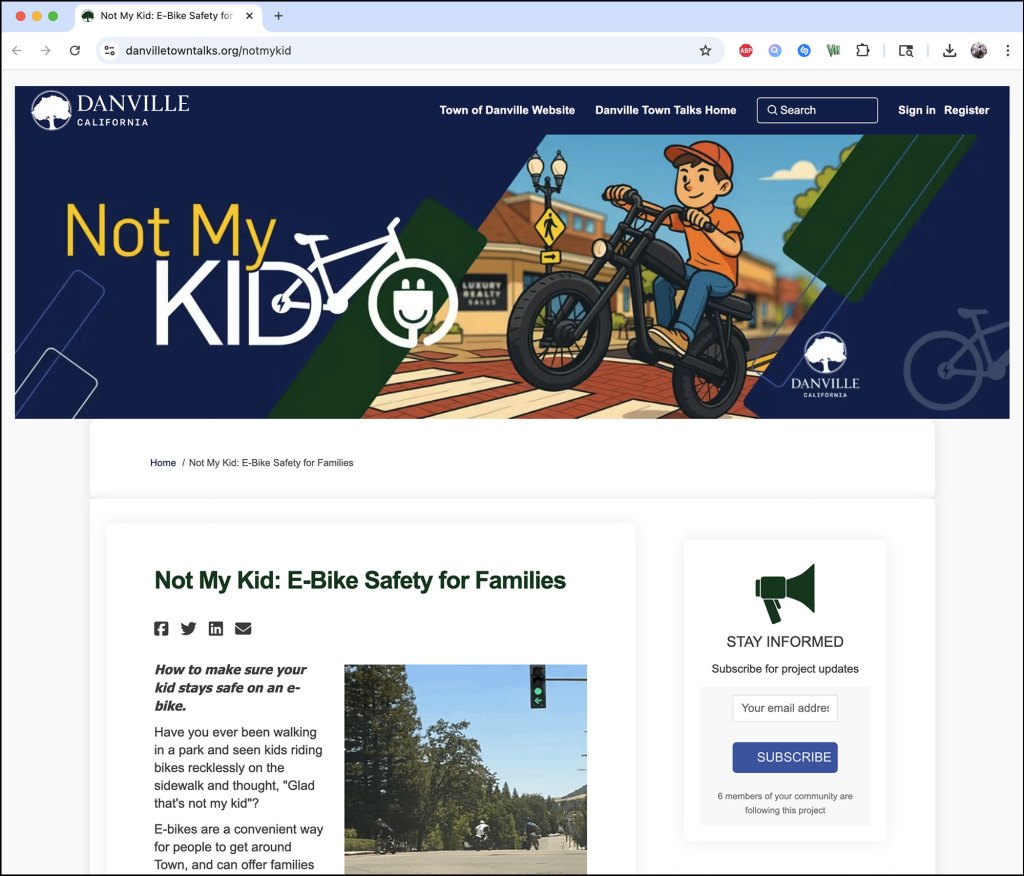 Municipal programs like Danville’s “Not My Kid” campaign stress e-bike safety for young riders with links to training courses and other resources for families. (Screenshot via danvilletowntalks.org)
Yejee Bang, a Walnut Creek parent of three, said she has strong opinions on e-bikes, including not allowing her kids to use one.
“No, absolutely not,” Bang said. “I have a friend who’s an RN at John Muir hospital, and one of the most common accidents that come in are from e-bikes and e-scooters.”
Bang went on to say there’s been a distinct change in recent years with the electric vehicles becoming more popular.
“People are on these e-bikes and scooters … it seems like a more pleasant ride where they can relax more, so they’re much more carefree when riding,” Bang added.
Traumatic incidents garner scrutiny
Stories of accidents involving electric vehicles are gaining attention across the nation and closer to home.
In September 2023, Amelia Stafford was ejected off the back of an electric bike near her home in Marin County. The now 17-year-old “suffered a severe brain injury and spent a week in a medically induced coma,” NBC Bay Area reported recently. “She, ultimately, underwent five surgeries, which included procedures to rebuild her skull after nearly half of it was crushed from the impact of the accident,” according to NBC Bay Area.
 Amelia Stafford in an undated image from a GoFundMe page set up to raise money for her medical bills. The San Rafael teen suffered serious brain injuries when she was thrown from an e-bike in September 2023. Her experience led to a state law that restricts throttle power on e-bikes based on the rider’s age. (Image via GoFundMe)
Stafford — who turned her experience into a call to action — joined with the on-call trauma surgeon at the MarinHealth Medical Center the night of her accident, and with other health professionals lobbied state legislators to pass a new law, AB 1778 — the state’s first-ever age restriction on throttle-powered e-bikes. The law went into effect on July 1, 2025.
How common are e-bike accidents? The Statewide Integrated Traffic Records System (SWITRS) 2018-23 database of e-bike injury collisions shows “e-bike incidents increased 18.6-fold over 5 years — from 184 to 3,429 events” across California, as reported by the American College of Surgeons. The researchers reported “a dramatic 49-fold increase in e-bike riders with head trauma nationally over the past five years.”
Experts credit these high numbers to inadequate safety regulations, “like mandatory helmets, speed limits for e-bikes and age restrictions.”
In an attempt to make motorized bikes and scooters safer, California Senate Bill 1271 went into effect Jan. 1, placing stricter regulations on both consumers and the e-bike/scooter industry. “Federal rules requiring safety standards for batteries in e-bikes and other devices such as e-scooters are in limbo after the Consumer Product Safety Commission, the independent federal regulatory agency meant to protect people against death and injury from bicycles and other consumer products, withdrew proposed regulations in August,” reports Colorado Public Radio.
Jennifer Alas is a 10th grader at Northgate High School in Walnut Creek and a CCYJ reporter. This story originally appeared in CCSpin.