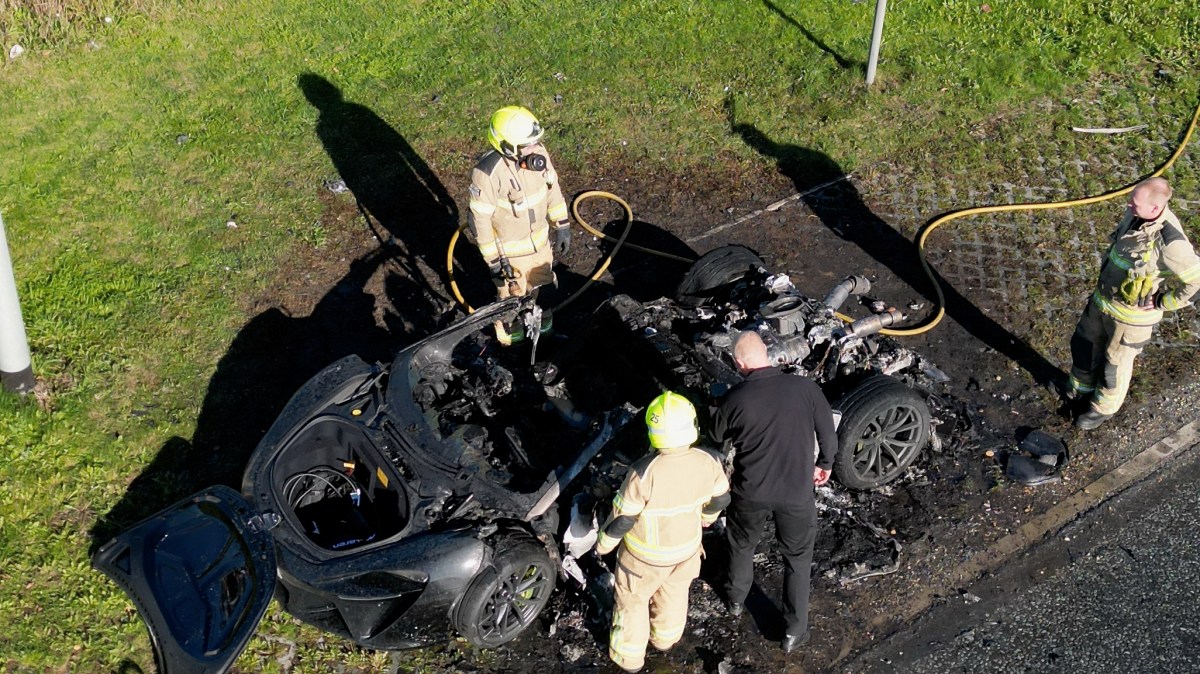
Motorists in hybrid cars are substantially more likely to die in road collisions than those in conventional petrol vehicles, according to statistics from the Department for Transport.
The official data shows that 122 people died in fatal collisions involving hybrid cars last year, compared with 777 deaths in crashes involving petrol-only vehicles.
With petrol models outnumbering hybrid vehicles by almost 20 to one on UK roads, this suggests that hybrids are involved in approximately three times as many fatal crashes.
Hybrid cars pair internal combustion engines with electric motors and high-voltage battery systems. They are often favoured over straight petrol and diesel cars or fully electric vehicles because they offer the value provided by home charging, but the greater range and certainty provided by combustion engines.
Overall, the data shows that there was one death for every 8,000 hybrid cars on the roads last year compared with one death for every 20,000 diesel vehicles, and one death for every 25,000 petrol engines.
The data suggests fully electric vehicles have the lowest fatality rate at one death for every 55,000 of these cars on the road.
The figures, obtained by The Mail on Sunday, have alarmed road safety specialists and led to calls for an inquiry into the reasons for the difference.
Some experts believe the higher death rates could be explained by hybrids’ combination of petrol engines and batteries and electric motors, which can be harder to control and more prone to fires.

A house fire started by a hybrid car vehicle that was parked outside
Emergency services may also require special training and equipment to deal with the different nature of hybrid fires, including the risk of toxic gases and battery thermal events.
Nicholas Lyes, of the road safety charity IAM RoadSmart, said: “Plug-in hybrids are often heavier and more complex vehicles owing to the fact they run on both a traditional combustion engine and a battery.”
He warned that such complexity, with “two power sources, two cooling systems and more complicated electronics and wiring”, could create “complex fire scenarios which are harder for firemen to put out”.
The concern over fires is not confined to crashes.
The Ford Kuga plug-in hybrid, one of the UK’s more popular electrified vehicles, has been the subject of multiple battery-related fire risk recalls.
In March 2025, Ford issued a recall for thousands of Kugas after it emerged that a high-voltage battery short-circuit defect could cause a “Stop Safely Now” warning and potential loss of power, or even thermal battery venting if severe, increasing the risk of fire. Owners were warned not to charge their vehicles until a remedy was available and to operate them in petrol-only mode where possible while waiting for software updates.

Earlier Kuga models were also recalled over concerns about overheating batteries, with several vehicles reported to have caught fire in Europe.
Despite the worrying data, official crash-test performance on many hybrid vehicles remains broadly positive. The Ford Kuga plug-in, for example, has achieved strong occupant protection scores in Euro NCAP testing, with a five-star overall rating.
Experts also warned that raw fatality figures without adjusting for exposure, age, usage and mechanical variances, meant the statistics offered only a starting point for discussion rather than a definitive assessment of risk.
• Drivers’ risk of dying in crash triples over the age of 75
Battery-related fires in electric and hybrid vehicles also remain rare although when they occur they can be intense and protracted, often requiring specialised firefighting techniques.
Car safety analysts suggested that several factors could contribute to the disproportionate fatality rate seen in hybrids. The additional weight of batteries and electric motors alters vehicle dynamics and crash energy distribution compared with single-engine cars.
Batteries situated under the vehicle floor, for example, have different crush behaviour in high-impact scenarios. And while internal combustion engines can ignite petrol in crashes, lithium-ion battery thermal events though infrequent burn hotter and with chemical complexity, requiring specialised suppression agents and protective equipment.
Hybrid vehicles also tend to cover many miles in commercial use, for example, when used as taxis, potentially exposing them to more risk over their lifetimes. Additionally, batteries degrade with age and use, which could influence safety outcomes if not properly managed or replaced.
Nonetheless, the RAC Foundation yesterday called for a “dedicated investigation” to examine the reasons for the higher fatality rate in hybrids.
Steve Gooding, of the organisation, said: “It’s high time we had a specialist resource to address road safety risk.”