A change in British traffic legislation creates a charge per kilometer driven and redesigns the cost of driving electric cars in the United Kingdom. Plug-in hybrids will now be subject to vehicle tax, a charge per kilometer, and gasoline taxes. The Treasury defends differentiation and predicts a rush to resell even before the law comes into effect.
A change in traffic legislation has placed electric cars at the center of a new controversy in the United Kingdom, by introducing a fee based on mileage driven and altering the cost logic of electrification.
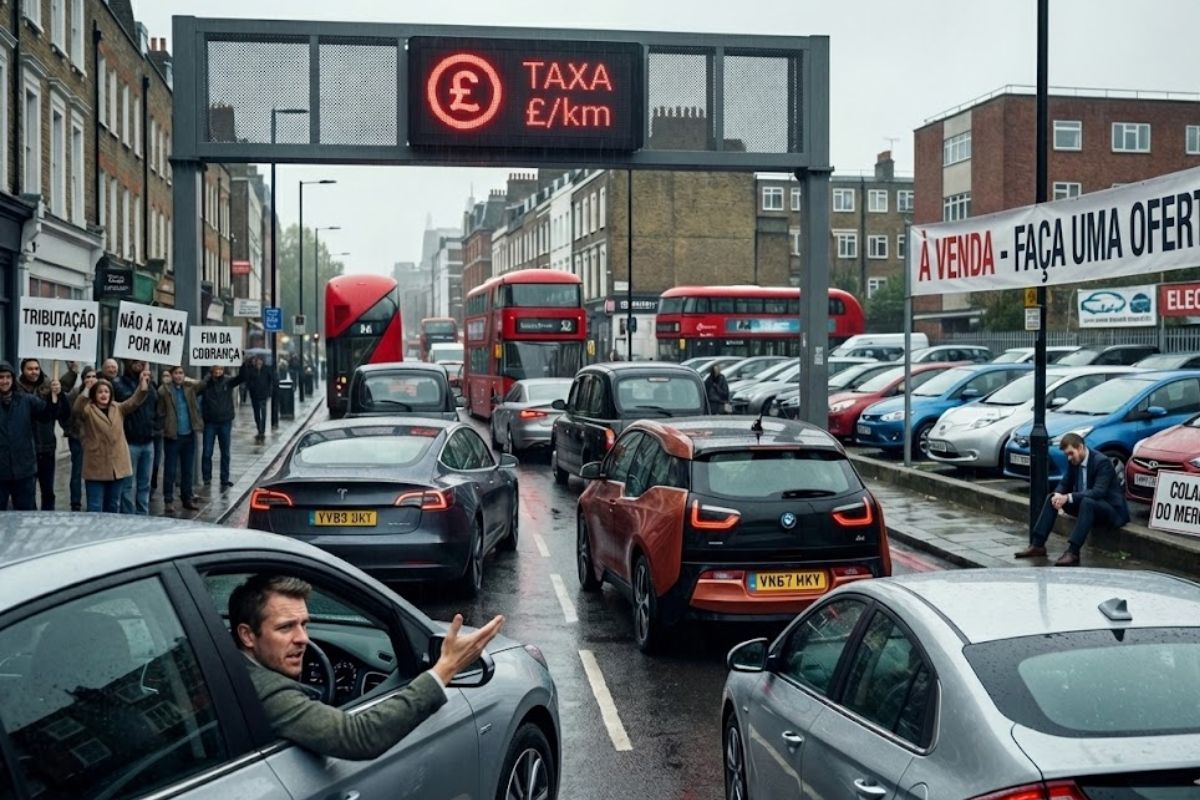
In practice, the measure promises to end the “golden age” of plug-in hybrids, which will now face a scenario described as “triple taxation.” While drivers report a loss of economic advantage, dealers project a direct impact on the used car market.
The new feature is a charge tied to the distance traveled, designed to to charge for the use of the road and to offset the drop in revenue linked to the reduction in taxes on fossil fuels, as the fleet becomes electrified.
— ARTICLE CONTINUES BELOW —
The immediate result is that Electric cars are losing some of their appeal. as they begin to have a recurring cost related to how much they are driven, and not just the cost of energy and maintenance.
Why are plug-in hybrids subject to “triple taxation”?
According to the rule described in the regulation, those who own a plug-in hybrid vehicle will now pay for three tiers of pricing simultaneously:
New rate per kilometer driven
Taxes already included in the price of gasoline when you need to refuel.
This hits hard the models that combine electric and combustion engines and, for many owners, dismantles the calculation that justified the choice of outlet..
Higher energy costs and cheaper gasoline worsen the equation.
The report details an economic distortion fueled by two simultaneous movements: a rise in the price of electricity and a fall in the price of gasoline.
As a result, drivers began to use combustion engines more frequently.
In this scenario, a feeling of “double taxation” arises in everyday use, because the driver may end up paying… both per kilometer driven and per liter of fuel, eliminating the financial advantage of owning an eco-friendly car.
Why were self-charging hybrids exempted, and why did the outrage increase?
The controversy grew with the exclusion of conventional hybrids, such as the Toyota Prius, and other self-charging models from the new taxation.
This differentiation, described as unfair by the public, generated a reaction especially among owners of popular SUVs, such as the Ford Kuga PHEV.
For this group, the message is straightforward: Those who chose plug-in hybrids to reduce consumption and emissions feel they have become a target., while another hybrid technology avoids the new cost.
The argument of the British Treasury Department
The British Treasury Department defends the measure, stating that the per-kilometer rate for plug-in hybrids will be half that charged for 100% electric cars.
The justification presented is the search for a balance between “fiscal justice” and the need to cover the shortfall associated with the tax exemption on fossil fuels, which puts electric cars back in the debate about how to finance infrastructure and revenue in the long term.
How Brazilians in the United Kingdom can feel it in their wallets.
For Brazilians residing in the country, the database lists practical effects that can alter choices and planning, especially for those who depend on their car daily. Among the impacts cited are:
Increased daily cost of commuting long distances or working as a driver.
Plug-in hybrids are ceasing to be an economical option, with higher tax and energy costs.
Greater depreciation of the used car, with potential loss on resale.
Pressure to change cars before the tax comes into effect, generating unexpected expenses.
Reduced attractiveness of pure electric vehicles in the used car market.
Possible changes in vehicle insurance and protection plans, as resale value influences policies.
Difficulty in exporting plugins to other countries, limiting options for those who intend to return to Brazil.
Indirect incentive to choose conventional hybrids because they are taxed less.
In short, The cost of running the vehicle and the risk of depreciation become as important as the technology itself. in the purchase decision.
Used goods market: risk of “unsellable” items and the rush to sell.
Experts and dealers, such as the Independent Motor Dealers Association, point to the risk of plug-in hybrids becoming “unsellable” in the used car market.
The projection is for a rush to sell before the tax collection begins, creating oversupply and a sharp drop in prices.
The chain reaction is clear: more cars for sale, fewer buyers willing to take on the new cost burden, and… Accelerated depreciation for those who already own the vehicle..
Difficult exports exacerbate the problem of devaluation.
Another aggravating factor described is the difficulty in exporting the surplus stock. Since vehicles in the United Kingdom use right-hand drive, distribution to other European countries tends to be limited.
In practice, this could leave owners “stuck” with a depreciating asset, with fewer exit routes to the market, while electric cars remain at the center of the fiscal debate.
The future of electric mobility is in doubt.
The British measure sparks a global debate: how to replace gasoline tax revenue as electrification progresses.
The case is being treated as a warning that poorly calibrated fiscal policies can slow the transition and punish those who adopted cleaner technologies earlier.
The basis summarizes the central consequences: triple taxation on plug-ins, an artificial competitive advantage for self-charging devices, and an aggravation of… Losses due to the low possibility of exporting right-hand drive vehicles.
What would your reaction be if you had recently purchased an electric car or a plug-in hybrid and suddenly saw your vehicle lose both value and cost-effectiveness?