17 Most Extreme Electric Bikes Ever Built
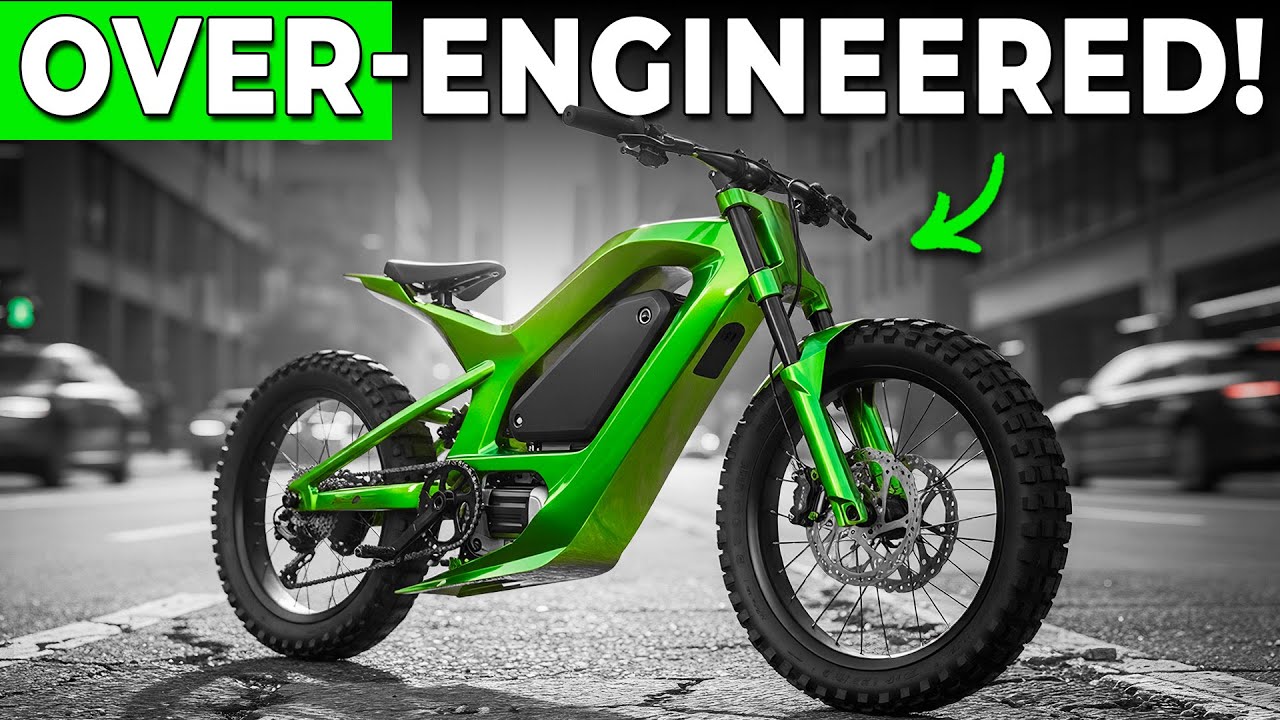
Most people think electric bikes are just glorified bicycles with a little motor assist. But what if I told you there are electric bikes out there that hit 85 mph, faster than most cars on the city streets, machines with more power than some motorcycles, batteries bigger than what’s in a Tesla, and price tags that’ll make your jaw drop. In this video, we’re counting down the 17 most extreme electric bikes ever built, ranked from impressive to absolutely mind-blowing. We’re talking about bikes that blur the line between bicycle and motorcycle, some packing 15,000 watts of power, others weighing less than 30 lbs, and one that holds a Guinness World Record. Stick around until number one because that machine redefes everything you thought was possible on two wheels. Miss and you’ll never know what’s actually out there beyond those basic pedal assist bikes everyone’s riding. Let’s dive right in. Number 17, Aventon Adventure 3. Starting off our list is a bike that’s shaking up the entire industry by proving you don’t need to spend a fortune to get serious performance. The Aventon Adventure 3 comes in under $2,000. But here’s the thing, it’s loaded with features that were reserved for bikes costing three or four times as much just a few years ago. This machine runs a 750 W motor paired with massive 4-in fat tires that can handle any terrain you throw at them. But what really sets it apart is the torque sensor integration. Most budget bikes use basic cadence sensors that just detect if you’re pedaling. They feel clunky and unnatural. The Adventure 3’s torque sensor actually measures how hard you’re pushing, giving you smooth, responsive power that feels like a natural extension of your effort. The real gamecher here is the Abenton ACU programming system. This gives you advanced security features like geo fencing and motion detection alarms. Technology you’d expect on bikes costing $10,000. What this bike represents is a fundamental shift in consumer expectations. It’s forcing every other manufacturer to justify their higher prices because Aventon just proved you can pack serious capability into an affordable package. The democratization of performance starts here. Number 16, Brmpton Electric Pine. Now, we’re looking at the opposite end of the philosophy spectrum. The Brmpton electric pline costs around $4,500. And you might wonder why anyone would pay that much for what looks like a compact folding bike with just $250 W of power. The answer is engineering precision. This bike achieves extremity through miniaturization. The patented folding system allows it to collapse into an incredibly compact footprint in seconds. Small enough to carry on to trains, buses, or store under your desk without anyone noticing. That level of engineered portability requires hundreds of custom components and years of development to perfect. For urban commuters who rely on multimodal transportation, this bike is essential. It solves the last mile problem that plagues every major city. You can’t take a regular bike on a crowded subway during rush hour, and you can’t easily store one in a small apartment. The Brmpton solves both problems while maintaining ride quality and integrating electric assist seamlessly into that compact package. The extreme cost reflects the extreme complexity of making everything fold, function, and fit together perfectly every single time. Number 15, Ree and Müller Load Touring HS. Here’s where we enter the world of German overengineering. The Reese and Müller Load Touring HS starts at around $6,700 and goes up from there. It’s a cargo bike, sure, but calling it just a cargo bike is like calling a Porsche just a car. This machine features full suspension, both front and rear, which is extremely rare in the cargo category. Most cargo bikes are rigid or have basic front suspension at best. Why does this matter? When you’re hauling kids, groceries, or sensitive equipment at 28 mph through city streets with potholes and rough pavement, that suspension becomes a critical safety feature. It keeps the load stable, protects your cargo, and maintains control when things get rough. The Bosch performance line speed motor puts out 350 W nominal power, which might seem modest compared to what’s coming later on this list, but it’s tuned specifically for torque and reliability under heavy loads. This isn’t about raw speed. It’s about moving serious weight safely and efficiently. The engineering focus here is on longevity and function. These bikes are built to replace cars for families, and that requires a level of safety and reliability that justifies the premium price. Number 14, Delast Top 3.0i. Now, things start getting interesting. The Delast Top 3.0 I holds the Guinness World Record for the longest distance traveled on a single charge, 228 mi. Let that sink in. That’s farther than most electric cars could go. just a decade ago. This range is possible because of the massive 72vt 48 amp hour battery system that totals 3,456 W hours of capacity. To put that in perspective, most standard electric bikes have batteries around 500 W hours. This thing carries nearly 7 times that amount. Here’s where it gets wild. The bike ships in class 2 mode, meaning it’s limited to 750 watts and 20 mph to comply with regulations. But flip it into unlimited mode and suddenly you’re dealing with 6,000 watts of peak power and speeds up to 50 mph. The moment you activate that mode, you’re no longer riding a bicycle in the eyes of the law. You’re operating what legally qualifies as a motorcycle in most jurisdictions. That record-breaking 228 mi range came with a catch. It was achieved at the lowest power setting, pedaling gently at around 15 mph. In realworld use with full power engaged, you’re looking at closer to 30 mi of range. Still impressive, but it shows how range claims can be misleading. This bike represents the extreme end of long-distance capability, proving that electric bikes can genuinely replace cars for serious commuting. Number 13, Optibbike R22 Everest. The name tells you everything. The R22 Everest is designed to climb mountains, literally. This $15,900 machine features a proprietary PowerStorm MBB mid drive motor that delivers a staggering 190 new meters of torque. That’s more twisting force than many car engines produce. The bike runs a dual battery system totaling 3,260 W hours. According to calculations, this setup provides enough energy to handle 24,000 ft of elevation gain on a single charge. That’s nearly the height of Mount McKinley. Whether you’d actually want to ride that much climbing in one go is another question, but the capability exists. What makes this bike truly extreme is the drivetrain choice. It uses the Rolloff Speed Hub 500, a 14speed internally geared hub that’s basically bomb-proof. Internal gear hubs are known for extreme durability because all the gears are sealed inside, protected from dirt, water, and damage. When you’re subjecting components to 190 new meters of continuous torque hour after hour on punishing climbs, you need that level of resilience. This isn’t a bike for casual riders. It’s purpose-built for extreme endurance challenges and mountain expeditions where failure isn’t an option. The price reflects that specialized engineering and the peace of mind that comes with knowing your bike can handle whatever vertical challenge you throw at it. Before we continue climbing this list, make sure you’re subscribed to the channel. We’re constantly testing and reviewing the latest electric bikes, and you don’t want to miss what’s coming next in this rapidly evolving market. Number 12, Specialized Turbo Crayo 2 Comp. Now, we shift into the world of high-performance e-gravel bikes. The Turbo Creo 2 Comp is built around a Fact 11R carbon frame, which is specialized high-grade carbon fiber construction. But the defining feature here is the Future Shock 3.0 system. This is an innovative suspension technology integrated directly into the steer tube. It provides 20 mm of travel that specifically targets highfrequency vibrations and impacts, the kind of jarring hits you get from gravel roads, broken pavement, and rough terrain. Traditional suspension can feel mushy and waste pedaling energy. The Future Shock isolates your hands and upper body from road shock without compromising the lateral stiffness you need for efficient power transfer. The bike also accommodates extremely wide tires up to 700 CE by 55 mm or 29 in x 2.2 in mountain bike tires. This versatility means you can set it up for everything from smooth gravel roads to legitimate single track trails. The engineering challenge was creating a carbon frame that could handle those wide tires and the forces they generate while maintaining the responsive feel of a performance road bike. This represents the extreme end of gravel capability. A machine that can genuinely handle terrain that would destroy a traditional road bike while still feeling fast and efficient on pavement. Number 11. Trek domain plus SLR9 EAP. Here’s where lightweight engineering reaches its peak. The Trek Domain Plus SLR9 EAP weighs just 28.5 lb. For an electric bike with a motor, battery, and all the associated electronics, that’s borderline impossible. Most electric road bikes weigh 35 to 40 lb. This achievement comes from Trek’s 800 series OV carbon construction. OLV stands for optimum compaction low void, which is Trek’s proprietary process for creating extremely lightweight, high strength carbon fiber. Every tube is carefully engineered to place material exactly where it’s needed and remove it everywhere else. The bike uses a compact TQ mid drive motor system and an internal battery of around 360 W hours. That’s a relatively small battery, but the priority here isn’t massive range. It’s maintaining the ride characteristics of a high-end road bike. The ISO speed rear suspension technology further refineses the ride by decoupling the seat tube from the top tube, allowing vertical compliance that absorbs road vibration without affecting handling. At $12,999, you’re paying for the engineering complexity required to integrate electric assist into a frame this light while maintaining structural integrity and ride quality. This bike proves that electric bikes don’t have to be heavy to be capable. Number 10, Luna X2 Enduro bike. The Luna X Enduro represents something fascinating. performance that rivals bikes costing three times as much, delivered at a fraction of the price. At $3,950, this bike delivers a full 6 in of suspension travel front and rear, plus a mid drive system capable of producing up to 2,000 ws of power. To understand why this matters, compare it to the Specialized S Works Turbo Level 4, which comes later on this list and costs over $13,000. The Luna X2 provides similar suspension travel and actually more raw power output, yet costs less than a third of the price. So, what’s the difference? The answer lies in proprietary technology, brand support, and component refinement. The Specialized uses customdeveloped motors with specific tuning, integrated battery management systems, and years of research and development baked into every aspect of the design. Luna achieves high performance by using readily available, proven components and keeping overhead low. For riders who want serious mountain bike capability without the premium price tag, the Luna X2 proves it’s possible. This is the bike that makes expensive brands nervous because it forces them to justify every dollar of that price difference. The performance gap is closing and the value proposition here is undeniable. Number nine, Specialized S Works Turbo Levo 4. Speaking of that specialized, here it is. The S Works Turbo Levo 4 ranges from $13,499 to over $15,000 depending on configuration. This is the financial peak of production electric mountain bikes. The bike features the SA Works 3.1 motor delivering 720 Ws nominal power and 111 Newton me of torque powered by an integrated 840watth battery. The frame is constructed from FAC 11 m carbon specialized top tier carbon fiber. It includes adjustable geometry, the mastermind T3 display system and component specification that reads like a wish list. Stram XX Eagle TypeA XS electronic shifting and Fox factory suspension with 160 mm of front travel and 150 mm in the rear. What justifies this extreme cost? Proprietary integration and refinement. Every aspect of this bike is designed to work together as a complete system. The motor tuning is specifically calibrated for the frames geometry and suspension kinematics. The battery management communicates with the motor controller to optimize power delivery based on riding conditions. The carbon layup is engineered to handle the specific torque loads while minimizing weight. This is what the absolute pinnacle of mass-produced electric mountain bike technology looks like. It’s expensive because developing this level of integration requires years of engineering and testing. For riders who demand the best and can afford it, this is where that money goes. Number eight, Stealth B-52. Now we’re entering the realm of machines that barely qualify as bicycles anymore. The Stealth B-52 is engineered for aggressive off-road performance, generating 6,200 W of peak power and hitting speeds of 50 mph. But here’s the thing, it weighs 110 lb. That massive weight is both a challenge and a solution. The bike needs a robust chassis to handle the forces generated by 6,200 Ws of power hitting rough terrain. It features 180 mm of front suspension travel and 200 mm in the rear, numbers you’d see on downhill mountain bikes built for racing. The braking system uses highly tuned mini cross hydraulic brakes with massive 250 mm rotors to safely stop all that mass. What sets the B-52 apart from cheaper high-powered bikes is the motor management system. Many high-powered machines deliver power in jerky, uncontrolled bursts that make them difficult and dangerous to ride. The B-52’s controller delivers power smoothly and predictably, giving you control even when you’re unleashing all 6,200 W. That refined power delivery is what separates a quality high performance machine from a sketchy death trap. This bike is built for riders who want to tackle serious off-road terrain at motorcycle speeds. The weight makes it impractical for pedaling, but that’s not the point. This is a machine for bombing down mountains and ripping through trails with the power to clear obstacles that would stop lesser bikes cold. Number seven, Halo Motor FC1. Here’s where things get concerning. The Halo Motor FC1 claims a top speed of 68 mph and costs just $4,868. On paper, that speed to price ratio seems incredible. In reality, it represents a dangerous engineering compromise. The bike achieves that extreme speed through raw power, estimated around 7,500 W peak. It has a chunky suspension setup with 180 mm of fork travel, which sounds impressive. But here’s the problem. The braking system uses custom hydraulic disc brakes with 203 mm rotors that industry analysis describes as undergunded for the bike’s top speed capability. Think about what happens when you’re traveling at 68 mph on a machine weighing around 80 lb. The kinetic energy is enormous. If your brakes can’t handle that energy, you’re in serious danger. The corners that were cut to achieve this low price show up in the components that matter most for safety. This bike proves that raw speed is easy to achieve when you’re willing to compromise on everything else. The scary part is that these machines are available to anyone with a credit card, regardless of their riding experience or understanding of the risks. Speed without proper engineering for control and stopping power creates a recipe for disaster. Number six, High Power Cycles Revolution X. The HPC Revolution X offers multiple configurations, 5000 watt, 7,000 W, and 10,000 W motor options, all capable of exceeding 65 mph. With prices starting around $13,695, this sits in the premium tier of high-speed electric bikes. What you’re paying for is the complete component package. The bike features Mura quad piston regenerative braking systems. Four pistons per caliper provide enormous stopping power, and the regenerative capability actually puts energy back into the battery during braking. The suspension offers 9.5 in of frame travel with 200 mm forks, giving it legitimate off-road capability at speeds that would destroy most bikes. The battery options go up to 2,400 W hours, providing the capacity needed to sustain high-speed riding without constantly running out of juice. This is important because at 65 mph, energy consumption skyrockets. Without adequate battery capacity, you’d get maybe 15 minutes of ride time. The HPC Revolution X represents the brand’s commitment to tiered high performance. You can choose the power level that matches your needs and budget, but every configuration maintains the same emphasis on quality components and safety equipment. This is how you build a high-speed electric bike responsibly by making sure every other system can handle the performance you’re delivering. Number five, high power cycles. Revolution X9. At the top of the HPC lineup sits the Revolution X9, priced at $18,325. This is claimed to be the fastest production electric bike available to the public with tested speeds exceeding 65 mph. That’s 104 kmh. The extreme price tag buys you a carbon fiber frame, Mura MT7 quad piston brakes that provide unmatched stopping power, and advanced suspension designed to keep control at those insane speeds. But the most interesting component is the Schlump high-speed drive crank set. This is a complex mechanical overdrive system that allows you to actually pedal effectively at speeds where normal pedaling would be impossible. Without it, your legs would be spinning uselessly once you got above 40 mph. The HSD crank set gives you another gear range, letting you contribute pedal power even at maximum velocity. It’s a sophisticated solution to a problem most bikes don’t even have. The bike also integrates a proprietary 3,450Wh battery system necessary to feed the demands of its high output motor. At this performance level, every component must be overbuilt to handle forces that would destroy standard bicycle parts. The price reflects not just the cost of premium components, but the engineering required to make them all work together reliably at the absolute edge of what’s possible. Number four, Vector Vortex. The Vector Vortex specializes in high power mid drive performance, delivering up to 10,000 watts through its drivetrain. This is fundamentally different from the hub motor approach used by many high-speed bikes, and that distinction matters tremendously for how the bike performs. Hub motors deliver power directly to the wheel, which is great for raw top speed on flat ground. Mid drive motors, however, work through the bike’s gearing system. This gives you the mechanical advantage of those gears, multiplying torque for aggressive acceleration and technical climbing. When you’re off-road racing through demanding terrain, that torque multiplication is essential. The bike typically employs a custom Kelly 7230s controller to manage the immense power demands. At 10,000 watts, you’re pulling enormous current from the battery. And without sophisticated electronic management, you risk overheating, burning out components, or creating dangerous power delivery characteristics. The controller is the brain that keeps everything working smoothly under extreme loads. The Vector Vortex uses a 72vt battery system which is critical for efficiency at this power level. Higher voltage means lower current requirements for the same power output. Lower current means less heat generation and resistive losses in the wiring and motor. This thermal efficiency is what allows the bike to sustain 10,000 W of output without melting down. This machine is purpose-built for off-road racing where terrain demands massive torque and instant power delivery. It represents the peak of what mid drive systems can achieve when you throw conventional power limits out the window. Number three, Kulix’s Q1 140m Dore race. The Kulbix Q40MD pushes mid drive performance even further with a 12,000 W motor capable of 50 mph. But the truly extreme specification is the torque output. 280 Newton meters at the rear wheel. That’s an absolutely staggering amount of rotational force. What makes this bike unique is the integrated frame design. The shell frame serves double duty as both structure and battery enclosure. It’s a watertight compartment that houses the 2,160Wh battery, eliminating the need for separate battery mounting and housing. This integration reduces part count, complexity, and weight. The bike comes in at 58 kg with pedals, which is actually reasonable given the power output. That 280 Newton m of torque creates serious engineering challenges. Every component in the drivetrain must be overbuilt to handle forces that would snap standard bicycle chains and destroy normal cassettes. This requires motorcycle grade parts throughout, which adds cost and weight, but ensures reliability. The Q140MD represents a design philosophy that prioritizes integration and purpose-built engineering over using off-the-shelf components. When you’re dealing with 12,000 watts and 280 Newton meters, standard solutions don’t work. You need custom everything, and that’s exactly what this bike delivers. It’s a motorcycle wearing bicycle clothes. And at this power level, that’s not a criticism, it’s a necessity. Number two, custom 15,000 watt DIY build. This entry represents the wild west of extreme electric bikes. Custom builders have created machines producing 15,000 watts using readily available higherformance components. These builds typically feature a chrometer 8000 W hub motor pushed to its limits driven by a Yu Yonging 150 amp controller and powered by a customuilt 100.8vt 8V 20 amp hour lithium polymer battery pack totaling 2016 W hours. The performance is genuinely insane. Brutal acceleration and top speeds exceeding 60 mph. But here’s where the extreme danger comes in. Many of these builds rely on stock 160 mm Shimano disc brakes that are described as barely adequate even at 40 mph. At 60 mph, they’re dangerously inadequate. This highlights a critical problem in the DIY extreme market. High- power components are readily available and relatively affordable. You can buy a 15,000 W motor system online and bolt it onto a frame. But properly specing and installing brakes, suspension, and structural reinforcement requires knowledge and money that many builders don’t have or won’t spend. The result is bikes with massive power, but catastrophically insufficient safety equipment. These custom builds prove that 15,000 watts is achievable outside of commercial products, but they also serve as a warning. Power without proper engineering for kinetic management is a disaster waiting to happen. Just because you can build it doesn’t mean you should ride it. Number one, SB Thunder Ludicrous Plus. At the absolute peak of electric bike performance sits the SB Thunder Ludicrous Plus. This machine features a colossal 15,000 W motor and claims a maximum speed of 85 mph. Let that number sink in. 85 mph on a bicycle frame. That’s faster than the highway speed limit in most places. The engineering required to make this possible is extreme in every dimension. The bike uses a massive 72V 75 a battery system providing 5,400 W hours of capacity. that’s built with high discharge ferasis pouch cells capable of delivering the enormous current demands of a 15,000 W motor. At full power, this system is pulling over 200 amps, enough to weld metal. The thermal management challenge is immense. The bike requires an ENT smart Bluetooth battery management system that constantly monitors every cell, managing temperature and ensuring safe operation while the battery is under extreme stress. Without sophisticated active management, these cells would overheat and potentially catch fire. The motor delivers 200 Newton meters of torque, which is essential for managing the bike’s weight in achieving that brutal acceleration. But at 85 mph, the real engineering challenge is stopping. The bike uses motorcycle grade dual piston hydraulic brakes front and rear coupled with inverted forks designed for extreme forces. These aren’t bicycle components anymore. their motorsport equipment. The SB Thunder Ludicrous Plus represents the absolute limit of what’s currently possible in electric bike technology. It’s a machine that proves we’ve moved far beyond pedal assist transportation into a new category of lightweight electric vehicles that challenge every assumption about what a bike can be. Now, you know what’s actually out there beyond those basic commuter ebikes. But here’s something just as important. Knowing which electric bikes to avoid. Check out our video, 12 popular electric bikes that just aren’t worth it to see which models have serious problems hiding behind flashy marketing.
Most people think electric bikes are just glorified bicycles with a little motor assist. But what if I told you there are electric bikes out there that hit 85 miles per hour—faster than most cars on city streets? Machines with more power than some motorcycles, batteries bigger than what’s in a Tesla, and price tags that’ll make your jaw drop.
▶️ Watch more videos from Tech Charge: 🔋
_____________________________________________
The UGLY Truth About Electric Cars…
_____________________________________________
When Will Electric Cars Become Affordable
_____________________________________________
The INSANE History of Electric Cars
_____________________________________________
This Tiny EV is a HUGE SUCCESS
_____________________________________________
First EV to Reach 1000 MILES Range
_____________________________________________
The First EV to Reach 1,000 km Range
_____________________________________________
🔔 Subscribe: https://bit.ly/30vR5eV