BEYOND ZERO | Paths to the Future Episode2: The Threads of Ingenuity | Toyota
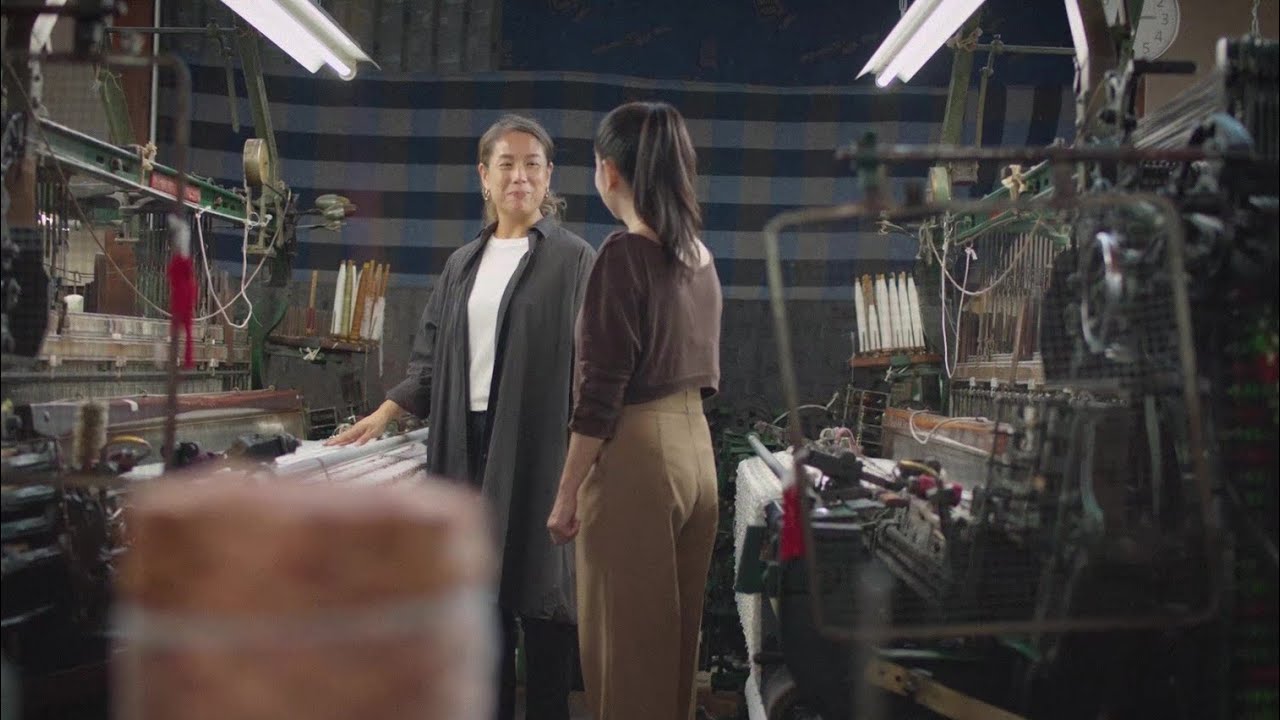
My journey in Pattaya felt like finding a small but powerful clue. What I learned about the songthaew hinted at something even bigger. A philosophy of upcycling and respect for materials ingrained in Japan for centuries. I’ve been thinking about “mottainai,” a beautiful Japanese word I’ve discovered. It’s a philosophy of not letting anything go to waste. This spirit brought me to Ichinomiya in Aichi, a region known for its pride in craft. Here, something truly remarkable is happening. Canale Japan, a local textile manufacturer, is using classic looms to weave new life into discarded automotive materials. Hello! Hello! I’m Mai Kato. I work for Toyota Motor Corporation as a Color Material Finish Designer. I design textiles for automobiles and also exterior colors. Oh, I’m actually curious to know how was it that you got interested in working with Canale Japan? After I came here, I kind of fell in love with their machines and textiles. I noticed a lot of the old and beautiful machines and I was actually wondering why you’re working with those particular ones. Because they can deal with very creative yarns which the latest weaving machines cannot deal with. Their machines were owned by older generations. Canale Japan decided to buy their business and then preserve the technologies and also the technicians. So why do you believe it’s important to not use new materials and focus on upcycling? I think it’s our responsibility. We design car textiles, but for various reasons we have to discard materials. But we still believe they’re beautiful. So, we would love to update the value of the textile to something else. Would you say that this is somehow inspired by Japanese culture? Yeah, there is a word “mottainai” in Japanese. “Mottainai” means “too wasteful.” There are things that we can still use but that sometimes we throw away. How would you feel? I think that’s the feeling of “mottainai.” I would be very sad. Because we never should waste. How do you see “mottainai” apply to upcycling? We try to use as much as possible of the wasted materials in our upcycle project. We already introduced leather pen cases and card cases. And also, from airbags, we made tote bags. And we also used the seatbelt for the tote bags. That’s so awesome. It’s creative, it’s functional, it’s upcycled. This is so interesting! What is this weave? This is the sakiori technique. This technique can be made on Canale Japan’s machines. So we decided to work with them. That’s amazing! What kind of products are you going to be making with this fabric? We’re going to develop a pillow cover. And then, right now we’re testing different executions to find the best look. Hello Mr. Adachi! Hello. What is the role of Canale Japan’s craftsmen in the process? They interpret my imagination into real textiles. Sakiori uses fabrics that are no longer needed. There are many scraps that get discarded and the work to transform them into something new leads to the creation of something else that connects to what comes next. It’s a traditional technique, but Mr. Adachi is incorporating it into contemporary fashion. For our current project, he’s weaving automotive textiles into this fabric. The real challenge is how to pass this technique on to the next generation. So even in our company, we work with young people. We believe that skills are learned through experience. I feel that you truly believe, in order for sustainability to work, it really has to be beneficial on so many levels. When we think about the end, right now we’re generating waste. That is the reality. When we study engineering, we have to admit that kind of fact. And then to start thinking about the allocation of the materials. How to use different materials and which types of materials. Are there any other products that you’re currently upcycling and creating? Yes, we’re exploring a partnership in Miyagi Prefecture. We’re upcycling automotive glass into glassware. Waste is never wasted if we don’t waste it. Yeah! The idea that the waste from cars can find a new life in such a creative form is beautiful. Thinking about not just “how things begin,” but “how things end.” For sustainability to work, it has to be more than a noble act. It has to create something valuable for both people and the planet. And that’s why my journey continues to Miyagi. I need to see this final transformation for myself. To witness the artistry of upcycling discarded automotive glass into glassware.
Warner Brothers Discovery presents: “Paths to the Future”
Sometimes we have to look backward to move forward. In Aichi, Japan, old textile looms are used in the upcycling of fabrics used in automobiles.
If we can reflect on the waste we create, the end doesn’t have to be the end for these high-quality materials–they can be reborn as something completely new.
About “Paths to the Future”:
Antoinette Taus, an actor/singer passionate about environmental protection activities, journeys through Thailand and Japan. During her travels she discovers how sustainable innovation can be inspired by traditional wisdom and modern concepts.
Discover more
https://sponsorcontent.wbd.com/beyond-zero/
See the link below to learn more about Beyond Zero and our sustainability efforts.
https://global.toyota/en/mobility/beyond-zero/
#Toyota #ToyotaGlobal #BeyondZero
Toyota Motor Corporation Official Global Website: https://global.toyota/en/
トヨタ自動車株式会社 公式企業サイト: https://global.toyota/jp/
Facebook: https://www.facebook.com/TOYOTA.Global/
X: https://x.com/ToyotaMotorCorp
Instagram: https://www.instagram.com/toyota/
BEYOND ZERO | Paths to the Future Episode2: The Threads of Ingenuity | Toyota
https://www.youtube.com/user/TOYOTAglobal