Are Plug In Hybrids More Viable Now?
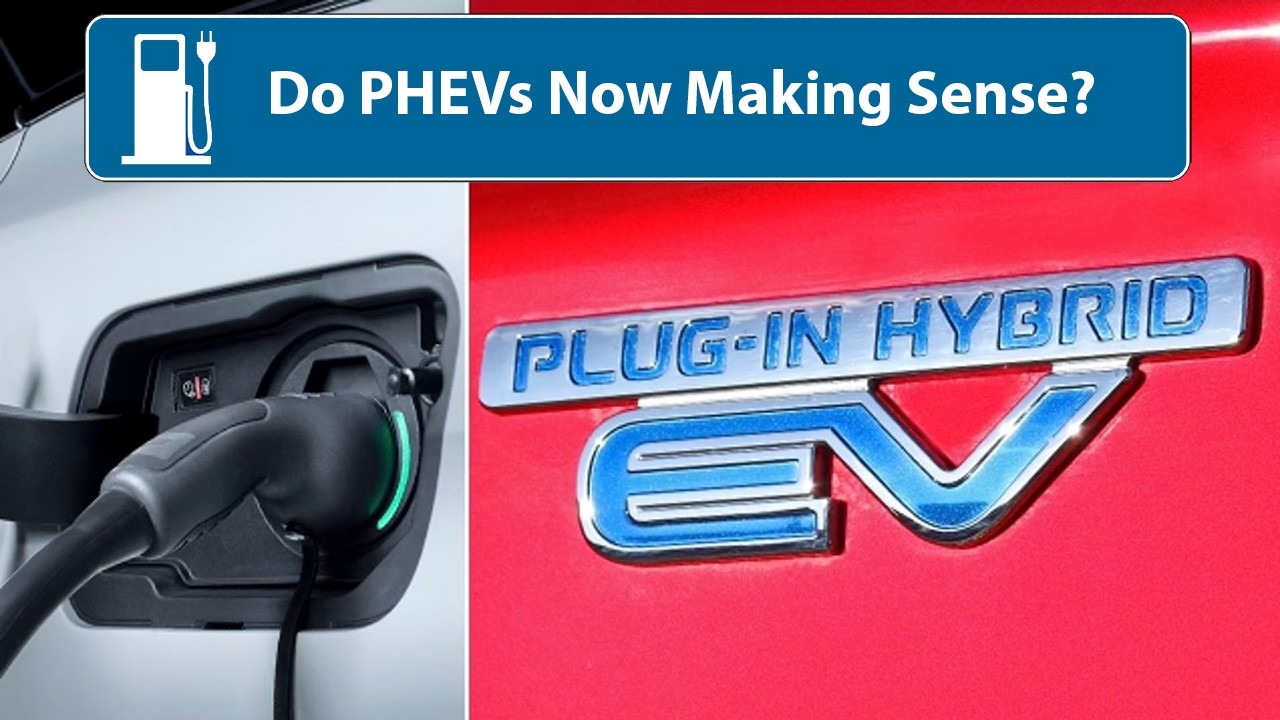
If you want to get a brand new combustion engine car after 2030, then it’s going to have to be a plug-in hybrid. But plug-in hybrids have often been seen as kind of pointless. They’re not the best of both worlds. They’re the worst of both worlds. Why would you choose one of those over either just a petrol engine or diesel engine or just a full electric? Isn’t it just a massive compromise? Well, now we’re pretty much into 2026. Do FEVs make sense or do they still have that same Achilles heel that they’ve always had that for them to make sense, you have to be able to charge from home? And if you can charge from home, you might as well just go for a full EV. Can you believe that more people watch my videos that aren’t subscribed than people that are subscribed? So, if you could subscribe, please do so. And it’s YouTube that makes us do this. They basically beat us if we don’t ask you to like and subscribe, which is why every YouTuber does the same thing. Now, let’s go back to 2015 when we got our first full EV, a 24 kW Leaf that did, if you were lucky, 95 miles. Things were very different back then. Charging was free at service areas. I mean, it was only available at some service areas. And there was one maybe two chargers if you were looking. And petrol prices, I think they were about 1.5 p per liter in 2015ish. Price at home for electricity was about 14 pilowatt hour. And they were just starting to get the first time of use tariff as well. So things were very different then. But that free charging at service areas, which I believe started years before that, but that changed the behavior and the appeal of at least a certain plug-in hybrid, the Mitsubishi Outlander FEV, which is this one plugged in here, that had the unique ability, even today, it’s quite uncommon, to be able to DC rapid charge using the Chadamo socket, which back then every charger had. The reason this was done, I believe, buying Mitsubishi in the UK is essentially just to take advantage of the fact that you could charge for free. So, if you had a Mitsubishi Outlander, you’re driving along and you think, I’m getting peckish or I need the toilet. You pulled into services, well, you might as well plug into the rapid charger and get free fuel. Fast forward to 2016. Prices of petrol has gone up. Prices of electricity has gone up a little bit, but essentially the price of charging on the old electricity network, remember those? Went from free to £5 for 20 minutes or six pounds for 30 minutes. They weren’t trying to incentivize people just doing in half hour clumps because the most you could rapid charge was 50 kW. That’s all the chargers could do and pretty much every car and bar Tesla anyway. Um, so it was it was time based rather than per kilowatt hour. That had the pretty much instantaneous effect of stopping Outlander FEVs from using those chargers because ultimately it was about the same price to charge as it was to just carry on using petrol. So as soon as they started charging for it, that FEV suddenly became only worthwhile if you could charge cheaply at home. Now, let’s fast forward to today when there’s dozens, even hundreds of different EVs to choose from. 250 miles in the real world is far from unusual. In fact, it’s more common than anything. You can do long journeys in an EV now quite easily. Worst case scenario, you’re queuing for 10 minutes, 15 minutes. Um, and a plug-in hybrid that charges from home enough to make it make financial sense over just a petrol or diesel car. Again, why bother with all that? Why not just get something that does 250 mi rather than something that does 20 25 miles on the cheap fuel? There was a tree surgeon that lived down there um that basically did that. He charged a lot on his plug-in hybrid, but he he had to tow quite often. So, it was the perfect single car for him rather than having two separate cars. Um, so there are edge cases, but generally in the mainstream of things, FEVs were seen as the worst of both worlds because you got two drivetrains, double the complexity, double the maintenance, and twice as much to go wrong. So, therefore, why not just go for one or the other? pure petrol or diesel engine or pure full EV. Now, things are slightly different today because plug-in hybrids have got much better range than they ever have, just like full electric cars. The only people that I see outside of the company car schemes anyway, that are picking FEVs are those that want to be able to charge from home and do the cheap fuel thing. So, so 90% of what they do is on electric only mode, but when they do a long journey, they’re choosing convenience over any potential year round cost savings. So, yes, it might be more expensive throughout the year because I have to use it’s a hybrid as opposed to a full EV, but when I do a long journey, I can just I could just go I don’t have to plan ahead. I’m willing to pay a little bit extra for the plug-in hybrid in terms of running costs, in terms of pure pure fuel costs and maintenance because then I can just set off and go. I don’t have to think about charging at all. And that’s just humans being humans in it. That’s pure psychology. So, if you’re in that fortunate position to be able to say, I’m happy to pay a bit extra. That’s who at the moment for me is picking a plug-in hybrid. Again, forgetting any tax incentives. So, part of me is thinking, why not just bin off the plug-in hybrid as a bad example, as a bad thing, as something too complex, that’s not as reliable as a full EV. And I don’t think it’s as reliable as as just a pure combustion engine car either. Why not just let people drive combustion engines, you know, with with no hybridness at all if they want all the way up to 2035 and then have the cut off point at that point. The reason why they’re getting more popular at the moment in terms of sales anyway and not just tax incentives is because it’s it’s human nature. It’s psychology. As I said before, people generally pick the easiest way, not necessarily the cheapest way. You pick what is convenient rather than what the spreadsheet says. There are people that live off of spreadsheet, but they’re few and far between. But you get my point. If you think, “Ah, it’s just an easier life. I’m going to do that.” That’s why takeaways exist because it’s easier than making it yourself or going to the restaurant. It’s convenience and you’re paying for that convenience. Introducing or mandating plug-in hybrids only for 5 years at least, I guess, does give people the option of okay, for that 5 10 year period as these cars are going to be around, you know, because if you buy one in 2035 or 2029, you can keep it for years. for that period, whether you plug it in or not, you have something that can be plugged in. You can experience it. You can think, okay, let’s see if this is any good. Let’s get a home charger installed and then a time of use tariff. Let’s see if we can benefit from this. And then when it comes to the full EV where you have to get one, they’re familiar with it. It’s like a a middle ground, isn’t it? Rather than go from there to there, let’s meet people halfway. So, psychologically, I can see why a plug-in hybrid is a is is a a gentle curve rather than a really steep one. A lot of people, again, going back even to 2015 and before, who got an Outlander, then went on to get a full electric car because they thought, well, I’m saving a lot of fuel by charging at home. I’m I’m familiar with electric mode. I prefer driving in pure electric mode. It’s quieter and more refined, etc., etc. It was a proof of concept that yes, I can live with a full electric car because 95% of my miles in something that does 20 miles in EV mode are done in electric. So therefore, a 200 mile EV is is it should be a dodle. So if I was in charge, would I keep plugging hybrids as a as a thing or would I mandate them as they are in 2030 to 2035? it you know what some sometimes people need a a nudge so let me go back to when I worked in IT for 20 years when we moved from one system to another system let’s imagine you need a new log on when migrating you either have a big cut off date or you do it gradually the trouble with the cut off date is it hammers the support desk it causes a lot of disruption for for a month or two and it stops people working. It has a lot of issues, put it that way. So, what we often did was, okay, you can use your old loon, but the next time you get a new device, a new laptop, a new tablet or something, then you’re going to have to migrate to the new system. And after three or four years, everyone would be on the new system and you can just quietly bin the old one. And there was no animosity among the users, should we say. And it’s that sort of mentality with the FEV. It gives people an option to plug in or to just use petrol. And although it’s not ideal from a logical cold spreadsheety perspective, we’re not all robots and machine. Sometimes you have to give people a nudge but also meet them halfway. And that that’s how I see a FEV. So that’s this extra content Tuesday’s topic and discussion. I want you to probably have a slangy match as has happened in the previous ones in the comment section. Uh, again, I think this will divide opinion because if you can charge from home, I get I see this an awful lot if I’m being blunt for a second. If you can charge from home, so why don’t people just get an EV? It’s easy. Take that charger away again and see how your life would be. You would probably get shouted at by your partner, your other half, to say, “I’m sorry. I’ve had enough at this. Give me the previous car back.” A plug-in hybrid does have the same restrictions as an EV to make it financially viable charging from home. So, you can I can see why people want to bin them off. But ultimately, I think it’s better to accept that people are people. Humans behave how they do and sometimes incentivizing or meeting them halfway is a better way of doing something than forcing someone to do what might be better for them but ultimately they don’t really want to do. It’s like when I used to work again in IT in schools. Some schools wanted to ban YouTube because there was some things on it that weren’t suitable. This is before filters were were as good as they are today. and you think, “No, no, no, no, no. It’s a brilliant resource. It’s a great teaching resource is YouTube. Teach them how to use YouTube effectively and safely. Don’t just ban them from it. You don’t ban people from crossing the road. You teach them how to cross safely.” And although it’s a different analogy entirely, but it’s the same with plug-in hybrids. They kind of give people a method of, okay, I’m going to show you how to do this now. Now, you’ve got a plug-in hybrid. Let why not try and plug it in? Why not? Why not get a charger so you’re ready for the full EV beforehand rather than doing all at the last minute? I think that is a better way of doing things. But do you agree? So, thanks for watching. Please do like and subscribe. As I said earlier, it does make a big difference. And uh if you got any extra content Tuesday topics you want me to pick like this one or the previous ones, then please do let me know in the comment section as well. And then well, we’ll we’ll we’ll discuss that. So, thanks for watching. See you soon.
Do PHEVs make sense now manufacturers have started increasing their range and capabilities?
2nd Channel: https://www.youtube.com/@drivingohm
Website: https://www.ev-man.co.uk
Twitter: https://twitter.com/evmanuk
Tesla Referral: https://ts.la/andrew31112
Octopus Referral: https://share.octopus.energy/ore-cobra-425
#phev #repairingcars #electriccar